Bloodlust: Mastering Bold Horror Typography in Modern Design
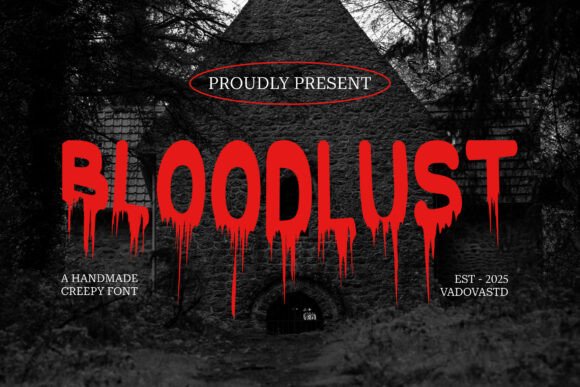
In the competitive landscape of visual communication, typography serves as the immediate emotional handshake between a creator and their audience. While clean sans-serifs and elegant serifs dominate corporate branding and editorial layouts, there exists a vital niche where legibility takes a backseat to visceral atmosphere. Bloodlust occupies this space with deliberate intensity, offering a bold horror display style defined by liquid-like dripping edges and irregular stroke endings. This typeface is not merely a collection of glyphs; it is a specialized tool designed to create an intense and unsettling atmosphere that standard fonts simply cannot replicate.
The relevance of such a distinct typographic voice has grown alongside the mainstream acceptance of dark aesthetics. Horror is no longer confined to October or midnight movie screenings; it has permeated gaming culture, alternative fashion, music festivals, and experiential marketing. As audiences become more visually literate, the demand for authentic, high-impact design elements has increased. Bloodlust meets this need by providing expressive letterforms suited for dark-themed visuals, ensuring that the typography itself contributes to the narrative rather than just labeling it.
The Anatomy of Unease: Understanding Liquid Display Type
To utilize Bloodlust effectively, one must understand the psychological mechanics behind its design. The font features a bold horror display style that leverages biological mimicry. The liquid-like dripping edges trigger a primal recognition associated with viscosity, decay, or injury. Unlike digital grunge fonts that rely on static noise textures, Bloodlust uses organic irregularity to suggest movement and instability. The irregular stroke endings prevent the eye from resting comfortably on any single character, maintaining a state of low-level visual tension throughout the reading experience.
This level of detail matters significantly in professional workflows. In the past, achieving this aesthetic often required designers to manually distress clean fonts or apply rasterized texture overlays that degraded at larger sizes. Bloodlust eliminates this friction by delivering these effects natively within the vector outlines. Because it is delivered in high-quality font formats, the dripping effects remain crisp whether rendered on a 4K monitor or printed on a large-format poster. This scalability is essential for modern cross-media campaigns where assets must transition seamlessly from social media thumbnails to physical signage without losing their eerie atmosphere.
Evolving Trends in Dark Aesthetics and Experiential Branding
The resurgence of horror-centric typography aligns with broader shifts in consumer engagement. We are currently witnessing a move away from sterile minimalism toward maximalist expression in specific subcultures. This is evident in the rebranding of heavy metal festivals, the UI design of survival horror video games, and the packaging of craft beverages targeting alternative demographics. These sectors require a visual language that signals authenticity and edge.
Bloodlust fits into this ecosystem by serving as a signifier of genre competence. When a designer chooses this typeface for a game title or event flyer, they are communicating an understanding of the target audience’s expectations. The market has shifted; consumers can instantly distinguish between generic "spooky" clip art and intentional, crafted horror design. The strong contrast and dramatic presence of Bloodlust cater to this sophisticated audience, providing the high visual impact necessary to stop the scroll in a saturated digital feed.
Furthermore, the integration of horror elements into non-horror contexts has created new use cases. Escape rooms, immersive theater experiences, and even certain tech product launches utilize dark themes to generate buzz. In these instances, the typography acts as environmental storytelling. Bloodlust’s expressive letterforms help bridge the gap between digital promotion and physical immersion, setting the tone before the participant even enters the venue.
Practical Applications Across Media
Versatility is a key requirement for any display font in a professional toolkit. While Bloodlust is undeniably niche, its utility spans several high-value verticals:
- Cinematic Marketing: Horror movie posters rely heavily on title treatment to convey sub-genre. Bloodlust works effectively for slashers, creature features, and body horror, providing a ready-made texture that complements photographic elements.
- Event Design: For Halloween events, haunted house promotions, and gothic festivals, the font provides instant thematic recognition. Its bold weight ensures readability against busy, dark backgrounds common in event collateral.
- Game Development: Indie and AAA titles alike benefit from custom typography. Bloodlust serves as an excellent choice for main menus, chapter cards, and achievement unlocks in horror or dark fantasy games.
- Alternative Branding: Tattoo studios, metal bands, and streetwear labels often require typography that rejects corporate polish. The irregular stroke endings offer a hand-crafted, chaotic feel that resonates with counter-culture identities.
Technical Considerations for Digital and Print Workflows
Integrating a highly stylized font like Bloodlust requires technical mindfulness to maintain professional standards. Although the font is fully scalable and easy to use across digital and print projects, designers must consider hierarchy and accessibility. Display fonts are inherently less legible than text faces; therefore, Bloodlust should be reserved exclusively for headlines, logos, and short bursts of emphasis. Pairing it with a neutral sans-serif or a clean monospaced font for body copy creates necessary breathing room and ensures that critical information remains accessible.
In digital environments, contrast ratios are paramount. The liquid edges of Bloodlust can sometimes blur against complex backgrounds if not managed correctly. Designers should ensure sufficient padding around the text and test rendering across different screen densities. For web use, converting short headlines to SVG or using modern variable font technologies can preserve the intricate drip details that might otherwise be lost in standard web font rendering.
For print production, the high-quality font formats included with Bloodlust are indispensable. The vector precision allows for large-scale output without pixelation, but it also demands attention to ink spread. On uncoated papers, the fine points of the drips may bleed slightly, which can actually enhance the organic horror aesthetic. However, on coated stocks or vinyl wraps, the edges will remain razor-sharp. Understanding this interaction between typeface geometry and substrate is what separates amateur application from professional execution.
Navigating Accessibility and User Experience
A responsible approach to horror typography acknowledges that atmosphere should never completely override function. While Bloodlust creates an intense and unsettling atmosphere, the surrounding design system must support user navigation and comprehension. In web design, this means ensuring that interactive elements labeled with display fonts have appropriate aria-labels or alternative text. In print, it means ensuring that dates, times, and locations associated with an event are set in a legible companion face.
The goal is to use Bloodlust as an emotional amplifier, not a barrier to entry. When used judiciously, it enhances the user experience by validating the thematic promise of the content. A user clicking on a haunted attraction ad expects to feel a sense of dread; seeing clean Helvetica would create cognitive dissonance. Bloodlust aligns the visual interface with the emotional intent, creating a cohesive journey from the first impression to the final conversion.
The Future of Expressive Display Typography
As design tools become more automated and AI-generated imagery becomes ubiquitous, the value of distinct, human-crafted typography increases. There is a growing fatigue regarding generic, algorithmic aesthetics. Creators and businesses are seeking assets that possess tangible character and specific emotional resonance. Bloodlust represents a commitment to this specificity. It is not a font that tries to be everything to everyone; it is a font that excels at being exactly one thing.
This trend toward specialization suggests that future design workflows will rely less on universal super-families and more on curated collections of expressive display faces. Professionals who understand how to leverage these specialized tools will have a distinct advantage. They will be able to offer clients not just layout and color, but genuine atmospheric engineering. The ability to deploy Bloodlust effectively demonstrates a mastery of mood, tone, and cultural signaling that generic design cannot match.
Ultimately, the enduring appeal of horror aesthetics lies in their ability to evoke safe fear and controlled chaos. Bloodlust captures this paradox in vector form. By combining technical excellence with raw, visceral expression, it empowers creators to build worlds that feel dangerous, exciting, and unmistakably real. Whether for a blockbuster film campaign or an independent zine, this typeface provides the foundational texture needed to make dark visions tangible. In an era of fleeting digital attention, such bold, uncompromising design is not just an artistic choice—it is a strategic necessity for capturing the imagination of an audience hungry for depth and drama.