Caloy: Organic Display Font for Authentic Branding
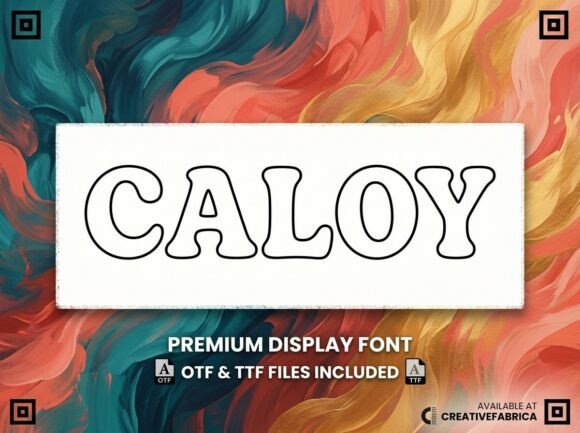
In a digital landscape often dominated by rigid grids and perfect geometric lines, finding a typeface that feels genuinely human can be a challenge. Caloy arrives as a refreshing solution for designers and business owners seeking to inject warmth into their visual identity. This soft display typeface captures a gentle-and-genuine soul that resonates with audiences tired of sterile corporate aesthetics. By featuring bold, hollow letterforms with rhythmic, hand-drawn wobble edges, Caloy bridges the critical gap between digital precision and the imperfect beauty of human touch.
For creators working on independent eco-friendly branding or artisanal projects, typography is not just about readability; it is about emotional connection. Caloy offers a heavy graphic weight paired with an approachable personality, making it an ideal candidate for those who want their work to feel handcrafted rather than manufactured. Whether you are designing a label for small-batch honey, creating headers for a sustainable lifestyle blog, or developing a logo for a creative workshop, this font provides the organic texture necessary to tell an authentic story.
Understanding the Organic Aesthetic of Hollow Letterforms
The defining characteristic of Caloy is its unique construction. Unlike standard solid fonts, Caloy utilizes hollow letterforms that maintain a substantial visual presence without feeling overwhelming. This outline style creates a sense of lightness and airiness, which is particularly valuable in designs where negative space is as important as the text itself. The interior openness of the letters allows background textures, colors, or patterns to peek through, integrating the typography seamlessly into the overall composition rather than having it sit stiffly on top.
Beyond the hollow structure, the font’s charm lies in its imperfections. The edges are not mathematically smooth; instead, they feature a rhythmic wobble that mimics the natural variance of ink on paper or marker on cardboard. Furthermore, the baseline is intentionally uneven. In traditional typesetting, an uneven baseline might be considered a flaw, but in the context of Caloy, it is a deliberate design choice that enhances the hand-drawn illusion. These subtle irregularities signal to the viewer that a person was involved in the creation process, fostering trust and intimacy in commercial and personal projects alike.
Where Caloy Shines in Creative and Commercial Projects
Versatility within a specific niche is key for any display font. While Caloy is distinctively organic, it serves a wide array of practical applications for entrepreneurs, educators, and marketers. Its high-impact nature makes it suitable for headlines and short bursts of text where personality needs to shine immediately.
- Artisanal Product Packaging: For makers selling candles, ceramics, baked goods, or skincare, Caloy reinforces the "handmade" value proposition. It looks exceptional on kraft paper labels, glass jar stickers, and recycled packaging materials.
- Eco-Friendly Brand Identity: Sustainability brands often struggle to look modern without looking industrial. This typeface softens the message, making environmental initiatives feel welcoming and community-focused rather than clinical or preachy.
- Social Media Headers and Stories: On platforms like Instagram and Pinterest, users scroll quickly. Caloy’s bold weight grabs attention, while its playful-and-pure vibe encourages engagement. It works beautifully for quote cards, announcement overlays, and profile banners.
- Creative Lifestyle Logos: For yoga studios, art therapists, freelance illustrators, and boutique shops, the font acts as a visual handshake. It suggests a business that values creativity and human connection over aggressive growth metrics.
- Educational and Children’s Materials: The gentle, rounded forms are non-threatening and inviting, making Caloy a strong choice for worksheets, classroom decor, or book covers aimed at younger audiences or early learners.
Balancing Playfulness with Professional Legibility
While Caloy is undeniably expressive, users must apply it with intention to maintain professional standards. Because it is a display font with significant character, it is not designed for long-form body copy. Attempting to use it for paragraphs of text will result in readability issues and visual fatigue. Instead, treat Caloy as the star performer in your typographic hierarchy. Pair it with a clean, neutral sans-serif or a simple serif for supporting text. This contrast ensures that the organic friendliness of Caloy pops without compromising the functional clarity of your information.
Consider the scale of application carefully. The intricate wobble edges and hollow centers require adequate size to render correctly, especially in digital formats. If scaled too small, the details may blur or pixelate, losing the very charm that defines the font. For print projects, ensure your resolution is high enough to capture the nuanced line work. When using Caloy for logos, test the design at various sizes to confirm that the uneven baseline does not create alignment issues when placed next to other graphical elements or taglines.
Practical Tips for Maximizing Visual Impact
To get the most out of this typeface, think beyond basic black-and-white usage. The hollow nature of Caloy invites creative color treatments. Filling the interior of the letters with a contrasting hue, a gradient, or even a photographic texture can add depth and customization to your project. This technique is particularly effective for social media graphics where vibrant visuals drive performance. Additionally, because the baseline is naturally uneven, avoid forcing the text into strict alignment boxes. Let the letters breathe and follow their inherent rhythm; trying to artificially straighten them defeats the purpose of choosing an organic font.
Spacing also plays a crucial role. Display fonts with hand-drawn characteristics often benefit from slightly tighter tracking in headlines to create a cohesive word shape, or looser spacing in all-caps settings to enhance legibility. Experiment with kerning to find the sweet spot where the wobble edges interact pleasantly without colliding awkwardly. Remember that Caloy carries a lot of personality on its own, so keep surrounding decorative elements relatively simple. Let the typography do the heavy lifting in conveying that gentle-and-genuine soul.
Why Authenticity Matters in Modern Design
The rise of fonts like Caloy reflects a broader shift in consumer preferences toward authenticity and transparency. People are increasingly drawn to brands and creators who show their humanity. In this context, typography is a strategic tool. Choosing a typeface that embodies imperfection and warmth communicates values faster than words alone can. For small business owners and freelancers, this is a powerful differentiator. You may not have the massive budget of a multinational corporation, but you have something they cannot easily replicate: genuine character.
Ultimately, Caloy is more than just a collection of vector shapes; it is a vessel for tone and emotion. It supports the goals of those who wish to build communities rather than just customer bases. By embracing the rhythmic wobble and natural unevenness, designers can create work that feels alive. Whether applied to a jam label, a workshop flyer, or a digital banner, Caloy brings a touch of organic friendliness that transforms ordinary projects into memorable experiences. When used thoughtfully, it ensures that your visual voice remains as sincere and approachable as the mission behind it.