Everly Font: Elevating Design with Playful Minimalist Charm
In the vast landscape of digital typography, finding a typeface that balances personality with professionalism can often feel like searching for a needle in a haystack. Designers and content creators frequently face a dichotomy: choose a font that is clean and legible but lacks character, or select one that is overly decorative at the expense of readability. Enter Everly, a playful display font that has carved out a unique niche by merging tall, hand-drawn aesthetics with clean, minimalist charm. This article explores the nuances of the Everly typeface, its significance in modern visual communication, and how to effectively leverage its distinct style across branding, social media, and creative projects.
Understanding the Anatomy of Everly
To truly appreciate why Everly works so well in contemporary design, one must first understand its construction. Unlike traditional serif fonts that rely on historical conventions or rigid sans-serifs that prioritize geometric perfection, Everly occupies a space of curated imperfection. It is defined by several key anatomical features that contribute to its approachable yet stylish demeanor.
Tall Proportions and Slim Strokes
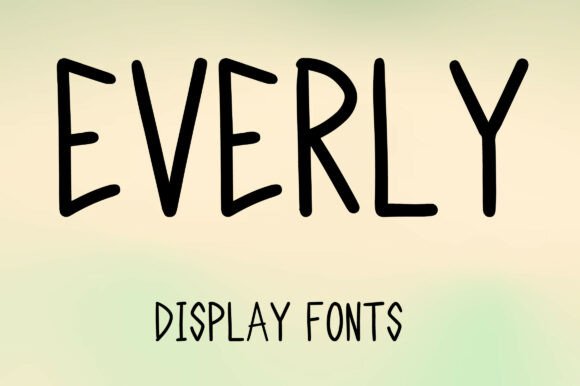
The most immediate characteristic of Everly is its verticality. The uppercase letterforms are notably tall and slim, creating an elegant silhouette that commands attention without appearing heavy. This elongated structure allows designers to maximize headline impact while conserving horizontal space. The strokes themselves are rounded rather than sharp, softening the overall appearance and making the text feel inviting rather than authoritative or stern.
The Hand-Drawn Aesthetic
What separates Everly from standard minimalist fonts is the subtle irregularity in its lines. While it maintains a clean baseline, the curves and terminals possess a slight organic variation. This hand-drawn quality mimics the warmth of human touch, which is increasingly valuable in a digital environment dominated by AI-generated content and pixel-perfect grids. It signals authenticity and craftsmanship, traits that resonate deeply with modern audiences seeking genuine connections.
The Role of Display Fonts in Modern Visual Culture
Everly is categorized as a "display font," a term that beginners sometimes misunderstand. In typography, display does not refer to screen resolution; rather, it indicates a typeface intended for use at large sizes for headings, posters, and titles, as opposed to body text meant for long-form reading. Understanding this distinction is crucial for using Everly effectively.
In today’s fast-paced digital ecosystem, attention spans are fleeting. Whether a user is scrolling through Instagram, walking past a storefront, or browsing an online shop, the headline serves as the primary hook. Display fonts like Everly act as visual shorthand, conveying mood and tone before a single word is processed cognitively. The playful nature of Everly suggests creativity and friendliness, instantly setting expectations for the content that follows. This psychological priming is essential for effective marketing and storytelling.
Practical Applications Across Industries
The versatility of Everly lies in its ability to adapt to various contexts while maintaining its core identity. Because it includes uppercase letters A–Z and numbers 0–9, it provides a complete toolkit for short-form messaging. Here is how different sectors can utilize this typeface to enhance their visual strategy.
Branding and Packaging
For lifestyle brands, boutiques, and artisanal products, packaging is often the first physical touchpoint with a consumer. Everly’s blend of modern minimalism and artistic flair makes it ideal for product labels, shopping bags, and unboxing experiences. It pairs exceptionally well with neutral color palettes and textured papers, adding a layer of sophistication to handmade goods or organic beauty products. The font’s slim profile also ensures that brand names remain legible even on smaller containers where space is at a premium.
Social Media Graphics and Content Creation
Social media platforms are inherently visual, and typography plays a massive role in stopping the scroll. Everly’s tall aspect ratio is particularly advantageous for vertical formats like Instagram Stories, Reels covers, and Pinterest pins. Its friendly vibe encourages engagement, making it perfect for quotes, announcements, and promotional overlays. Creators can use Everly to establish a consistent visual voice that feels personal and relatable, distinguishing their feed from competitors using generic system fonts.
Invitations and Event Stationery
Weddings, baby showers, and corporate galas all require stationery that sets the right tone. Everly bridges the gap between formal elegance and casual celebration. It avoids the stuffiness of traditional scripts while offering more personality than standard block letters. For event planners and DIY brides, this font offers a modern alternative that photographs beautifully and remains easy to read for guests of all ages.
Best Practices for Pairing and Layout
While Everly is stunning on its own, knowing how to pair it with other typefaces is what elevates a design from good to professional. Because Everly is a display font with significant personality, it requires a supportive partner for body copy.
- Contrast is Key: Avoid pairing Everly with another hand-drawn or highly decorative font. Instead, opt for a clean, neutral sans-serif (like Montserrat or Open Sans) or a simple serif for body text. This creates a hierarchy that guides the reader’s eye and prevents visual clutter.
- Mind the Spacing: Due to its slim, tall nature, Everly may benefit from slight adjustments to tracking (letter-spacing). Tightening the spacing can create a cohesive logo lockup, while opening it up can add an airy, luxurious feel to headlines.
- Color Considerations: The delicate strokes of Everly can disappear if used in low-contrast colors. Ensure there is sufficient contrast between the text and background. Dark charcoal on cream or white on deep navy often yields better results than pure black on white, maintaining the font's soft aesthetic.
Addressing Common Misconceptions
As with any stylistic choice, there are assumptions about fonts like Everly that need clarification to ensure successful implementation.
Misconception 1: "Playful means childish."
This is perhaps the most common error. Everly’s playfulness is derived from its rhythm and flow, not from cartoonish proportions. It is sophisticated enough for adult-oriented branding, editorial spreads, and high-end retail. The key is context; when paired with mature imagery and refined layouts, the font reads as whimsical and chic, not juvenile.
Misconception 2: "Hand-drawn fonts are hard to read."
While some grunge or distressed fonts sacrifice legibility for style, Everly was designed with clarity in mind. The irregularities are subtle and controlled. However, users should still adhere to best practices: avoid using it for paragraphs of text, and ensure adequate size and contrast. When used as intended—as a headline or accent—it remains perfectly accessible.
Misconception 3: "It only works for feminine brands."
Although the rounded strokes have a softness often associated with feminine aesthetics, the clean lines and modern structure make Everly gender-neutral in application. It has been successfully used in tech startups, coffee roasters, and architectural firms looking to soften their corporate image. The font conveys approachability, a trait universally valued across all demographics.
Technical Considerations and Accessibility
When integrating Everly into web design or digital assets, technical performance matters. As a display font, it should be loaded efficiently to prevent layout shifts. For web use, consider preloading the font file or using font-display: swap in CSS to ensure text remains visible during loading.
From an accessibility standpoint, always remember that decorative fonts should never be used for critical navigation or essential instructions. Use Everly to enhance the emotional resonance of your message, but rely on standard, highly legible typefaces for functional elements. This inclusive approach ensures that your design is both beautiful and usable by people with visual impairments or cognitive differences.
Conclusion: The Enduring Appeal of Authentic Typography
Everly represents a broader shift in design philosophy where perfection is no longer the ultimate goal. In an era of polished artificiality, the slightly irregular, hand-drawn charm of Everly offers a breath of fresh air. It reminds us that behind every screen and package is a human creator.
Whether you are designing a book cover that needs to stand out on a crowded shelf, crafting a social media campaign that demands engagement, or building a brand identity that values warmth over rigidity, Everly provides the typographic foundation to succeed. By understanding its anatomy, respecting its role as a display font, and applying thoughtful pairing strategies, designers can harness the full potential of this playful yet minimalist typeface. Ultimately, Everly is more than just a collection of glyphs; it is a tool for storytelling that brings a memorable, stylish, and distinctly human touch to the modern visual landscape.