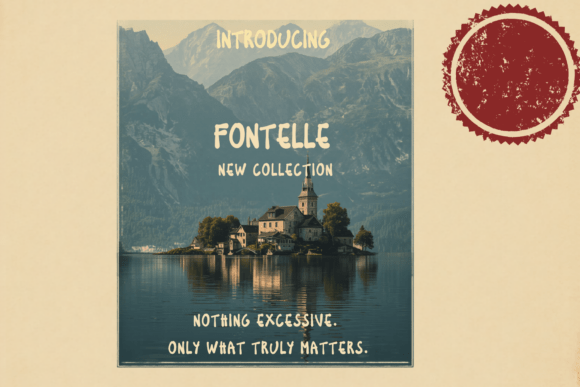
Fontelle: Elevating Visual Identity Through Serene Minimalism
In the crowded landscape of digital and print design, the quest for a typeface that balances modern clarity with emotional resonance is perpetual. Designers and brand strategists often find themselves choosing between sterile geometric sans-serifs that lack personality or ornate serifs that feel too traditional for contemporary contexts. Fontelle emerges as a distinct solution to this dichotomy, offering a minimalist display typeface that captures a serene-and-sophisticated soul. By bridging the gap between heritage travel aesthetics and modern editorial branding, this typeface provides a versatile foundation for projects requiring both calmness and authority.
The Anatomy of Organic Letterforms
To understand why Fontelle performs effectively across various media, one must examine its construction. Unlike purely digital typefaces constructed on rigid grids, Fontelle features clean, organic letterforms uniquely characterized by subtle hand-drawn variations. These imperfections are not flaws; they are deliberate design choices that introduce a human element into the typography. The soft, rounded weight of the characters prevents the harshness often associated with minimalist fonts, creating a visual texture that feels approachable rather than clinical.
This organic quality serves a functional purpose in user experience. When viewers encounter text set in Fontelle, the subtle irregularities reduce cognitive fatigue associated with perfect symmetry. The eye glides over the soft terminals and gentle curves, facilitating a reading rhythm that mirrors natural handwriting while maintaining the legibility required for professional display work. This synthesis of structure and fluidity allows the typeface to remain timeless, avoiding the trap of trending aesthetics that date a design within months of release.
Balancing Heritage and Modernity
A primary challenge in contemporary branding is honoring tradition without appearing outdated. Fontelle addresses this by embedding heritage travel aesthetics into a modern framework. The proportions recall mid-century signage and classic European resort stationery, evoking a sense of established trust and leisurely sophistication. However, the execution remains firmly rooted in current design standards. The spacing is optimized for high-resolution screens, and the stroke contrast is balanced to ensure reproduction fidelity in both large-format printing and mobile interfaces.
This duality makes the typeface particularly valuable for brands undergoing a rebrand or those seeking to position themselves as "new classics." It signals respect for history while demonstrating forward-thinking design sensibilities. For designers, this means less time spent trying to artificially age a modern font or clean up a vintage revival; Fontelle arrives with this equilibrium already built into its DNA.
Strategic Applications in Hospitality and Lifestyle
The specific characteristics of Fontelle make it exceptionally well-suited for industries where atmosphere and emotion drive consumer decisions. Its calm personality and timeless flow translate directly into perceived value for businesses in the hospitality and lifestyle sectors.
- Independent Boutique Hotel Identities: Luxury in the modern era is defined by tranquility and authenticity rather than opulence. Fontelle supports this narrative through its understated elegance. Used in lobby signage, room keys, and welcome literature, it communicates a promise of restful sophistication. The typeface does not shout for attention; instead, it whispers exclusivity, aligning perfectly with the intimate scale of boutique accommodations.
- Premium Lifestyle Magazine Layouts: Editorial design requires typefaces that can carry headlines without competing with photography. Fontelle’s display nature allows it to anchor cover lines and feature titles with confidence. Its organic forms complement the textures found in fashion and interior photography, creating a cohesive visual language across the spread. The softness of the letterforms adds a layer of warmth to glossy pages, making content feel more curated and less commercial.
- Artisanal Travel Journals: For publications focused on slow travel and cultural exploration, typography must reflect the pace of the content. Fontelle embodies the spirit of mindful wandering. Its hand-drawn nuances suggest the personal touch of a field journal, while its clean structure ensures readability for long-form essays. This makes it ideal for mastheads, pull quotes, and chapter openers in niche travel publishing.
- Essential-and-Elegant Social Media Headers: In the fast-scrolling environment of social media, clarity is paramount. Fontelle’s distinct silhouette ensures recognition even at smaller sizes or against complex backgrounds. Its minimalist nature leaves ample negative space, allowing for flexible composition in Instagram stories, LinkedIn banners, and Pinterest pins. The typeface elevates social content from ephemeral noise to enduring brand assets.
Typography Pairing and Hierarchy Considerations
While Fontelle excels as a display face, its successful implementation depends on thoughtful pairing with supporting typefaces. Because it possesses such a strong, serene character, it generally works best when contrasted with neutral body copy. A clean, monolinear sans-serif or a highly legible transitional serif often provides the necessary counterpoint. The goal is to let Fontelle breathe as the voice of the brand while ensuring that informational text remains utilitarian and unobtrusive.
Hierarchy management is equally critical. Due to its soft, rounded weight, Fontelle carries significant visual mass even at moderate sizes. Designers should be cautious about using it in all-caps settings for extended phrases, as this can diminish the organic flow that defines its charm. Instead, leverage title case or sentence case to preserve the rhythmic variation of ascenders and descenders. When emphasis is needed, consider utilizing size scaling and whitespace rather than bold weights, which may disrupt the delicate balance of the letterforms.
Color and Texture Integration
The versatility of Fontelle extends to its interaction with color palettes and textural elements. Its understated design acts as a sophisticated canvas for color experimentation. Against deep, saturated tones like forest green, navy, or terracotta, the light-colored typeface pops with refined contrast. Conversely, when used in dark charcoal or ink blue against cream or paper-white backgrounds, it reinforces the heritage aesthetic reminiscent of vintage letterpress.
Texture also plays a role in maximizing the typeface's potential. While it renders beautifully in flat digital environments, Fontelle truly sings when paired with tactile materials. Embossing, debossing, and foil stamping highlight the subtle hand-drawn variations in the strokes. The soft edges interact with light and shadow differently than sharp geometric fonts, adding a physical dimension to business cards, packaging, and environmental graphics. This tactile engagement deepens the user's connection to the brand, transforming visual identity into a sensory experience.
The Psychology of Understated Design
Choosing Fontelle is ultimately a decision about psychological positioning. In an attention economy characterized by visual noise, understated design signals confidence. It suggests that a brand does not need to rely on aggressive styling to communicate its value. The serenity embedded in the typeface transfers to the viewer, creating a subconscious association with peace, reliability, and quality.
This psychological impact is particularly relevant for educators, researchers, and wellness professionals who utilize design to create safe, focused learning or healing environments. The non-threatening, organic nature of the letterforms reduces anxiety and promotes openness. Unlike sharp, angular typefaces that can subconsciously signal danger or urgency, Fontelle’s rounded weight invites engagement and sustains attention through comfort rather than coercion.
Implementation Best Practices for Diverse Audiences
For professionals integrating Fontelle into their workflow, accessibility and technical performance must remain priorities. Despite its decorative qualities, the typeface maintains sufficient distinction between characters to support readability for broad audiences. However, designers should always test contrast ratios and sizing across devices. What appears serene on a desktop monitor may become illegible on a low-contrast mobile screen if not properly calibrated.
Furthermore, licensing and usage rights should be reviewed carefully to ensure compliance across all intended touchpoints. As a premium display typeface, Fontelle represents an investment in brand equity. Maximizing this investment requires consistent application. Establishing clear typographic guidelines regarding minimum sizes, acceptable background colors, and prohibited modifications ensures that the typeface retains its integrity over time. Consistency builds familiarity, and familiarity breeds the trust that Fontelle is designed to evoke.
Ultimately, the power of this typeface lies in its ability to do less so that the message can do more. By providing a vessel of serene sophistication, it allows the content, the imagery, and the brand story to take center stage. Whether defining the identity of a coastal retreat or structuring the layout of a scholarly journal, Fontelle proves that minimalism need not be cold, and that elegance need not be complicated. It stands as a testament to the enduring appeal of design that respects both the eye and the mind.