Foudi: Elevating Brand Identity with Bold Decorative Typography
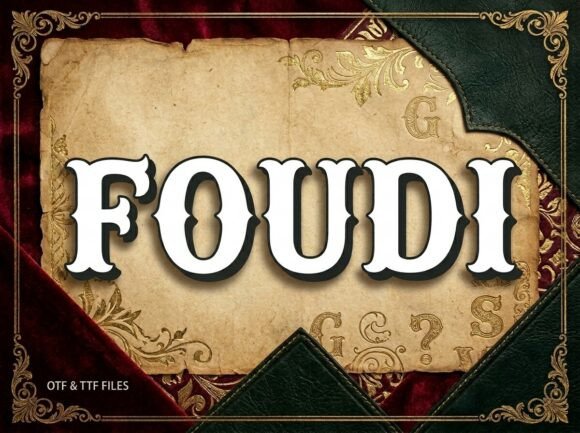
In the saturated landscape of modern digital design, capturing attention within seconds is no longer just a goal; it is a necessity. Visual communication has evolved beyond simple legibility to become an immersive experience where typography acts as the primary voice of a brand. Foudi emerges in this context not merely as a tool for rendering text, but as a strategic asset for creators seeking to establish a distinct visual hierarchy. This stunning decorative display font is designed to be the center of attention, offering a solution for designers who find standard sans-serifs too sterile and traditional serifs too restrained for contemporary projects.
The relevance of a typeface like Foudi lies in its ability to bridge the gap between artistic expression and commercial utility. Featuring unique artistic elements and a strong visual personality, this font is perfect for creators who want to break away from the ordinary without sacrificing professional credibility. In an era where user expectations are shaped by high-fidelity interfaces and curated social media feeds, generic typography often fails to convey the nuance of a brand’s story. Foudi addresses this deficit by providing a versatile foundation for bold headlines, artistic logos, and creative packaging, all while maintaining a polished finish that reassures clients and audiences alike.
The Shift Toward Expressive Display Typefaces
Current design trends indicate a significant departure from the minimalist uniformity that dominated the previous decade. While clean, neutral typefaces remain essential for body copy and user interface elements, there is a growing demand for character in headline treatments. This shift is driven by changing consumption habits; audiences scroll rapidly through content, making decisions based on immediate visual impact rather than detailed reading. Consequently, marketers and business owners are prioritizing assets that stop the scroll.
Foudi fits precisely into this evolving workflow. It responds to the market's desire for "maximalism with purpose," where decorative elements serve to reinforce brand identity rather than distract from it. Unlike novelty fonts that may feel dated or unprofessional, Foudi balances eccentricity with structural integrity. This balance is crucial for professionals who need to deliver work that feels fresh yet timeless. The font’s evolution mirrors the broader creative industry's move toward bespoke aesthetics, where off-the-shelf solutions are customized to create proprietary visual languages. By integrating such a distinctive typeface, designers can elevate their portfolios and help clients stand out in crowded marketplaces ranging from e-commerce to editorial publishing.
Practical Applications in Modern Creative Workflows
Understanding where and how to deploy a specialized display font is as important as the selection itself. Foudi is engineered for specific high-impact use cases rather than general-purpose typesetting. Its versatility makes it an excellent candidate for several key areas of modern design:
- Brand Identity and Logotypes: For startups and rebrands, the logo is the cornerstone of visual recognition. Foudi provides a pre-styled architectural framework that allows designers to craft logotypes with inherent rhythm and flair, reducing the time spent manually manipulating vector points.
- Packaging Design: Shelf appeal relies heavily on typography that communicates quality at a glance. Whether for artisanal food products, cosmetics, or luxury goods, this font adds a tactile, premium feel that suggests craftsmanship and attention to detail.
- Digital Headlines and Hero Sections: Web designers can utilize Foudi to create landing pages that make an immediate emotional connection. When paired with ample whitespace and complementary neutral body text, it guides the user’s eye effectively through the conversion funnel.
- Social Media Assets: Content creators and social media managers benefit from using consistent, striking typography in templates. Foudi ensures that quote cards, announcement posts, and video thumbnails maintain a cohesive and professional aesthetic across platforms.
These applications demonstrate that the font is not just an artistic indulgence but a functional component of effective marketing strategies. However, successful implementation requires adherence to best practices regarding spacing, contrast, and hierarchy to ensure the decorative nature of the letterforms enhances rather than overwhelms the message.
Technical Specifications and File Compatibility
For professional designers, the aesthetic value of a font must be matched by technical reliability. Workflow efficiency depends on having the right file formats for various software environments and output requirements. When acquiring Foudi, users receive two industry-standard formats that ensure seamless integration across different stages of production.
The package includes an OTF (OpenType Font) file, which is widely regarded as the professional standard for advanced design and layout software. OpenType format supports superior typographic features and is preferred in Adobe Creative Cloud applications like Illustrator, InDesign, and Photoshop. It offers better cross-platform consistency and is ideal for print production, branding projects, and complex layouts where precise control over glyph positioning is necessary.
Additionally, the download contains a TTF (TrueType Font) file. This format serves as the universal standard for compatibility across all devices and operating systems. TTF files are particularly useful for web embedding, office applications, and environments where OpenType features might not be fully supported. Having both formats ensures that whether you are designing a billboard in a studio or mocking up a presentation on a laptop, the visual integrity of the typeface remains intact.
Critical Usage Considerations: The Uppercase Constraint
Transparency regarding typeface limitations is vital for avoiding frustration during the design process. Prospective users must understand the specific architectural intent behind Foudi before purchase. This font is an ALL-CAPS Uppercase Only display typeface. It does not include lowercase letters. This is not a missing feature but a deliberate design choice intended to maximize visual impact.
The absence of lowercase characters means Foudi is specifically designed for high-impact headlines, logos, and decorative initials where every letter is treated as a standalone work of art. Attempting to use this font for paragraph text, captions, or long-form content will result in poor readability and a jarring user experience. Designers should reserve Foudi exclusively for short bursts of text where the goal is emphasis and style. Pairing it with a highly legible sans-serif or geometric font for supporting text creates a harmonious contrast that leverages Foudi’s strengths without compromising information accessibility.
Integrating Decorative Fonts into Professional Standards
Adopting a bold, decorative typeface requires a disciplined approach to maintain professionalism. There is a misconception that expressive fonts are inherently less serious, but when used correctly, they signal confidence and brand maturity. The key lies in restraint and context. Because Foudi possesses such a strong visual personality, it demands negative space to breathe. Cluttering a layout with additional ornamental graphics can compete with the letterforms, diluting their effect.
Furthermore, accessibility should remain a priority even when using display typography. While Foudi is uppercase-only, ensuring sufficient color contrast against backgrounds and appropriate sizing for the intended viewing distance is essential. In digital contexts, always provide alt text or semantic HTML tags that convey the same message in a screen-reader-friendly format, as decorative fonts can sometimes be difficult for assistive technologies to interpret accurately.
Ultimately, Foudi represents a convergence of artistry and function tailored for the current creative climate. It empowers entrepreneurs, freelancers, and agencies to produce work that feels custom-crafted and emotionally resonant. By understanding its specific role as a display tool, respecting its uppercase-only nature, and leveraging the provided OTF and TTF files appropriately, designers can harness its full potential to create memorable, impactful visual communications that endure beyond fleeting trends.