Sploosh: Mastering Bold Comic Lettering and Visual Impact
In the dynamic world of visual storytelling, typography is never just about reading words; it is about hearing them. When a reader encounters a sound effect in a graphic novel or a shouted title on a poster, the letterform itself carries the volume, texture, and emotion of the scene. This is where Sploosh enters the creative toolkit. Designed specifically as an all-caps comic lettering font, Sploosh is engineered for bold impact at large sizes, serving as a vital bridge between static text and kinetic energy. For creators, business owners, and designers looking to inject authentic hand-drawn vitality into their projects, understanding the nuances of this typeface is essential for achieving professional results.
The Anatomy of Authentic Comic Typography
To appreciate why Sploosh functions differently than standard display fonts, one must understand the mechanics of traditional comic lettering. Hand-lettered comics are rarely uniform. A letterer’s hand naturally varies pressure, angle, and spacing based on the speed and intensity of the narrative moment. Digital fonts often fail to capture this organic chaos, resulting in text that feels sterile or overly repetitive. Sploosh addresses this challenge through sophisticated OpenType programming rather than static glyph placement.
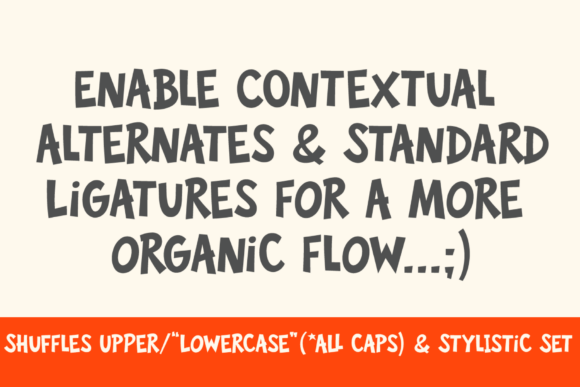
The core of this authenticity lies in the calt (Contextual Alternates) OpenType feature. In many decorative fonts, users must manually select alternate characters to avoid repetition. Sploosh automates this process entirely. The font cycles intelligently through uppercase, alternate uppercase, lowercase forms, and stylistic set variants as you type. This automatic rotation ensures that no two adjacent letters look identical, keeping every line of text visually lively and authentically hand-drawn in feel. For the designer, this means less time tweaking individual glyphs and more time focusing on layout and storytelling flow.
Kerning and Intentional Overlap
Another defining characteristic of Sploosh is its approach to spacing. Unlike corporate sans-serifs where negative space is maximized for legibility at small sizes, comic lettering thrives on density. Sploosh is tightly spaced and carefully kerned, with letters that sometimes overlap intentionally. This overlapping is not a flaw; it is a design feature meant to match the energy and flow of natural comic lettering. It mimics the way ink bleeds and pens rush across paper during high-action sequences. However, this tight architecture also dictates how the font should be used, which leads to important practical considerations for implementation.
Practical Applications and Best Use Cases
While versatile, Sploosh is a specialized tool. Understanding where it excels—and where it might struggle—is key to integrating it successfully into a design workflow. Because of its bold weight and intricate alternates, this typeface demands room to breathe.
- Sound Effects (SFX): This is the primary habitat for Sploosh. Whether it is a metallic "CLANG," a wet "SPLASH," or an explosive "BOOM," the font’s weight and variable forms convey auditory volume visually.
- Title Treatments: For comic book covers, chapter headers, or event posters, Sploosh provides immediate genre signaling. Its all-caps structure commands attention without requiring excessive post-processing.
- Panel Captions and Shout Bubbles: When a character is screaming or a narrator is emphasizing a critical plot point, standard dialogue fonts can fall flat. Sploosh adds the necessary graphical weight to distinguish these moments from regular conversation.
- Merchandise and Apparel: Business owners creating t-shirts, stickers, or enamel pins for pop-culture brands will find that Sploosh scales well for physical products, maintaining legibility and impact even when printed on textured fabrics.
Maximizing Visual Potential: Styling and Effects
Sploosh is designed to get along well with other graphic elements, but it truly sings when treated as an illustration rather than mere text. To make the most out of this font, creators should move beyond simple black-on-white typing. The Family contains three distinct version styles: Regular, Outline, and Shadow. These are not merely aesthetic variations; they are functional layers intended to be combined.
Consider stacking the Shadow version behind the Regular version with a slight offset to create depth, or using the Outline style to create a sticker-like border effect around filled text. Because the font is built for larger sizes, it handles these layering techniques without losing definition. Furthermore, applying color gradients, textures, or distress effects directly to the letterforms enhances the hand-drawn illusion. Adding Sploosh to balloons or integrating it within complex graphics helps ground the text in the environment, making it feel like part of the art rather than a caption pasted on top.
Evaluating Suitability for Your Project
Before committing to Sploosh for a project, it is wise to evaluate the specific needs of your layout. While excellent for headlines and SFX, the tight spacing and all-caps nature make it unsuitable for long-form body copy or fine print. If your project requires extensive paragraphs of explanatory text, pair Sploosh with a clean, legible sans-serif or a dedicated comic dialogue font. Sploosh is the lead singer, not the backing choir. Additionally, because the contextual alternates rely on OpenType features, ensure your design software supports calt. Most modern vector and layout programs do, but older versions or basic web CSS implementations may require manual fallback strategies.
Technical Considerations and Customization
For professionals working in publishing or commercial design, consistency and support are as important as aesthetics. The inclusion of multiple stylistic sets allows for granular control when the automatic cycling doesn't quite fit a specific lockup. Perhaps a title needs a specific alternate 'A' to balance the composition; the stylistic sets provide that manual override while maintaining the overall family aesthetic.
Furthermore, the creator of Sploosh emphasizes community and utility. Font development is often an iterative process, and specific projects may require unique ligatures or extended character support not included in the base release. For additional character requests or customizations, users are encouraged to contact the designer directly. This level of engagement is particularly valuable for indie comic creators or small businesses who need bespoke typographic solutions but lack the budget for a fully custom typeface commission.
Integrating Sploosh into Creative Workflows
Adopting a new display font requires adjusting one's design rhythm. Here is a practical workflow for integrating Sploosh effectively:
- Set Size First: Always begin at a large point size. Adjusting tracking or leading at small sizes can break the intentional overlaps. Scale down only after the letterforms are locked.
- Enable OpenType Features: Verify that Contextual Alternates are active in your character panel before typing. Turn them off only if you need to force specific repeating patterns for stylistic reasons.
- Test in Context: Never judge the font in isolation. Place it against your background art or within the speech balloon immediately. The tight kerning interacts differently with busy illustrations versus solid colors.
- Experiment with Color: Use the three family styles to test different color separations. The Outline style, for example, works exceptionally well in spot colors for screen printing.
- Review Readability: Despite being a display font, clarity remains paramount. Ensure that the automatic alternates haven't created confusing letter combinations, especially in non-English languages or unusual spellings common in fantasy/sci-fi genres.
Final Thoughts for Creators
Typography in visual media is an exercise in empathy. You are anticipating how a viewer will hear a sound or feel a shout before they consciously read the word. Sploosh offers a robust, technically sophisticated solution for creators who want that visceral connection without spending hours hand-drawing every single letter. By leveraging its automatic alternates, embracing its tight spacing, and utilizing its multi-style family structure, designers can achieve a level of professional polish that honors the tradition of comic art while utilizing modern digital efficiency.
Whether you are lettering a 200-page graphic novel, designing a convention banner, or branding a new energy drink, the goal remains the same: communication through visual impact. Sploosh is built to facilitate that communication with energy and authenticity. As with any creative tool, experimentation is the best teacher. Push the boundaries of the styling, mix the weights, and see how the font responds to your unique artistic voice. Good luck with your creative work, and remember that great lettering is felt as much as it is seen.