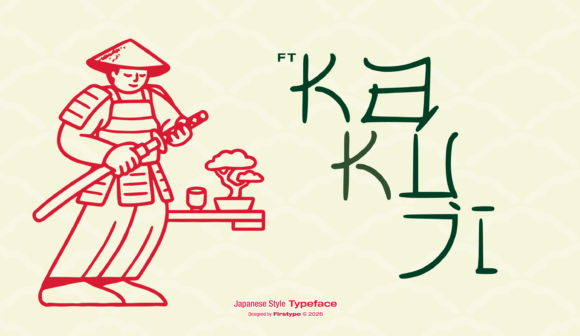
FT Kakuji: Bold Structural Type for Modern Branding
In the crowded landscape of digital design, selecting a typeface that communicates authority without aggression is a persistent challenge. FT Kakuji addresses this specific need by bridging the gap between historical Japanese block lettering and contemporary geometric precision. This display typeface is not merely an aesthetic choice; it is a functional tool designed for high-impact visual storytelling where clarity and cultural resonance must coexist. For designers and brand strategists working in sectors like luxury automotive, high-tech innovation, or premium corporate identity, understanding the practical application of FT Kakuji can significantly streamline the decision-making process during the branding phase.
Bridging Traditional Discipline with Digital Precision
The core value of FT Kakuji lies in its successful translation of analog tradition into a digital asset. Historically, Kakuji block-style lettering was defined by rigid structure and disciplined execution, often associated with architectural signage and formal announcements. In adapting this style for modern screens and print media, FT Kakuji retains the stoic undertones of its predecessor while refining the geometry for optical consistency at various sizes.
This refinement matters practically because many "traditional" fonts fail when scaled down for user interfaces or mobile applications. The vector construction of FT Kakuji ensures that the katana-like terminals and sharp angles remain crisp rather than becoming pixelated or visually muddy. For a designer creating a responsive website for a tech startup, this means the brand’s visual voice remains consistent from a massive hero banner down to a navigation menu. The font eliminates the friction often found when trying to force a heritage aesthetic into a modern UI kit, saving hours of manual adjustment and optical correction.
Establishing Authority in High-Tech and Automotive Sectors
Certain industries require a typographic voice that suggests engineering excellence and forward momentum. Generic sans-serifs can sometimes feel too neutral, lacking the distinctive character needed to differentiate a premium product. FT Kakuji provides a solution for brands that need to project confidence and structural integrity.
Consider a luxury automotive branding project. The vehicle’s marketing materials must convey speed, safety, and meticulous craftsmanship. The architectural rigidity of FT Kakuji mirrors the precision engineering of the car itself. Its bold weight commands attention on billboards and showroom displays, while its geometric construction aligns with the sleek lines of modern vehicle design. Similarly, in the high-tech sector, companies dealing with AI, cybersecurity, or hardware manufacturing benefit from this typeface’s authoritative character. It avoids the playful connotations of rounded geometrics and the coldness of sterile industrial fonts, striking a balance that feels both innovative and established.
Enhancing Visual Hierarchy Through Geometric Construction
Effective communication relies heavily on hierarchy, and FT Kakuji serves as a powerful anchor for display text. Because of its inherent boldness and structural density, it naturally draws the eye, making it an efficient tool for guiding viewer attention. When paired with a more neutral body copy typeface, FT Kakuji creates immediate contrast without requiring excessive sizing or color manipulation.
This efficiency supports creativity by reducing the number of variables a designer must manage. Instead of relying on drop shadows, gradients, or complex effects to make a headline pop, the typeface does the heavy lifting through its form alone. For freelancers and agency designers working under tight deadlines, this simplification is a tangible productivity booster. It allows for faster iteration cycles because the font’s personality is strong enough to carry the layout even in wireframe or mockup stages. Clients can visualize the final impact earlier in the process, leading to quicker approvals and fewer revision rounds regarding tone.
Practical Pairing Strategies for Neo-Japanese Aesthetics
While FT Kakuji excels as a standalone display face, its utility expands when paired correctly. To maximize its effectiveness in neo-Japanese aesthetics or modern corporate identities, consider these practical combinations:
- With Humanist Sans-Serifs: Pairing FT Kakuji with a softer humanist sans-serif (like Frutiger or Myriad) balances the font’s sharp discipline with approachability. This is ideal for corporate identities that want to appear innovative yet user-friendly.
- With Monospaced Typefaces: For technical documentation or developer-focused branding, combining FT Kakuji headers with a clean monospace body reinforces the high-tech, engineered aesthetic. This pairing emphasizes precision and data-driven reliability.
- With Elegant Serifs: In luxury contexts, contrasting the blocky structure of FT Kakuji against a refined editorial serif creates a dynamic tension. This works exceptionally well for fashion, architecture firms, or cultural institutions blending heritage with modernity.
These pairings are not just stylistic suggestions; they are functional strategies to ensure legibility and tonal balance. The goal is to let FT Kakuji serve as the structural pillar of the design system while supporting typefaces handle the nuance of extended reading.
Navigating Limitations and Best Use Cases
To use FT Kakuji effectively, one must also understand where it does not fit. As a display typeface rooted in bold, block-style traditions, it is inherently unsuited for long-form body text. Attempting to set paragraphs in this font will result in reader fatigue and poor accessibility due to its dense ink trap and aggressive terminals. Designers should reserve FT Kakuji strictly for headlines, logos, short callouts, and large-format environmental graphics.
Additionally, while the font carries a distinct Japanese aesthetic influence, users should be mindful of cultural context. It is most effective when the brand narrative genuinely aligns with concepts of discipline, structure, or neo-Japanese modernism. Using it solely for exoticism without substantive connection to the brand's values can lead to disjointed messaging. However, for brands where these themes are authentic, FT Kakuji offers a level of specificity that generic "Asian-inspired" fonts rarely achieve.
Another consideration is spacing. Due to its architectural rigidity, FT Kakuji may require custom tracking adjustments depending on the medium. Tight tracking enhances the solid, monumental feel for large-scale prints, while slightly looser tracking may be necessary for digital screens to prevent letters from merging at smaller display sizes. Testing across intended deliverables is essential to maintain the font’s intended impact.
Streamlining Creative Decisions for Modern Identities
Ultimately, the adoption of FT Kakuji is a strategic decision to reduce ambiguity in visual communication. For entrepreneurs and marketers, time spent debating whether a font looks "strong enough" or "modern enough" is time lost. This typeface answers those questions definitively through its design DNA. It signals quality and intentionality instantly.
For educators and content creators focusing on design systems or branding case studies, FT Kakuji serves as an excellent example of how historical forms can be recontextualized for contemporary utility. It demonstrates that tradition and innovation are not mutually exclusive but can be synthesized to create something functionally superior. By choosing a typeface with such a clear lineage and purposeful adaptation, professionals can build brand assets that feel timeless rather than trendy, ensuring their visual identity remains relevant as design trends continue to evolve.