Paris Font: Bold Decorative Display Type
When a design project demands immediate visual impact, standard typefaces often fall short of the creative vision. Paris is a stunning decorative display font specifically engineered to solve this problem by serving as the undeniable center of attention. Unlike versatile body text fonts meant for long-form reading, this typeface carries a strong visual personality that transforms simple words into artistic statements. It is designed for creators, marketers, and business owners who need to break away from ordinary aesthetics without sacrificing professional polish.
The primary purpose of Paris is to elevate headlines, logos, and packaging through unique artistic elements. It bridges the gap between raw creativity and refined commercial design. For entrepreneurs launching a new brand or educators creating engaging course materials, this font provides an instant upgrade in perceived value. Its distinct character shapes ensure that your message does not just communicate information but also conveys a specific mood and style. Understanding its strengths and limitations is key to integrating it successfully into your next project.
Defining Characteristics and Visual Appeal
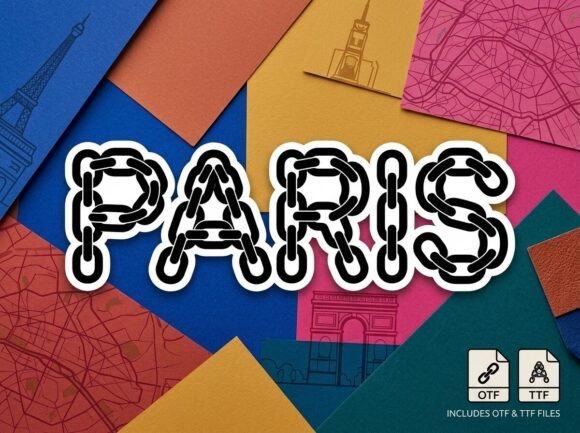
Paris distinguishes itself through deliberate stylistic choices that prioritize form and presence. The most critical characteristic to understand before use is that this is an ALL-CAPS Uppercase Only display typeface. It does not include lowercase letters. This limitation is actually a feature, not a flaw. By removing lowercase variants, the designer has focused entirely on making every capital letter a standalone work of art. This results in uniform height and weight that creates a solid, architectural block of text perfect for high-impact applications.
The visual personality of Paris leans toward the ornamental while maintaining clean lines suitable for modern contexts. It avoids the chaotic illegibility that plagues many decorative fonts. Instead, it offers a polished finish that feels intentional and expensive. Whether you are designing a luxury product label or a bold social media graphic, the letterforms provide enough intricate detail to be interesting at large sizes while remaining legible from a distance. This balance makes it particularly valuable for projects where aesthetic appeal must coexist with clear communication.
Practical Applications for Creators and Businesses
Versatility is a hallmark of Paris, provided it is used within its intended scope. Because it excels at grabbing attention, it is ideally suited for environments where you have only a second or two to make an impression. Small business owners can utilize this typeface for storefront signage or window decals to establish a distinct brand identity that stands out on a busy street. In the digital space, content creators and bloggers will find it effective for YouTube thumbnails, Instagram story titles, and website hero banners where readability at small mobile sizes is paramount.
Beyond marketing, Paris serves functional roles in product development and education. Creative packaging benefits immensely from this font, as it can turn a simple product name into a premium visual element on a shelf. For educators and instructional designers, using Paris for section headers in presentations or worksheets helps break up dense information and guides the learner’s eye through the material. Freelancers working on event invitations, such as weddings or galas, can leverage its artistic flair to set a sophisticated tone before the guest even reads the details. The key is to treat it as a graphical element rather than standard text.
Technical Specifications and File Formats
Acquiring the right file format ensures that Paris performs reliably across different platforms and software. When you obtain this font, you receive two industry-standard files that cover virtually all design needs:
- OTF (OpenType Font): This is the professional standard preferred by advanced designers using Adobe Illustrator, InDesign, or Photoshop. OpenType files support advanced typographic features and generally offer better rendering quality for print and high-resolution digital work. If you are doing professional layout work, this should be your primary choice.
- TTF (TrueType Font): This format offers universal compatibility. It is the safer bet for beginners, casual users, or those working in non-design-specific software like Microsoft Word, PowerPoint, or Cricut Design Space. TTF ensures that the font installs correctly on both Windows and macOS systems without technical hiccups.
Having both formats included eliminates the frustration of purchasing a font only to discover it is incompatible with your current workflow. This dual-format approach supports everyone from hobbyists crafting at home to agency professionals preparing files for commercial printing.
Important Considerations Before Use
While Paris is a powerful tool, it requires mindful application to avoid common design pitfalls. The absence of lowercase letters means you cannot use this font for paragraphs, captions, or any extended body copy. Attempting to force it into these roles will result in poor readability and a jarring user experience. Always pair Paris with a clean, neutral sans-serif or serif font for supporting text. This contrast allows the decorative display font to shine without overwhelming the viewer or making the design difficult to navigate.
Spacing is another factor that demands attention. Decorative display fonts often have unique kerning requirements. Depending on your software, you may need to manually adjust the tracking or letter spacing to achieve optimal visual rhythm. Because every letter is designed as an individual art piece, certain letter combinations might require slight tweaking to look cohesive. Taking an extra moment to refine the spacing will significantly enhance the professional quality of your final output.
Finally, consider the context of your audience. Paris works best when the goal is to evoke emotion, luxury, or creativity. It may be less appropriate for corporate financial reports, medical documentation, or minimalist tech interfaces where neutrality is preferred. Matching the font’s strong personality to the right project ensures that your design communicates effectively. When used with intention and respect for its all-caps nature, Paris becomes more than just a typeface; it becomes a defining element of your creative voice.