Ozark: A Bold Decorative Display Font for Impact
In the crowded landscape of modern typography, finding a typeface that genuinely stops the scroll is a rare achievement. Ozark is not designed to blend into the background or serve as a quiet vessel for long-form body text. It is a stunning decorative display font engineered specifically to be the center of attention. For designers, marketers, and business owners who feel constrained by safe, conventional choices, this typeface offers a distinct visual personality that demands engagement. It bridges the gap between raw artistic expression and professional polish, making it an essential asset for projects where standard sans serif or serif fonts simply lack the necessary gravity.
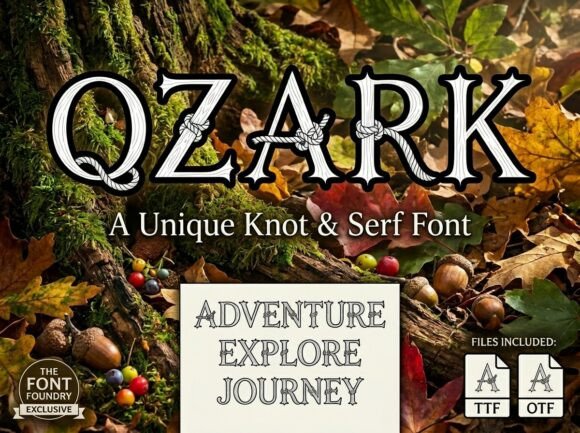
The visual character of Ozark is defined by its unique artistic elements and unwavering confidence. Unlike generic display fonts that often sacrifice legibility for novelty, Ozark maintains a structured integrity while showcasing bold, decorative forms. Every glyph feels intentional, carrying a weight that anchors layouts and establishes immediate hierarchy. This is not a font for whispering; it is for making statements. Whether you are crafting a brand identity that needs to stand out on a shelf or designing social media graphics that must compete in a saturated feed, Ozark provides the visual anchor necessary to capture audience interest within milliseconds.
Strategic Applications Across Branding and Editorial Design
Versatility in a decorative font is often a contradiction, yet Ozark manages to adapt across various creative disciplines without losing its core identity. Its primary strength lies in high-impact environments where brevity and visual punch are paramount. In logo design, the font’s strong silhouette allows for wordmarks that function almost as symbols themselves. Because the letterforms possess such distinct character, they often require little to no additional iconography to be memorable. This makes it particularly valuable for startups and small businesses looking to establish recognition with minimal visual clutter.
Beyond branding, Ozark excels in packaging design and retail environments. On a product label or box, readability at a distance and shelf appeal are critical metrics. The bold strokes and artistic flair of this typeface create contrast against packaging backgrounds, ensuring the product name remains the focal point even when surrounded by competitors. Similarly, in editorial design for magazines, zines, or digital publications, Ozark serves as an exceptional tool for pull quotes, chapter titles, and cover lines. It breaks up the monotony of body copy, guiding the reader’s eye through the layout and adding a layer of curated sophistication that elevates the perceived value of the content.
Digital creators and social media managers will also find practical value here. When creating thumbnails, story overlays, or ad creatives, the margin for error is slim. Text must be legible on mobile screens while still conveying emotion and tone. Ozark’s robust construction ensures it holds up well even when scaled down, provided it is used sparingly. It pairs exceptionally well with minimalist photography or solid color blocks, allowing the typography itself to provide the texture and interest that might otherwise require complex illustration.
Navigating the All-Caps Constraint for Maximum Effect
Before integrating Ozark into your workflow, it is vital to understand its specific technical parameters. This font is an ALL-CAPS Uppercase Only display typeface. It does not include lowercase letters. This is not a limitation but a deliberate design choice intended to enforce a specific aesthetic rhythm. Uppercase-only typefaces create a uniform vertical cadence that feels monumental and authoritative. However, this also means Ozark is strictly unsuitable for paragraphs, captions, or any interface text requiring sentence case.
Understanding this constraint actually improves your design outcomes. It forces you to be selective about where you deploy the font, preserving its impact. If you use a decorative font for everything, nothing stands out. By reserving Ozark exclusively for headlines, logos, and decorative initials, you maintain its power. When testing this font in your projects, always type in caps lock or transform your text to uppercase in your design software to preview accurate spacing and kerning. Attempting to force lowercase styling or mixing it with other all-caps fonts can lead to visual competition; instead, let Ozark be the singular loud voice in a composition of quieter supporting elements.
Pairing, Licensing, and Professional Implementation
Successful typography relies heavily on contrast. Because Ozark carries so much visual weight, it requires a partner that provides breathing room. Avoid pairing it with other decorative, script, or handwritten fonts, as this creates chaos rather than harmony. Instead, look for clean, neutral typefaces to handle the supporting roles. A geometric sans serif or a highly legible transitional serif works best for subheads and body copy. This juxtaposition highlights Ozark’s artistic qualities while ensuring the overall design remains accessible and professional. The goal is to create a clear visual hierarchy where the user instantly knows what to read first, second, and third.
From a production standpoint, having the right file formats ensures smooth execution across different platforms. Ozark includes both OTF (OpenType Font) and TTF (TrueType Font) files. Professional designers working in Adobe Illustrator, InDesign, or Figma should prioritize the OTF version, as it supports advanced typographic features and superior rendering for print and high-resolution digital output. The TTF version serves as a reliable backup for universal compatibility, ensuring consistency if you need to share mockups with clients using basic office software or older systems. Having both formats eliminates friction during handoffs and ensures your vision translates accurately from screen to final product.
Finally, consider the commercial implications of your font selection. Using premium, licensed assets like Ozark signals a commitment to quality that free alternatives often cannot match. Free fonts frequently suffer from poor kerning, incomplete character sets, or overuse that dilutes brand distinctiveness. Investing in a dedicated commercial font protects your brand identity and ensures you have the legal right to use the typeface across merchandise, advertising, and digital products. When evaluating whether Ozark fits your next project, ask yourself if the design needs to shout or speak. If the objective is to break away from the ordinary and establish a bold, polished presence, this typeface delivers the specific tools required to achieve that vision effectively.