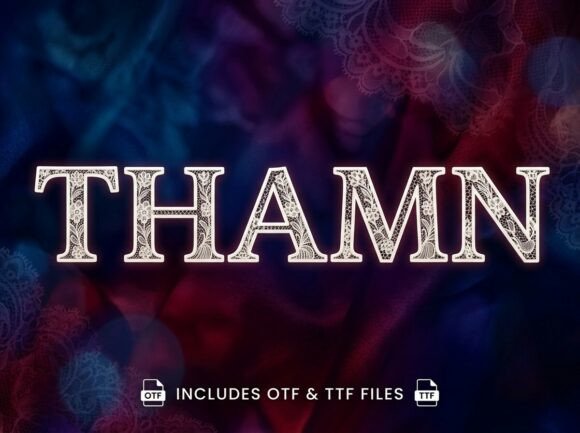
Thamn: A Bold Decorative Display Font
In the crowded landscape of modern typography, finding a typeface that genuinely stops the scroll is a challenge for any creative professional. Thamn arrives as a solution for designers and brand strategists who need more than just legibility; they need a visual anchor. This decorative display font is engineered to be the focal point of any composition, offering a strong visual personality that separates your work from generic templates. Unlike standard sans serif or serif fonts designed for long-form reading, Thamn operates as a graphic element in its own right. Its unique artistic elements provide an immediate sense of style and intention, making it a valuable asset for projects where first impressions are non-negotiable.
The appeal of Thamn lies in its ability to balance artistic flair with a polished, professional finish. It avoids the chaotic nature of some experimental typefaces while steering clear of the sterile safety of corporate defaults. For entrepreneurs, publishers, and content creators, this balance is crucial. You want your headlines to feel bespoke and premium without sacrificing clarity or brand trust. When you integrate Thamn into your design assets, you are signaling to your audience that every detail has been considered. The letterforms carry enough weight to stand alone as logotypes yet possess enough refinement to sit comfortably alongside editorial photography or minimalist packaging layouts.
Elevating Brand Identity and Visual Hierarchy
Typography is often the silent ambassador of brand identity, and choosing a creative font like Thamn can significantly alter how an audience perceives a message. In marketing and branding, visual hierarchy dictates where the eye travels first. Because Thamn is designed specifically for high-impact applications, it naturally claims the top tier of this hierarchy. When used for bold headlines on social media graphics or website hero sections, it creates an entry point that draws viewers deeper into the content. This is particularly effective for brands in fashion, lifestyle, artisanal goods, or luxury sectors where aesthetics are intrinsic to the product value.
Beyond mere attention-grabbing, this typeface influences brand recognition through consistency. Using a distinctive display font across various touchpoints—from business cards and packaging design to digital banners—creates a cohesive visual language. Audiences begin to associate the specific geometric quirks and stylistic nuances of Thamn with your brand’s voice. However, because this font carries such a strong personality, it demands thoughtful implementation. It works best when allowed to breathe. Crowding Thamn with other ornate elements can dilute its impact. Instead, let the font serve as the primary decorative feature, supported by negative space and simpler secondary typography. This restraint ensures the design remains accessible and professional rather than overwhelming.
Practical Applications Across Media
Versatility is a key requirement for any commercial font investment, and Thamn performs reliably across both print and digital environments. For editorial designers, it serves as an excellent choice for magazine covers, chapter titles, and pull quotes that need to break up dense text blocks. In the realm of packaging design, the font’s sturdy construction ensures it remains legible even when scaled down for labels or embossed onto textured materials. Small business owners creating physical products will find that Thamn adds a layer of perceived value to tags, boxes, and signage, helping handmade or boutique items compete visually with larger retail brands.
Digital creators also benefit from the font’s adaptability. While primarily a display face, it translates well to web design when used sparingly for navigation headers or landing page statements. Content creators and bloggers can use it to create custom Pinterest pins or YouTube thumbnails that stand out in algorithmic feeds. The key to successful application is understanding the font's intended scale. Thamn shines at large sizes where its intricate details are visible. Using it at small body copy sizes is not recommended, as the decorative elements may blur or reduce readability. Always test your designs at actual viewing size before finalizing production files to ensure the artistic integrity holds up in context.
Navigating Technical Specs and Font Pairings
Before adding Thamn to your toolkit, it is vital to understand its technical constraints to avoid workflow friction. This font is an ALL-CAPS uppercase-only display typeface. It does not include lowercase letters. This limitation is intentional, designed to maximize uniformity and impact for logos, initials, and short headlines. If your project requires sentence case or extensive paragraph text, Thamn is not the correct tool. Attempting to force it into roles meant for traditional text fonts will result in poor readability and a disjointed user experience. Respecting these boundaries is what separates amateur layouts from professional design work.
Successful font pairing is essential when working with such a dominant typeface. Since Thamn occupies the decorative end of the spectrum, it pairs best with clean, neutral companions. A simple geometric sans serif or a classic humanist serif provides necessary contrast, allowing Thamn to pop without fighting for attention. For example, use Thamn for a "Summer Collection" headline and pair it with a light-weight sans serif for the date and location details. This combination maintains visual interest while ensuring all information is easily digestible. Avoid pairing Thamn with script fonts or other highly stylized display faces, as the competing personalities will create visual noise and confuse the viewer.
File Formats and Licensing Considerations
Professional design workflows require reliable file formats, and Thamn includes both OTF (OpenType) and TTF (TrueType) options. The OTF file is generally preferred for advanced layout software like Adobe InDesign or Illustrator, as it supports better rendering and potential OpenType features. The TTF file ensures universal compatibility across older systems, office suites, and basic crafting software like Cricut Design Space. Having both formats guarantees that whether you are designing a billboard in Photoshop or a wedding invitation in Canva, the font will render correctly.
Finally, always verify licensing requirements for your specific use case. While Thamn is a premium font suitable for commercial projects, different licenses apply to different scales of usage. A freelance designer creating a logo for a client may need a different license tier than a corporation using the font for national advertising. Reviewing the End User License Agreement (EULA) protects you legally and ensures you are supporting the type designer appropriately. Understanding these practical aspects—from the all-caps constraint to file management and licensing—allows you to leverage Thamn effectively. When used with intention and respect for its design parameters, this typeface becomes more than just letters on a screen; it becomes a strategic tool for communication and connection.