Geese: A Reactive Typeface for Science Branding
Finding a typeface that communicates both precision and creativity is a common challenge in scientific design. Standard sans-serif fonts often feel too clinical, while decorative options can undermine the credibility of technical content. Geese bridges this gap as a reactive display typeface specifically engineered to capture a scientific-and-inventive soul. It moves beyond simple typography by integrating visual metaphors directly into the letterforms, creating an immediate association with experimentation and discovery.
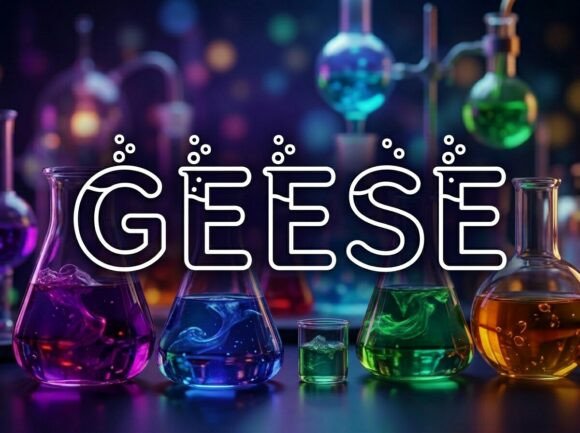
At its core, Geese is a bold, outlined font where the negative space and structural lines mimic laboratory equipment. The characters feature rhythmic beaker motifs, bubbling liquid levels, and rising chemical vapor details woven into their architecture. This is not merely a novelty font; it is a functional design tool intended for headlines, logos, and high-impact visual assets where the identity needs to convey active research and educational energy. For designers and creators working in STEM fields, Geese offers a way to visualize the process of science rather than just labeling it.
Defining the Visual Language of Experimentation
The primary appeal of Geese lies in its ability to tell a story through form. When you use this typeface, you are adopting a visual vocabulary that speaks to curiosity. The outlined nature of the letters provides a lightweight yet authoritative presence, preventing the bold scientific aesthetic from feeling heavy or oppressive. The integration of liquid levels and vapor trails adds a sense of motion, suggesting that the subject matter is alive and evolving.
This reactivity is crucial for modern branding. Static designs often fail to capture the dynamic nature of contemporary science and innovation. Geese solves this by embedding kinetic energy into the baseline structure. Whether the letters are arranged horizontally or stacked vertically, the internal rhythm of the beaker shapes creates a cohesive pattern that guides the viewer’s eye. This makes it exceptionally useful for creating wordmarks where the text itself serves as the primary illustration, reducing the need for additional iconography.
Ideal Applications for Educational and Commercial Projects
Understanding where to deploy Geese is just as important as understanding how it looks. Its specialized nature makes it perfect for specific niches within the science and education sectors. Independent science centers and museums, for example, benefit immensely from this typeface. These organizations often struggle to balance academic rigor with approachability for younger audiences or casual visitors. Geese signals that the content is rooted in real science while remaining visually engaging and accessible.
Digital products also represent a prime use case. Chemistry-themed educational apps and interactive learning platforms require interfaces that feel immersive. Using Geese for module titles, achievement badges, or onboarding screens reinforces the thematic experience without distracting from the user interface. The font’s distinct personality helps differentiate these apps from generic e-learning tools, creating a memorable brand touchpoint that users associate with hands-on discovery.
For commercial entities, artisanal laboratory suppliers and boutique equipment manufacturers can leverage Geese to stand out in a market dominated by sterile corporate aesthetics. Small businesses selling glassware, reagents, or maker-space tools often rely on packaging and social media to build community. A header designed with Geese immediately identifies the brand as part of the maker and researcher culture. It suggests that the company understands the tactile joy of lab work, fostering trust and affinity among hobbyists and professionals alike.
Practical Considerations for Implementation
While Geese is a powerful asset, it requires thoughtful application to maintain readability and professional standards. As a display typeface, it is optimized for large sizes and short bursts of text. Attempting to use it for body copy, captions, or dense paragraphs will result in legibility issues due to the intricate internal details. Reserve Geese for H1 headers, logo treatments, poster titles, and social media graphics where the unique characteristics can be fully appreciated.
Pairing is another critical factor. Because Geese carries so much visual weight and narrative detail, it demands a supportive partner font. Clean, neutral sans-serifs or monospaced typefaces work best to ground the composition. The contrast between the expressive, experimental nature of Geese and the stability of a utilitarian text font mirrors the relationship between creative hypothesis and rigorous data analysis. Avoid pairing it with other decorative or script fonts, as this creates visual competition that dilutes the impact of both choices.
- Scale Matters: Ensure the font size is large enough for the vapor and bubble details to render clearly. At small sizes, these elements may blur or disappear, leaving awkward gaps in the letterforms.
- Color Strategy: The outlined structure of Geese invites creative color fills. Consider using gradients or dual-tone colors to emphasize the liquid and vapor motifs, enhancing the reactive quality of the design.
- Spacing Adjustments: Display fonts often require manual kerning. Pay close attention to the spacing between characters to ensure the rhythmic beaker patterns align harmoniously across the word.
- Contextual Relevance: Verify that the scientific aesthetic aligns with your specific message. While excellent for chemistry and biology, it may feel out of place for theoretical mathematics or historical archives.
Enhancing Digital Presence and Social Engagement
In the realm of social media, stopping the scroll is paramount. Innovation-and-discovery accounts face the challenge of making complex topics visually arresting within seconds. Geese functions as an excellent hook for Instagram carousels, YouTube thumbnails, and LinkedIn headers. The inherent texture of the typeface adds depth to flat digital images, making text-based graphics feel more produced and intentional.
For content creators and educators sharing experiments or tutorials, consistency builds recognition. Establishing Geese as your signature header font creates a visual thread across disparate pieces of content. Followers begin to associate that specific typographic style with your unique perspective on science. This branding efficiency is invaluable for freelancers and independent researchers building a personal brand. It communicates professionalism and niche expertise instantly, allowing the audience to focus on the substance of the content rather than deciphering the design intent.
Ultimately, choosing Geese is a decision to prioritize character over convention. It acknowledges that science is not just a collection of facts but a human endeavor filled with wonder, trial, and error. By integrating the tools of the trade into the very shape of language, this typeface allows designers to celebrate the spirit of invention. Whether you are launching a new ed-tech startup, rebranding a local makerspace, or simply wanting to add a spark of creativity to your next presentation, Geese provides the structural balance and educational energy necessary to make your message resonate. It transforms standard text into a visual experiment, inviting the viewer to look closer and explore further.