Hello Sister: Integrating Handwritten Charm into Professional Design Workflows
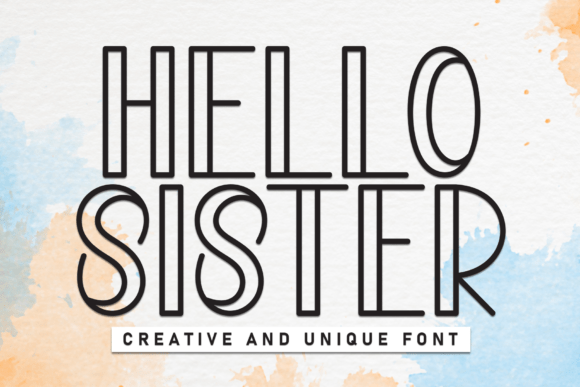
In the landscape of digital typography, finding a display font that balances authentic personality with professional legibility is a frequent challenge for designers and marketers. Hello Sister addresses this specific gap in creative asset libraries. It is a handwritten display typeface crafted to introduce a playful, endearing aesthetic without sacrificing structural integrity. For professionals managing brand identities, event collateral, or content creation, this font serves as more than a decorative element; it is a strategic tool for establishing tone and emotional connection within a broader design system.
Understanding where Hello Sister fits into your production pipeline requires viewing it through the lens of hierarchy and function rather than mere decoration. While its primary characteristic is a whimsical flourish, its utility lies in its ability to soften rigid layouts and guide viewer attention. Whether you are finalizing wedding stationery suites, designing social media templates for an e-commerce launch, or creating educational materials for younger demographics, integrating this typeface effectively demands a process-oriented approach to selection, pairing, and technical implementation.
Strategic Placement in the Creative Process
The decision to utilize Hello Sister should occur during the conceptualization and mood-boarding phases of a project, well before final layout execution. This ensures the font supports the communication goal rather than competing with it. In the pre-production stage, evaluate the project’s emotional requirements against the font’s characteristics. Hello Sister excels in environments requiring warmth, nostalgia, or personal intimacy. If your workflow involves creating style guides or brand bibles, test the font early to determine if its playful nature aligns with long-term brand consistency.
During the active design phase, treat Hello Sister as an accent instrument. Its intricate letterforms carry significant visual weight, meaning they perform best when used sparingly. A practical workflow involves establishing a strict typographic hierarchy where Hello Sister occupies the top tier—headlines, pull quotes, or signature elements—while neutral sans-serifs or readable serifs handle body copy. This separation prevents visual fatigue and maintains information accessibility. For example, in a greeting card production run, use the script for the primary sentiment but switch to a clean geometric sans-serif for the interior message and legal disclaimers to ensure clarity at smaller point sizes.
Post-production and quality assurance are equally critical when working with organic typefaces. Handwritten fonts often present unique challenges regarding spacing and alignment that do not exist with standardized system fonts. Before sending files to print or publishing digital assets, conduct a thorough review of kerning pairs and line height. What looks acceptable on a high-resolution monitor may become illegible when scaled down for mobile screens or rendered in low-quality ink. Incorporating a specific typography check into your QA checklist prevents costly reprints and ensures the intended charm translates across all deliverables.
Technical Integration and Tool Compatibility
Seamless integration of Hello Sister into existing workflows depends heavily on software compatibility and file management. The font is typically distributed in OpenType (OTF) and TrueType (TTF) formats, ensuring broad compatibility across industry-standard platforms like Adobe Illustrator, Photoshop, InDesign, Affinity Designer, and Canva. For web-based projects, verify licensing terms regarding @font-face usage or consider converting key headlines to SVG paths to preserve rendering fidelity across different browsers and operating systems.
When working within collaborative environments or agency settings, organization is paramount. Handwritten display fonts can easily clutter shared asset libraries if not managed correctly. Establish a naming convention that distinguishes Hello Sister from other script variants in your repository. Create dedicated character style sheets in layout software to standardize size, tracking, and color whenever the font is applied. This reduces friction during handoffs between team members and ensures that junior designers or freelancers apply the typeface consistently according to established guidelines.
For users leveraging template-based platforms like Etsy shops or print-on-demand services, Hello Sister acts as a differentiator in saturated markets. However, efficiency requires preparation. Pre-build master templates with the font already styled and locked. This allows for rapid customization without risking accidental distortion of the delicate strokes. When selling digital products featuring this typeface, always include clear instructions for end-users regarding installation and suggested pairings, reducing customer support inquiries related to typography mishaps.
Pairing Strategies for Balanced Layouts
The success of Hello Sister relies almost entirely on what surrounds it. Because the font possesses high contrast and irregular baselines, it requires stable partners to ground the composition. Effective pairing is not subjective guesswork; it is a systematic process of balancing form and function. Consider the following functional categories when selecting companion typefaces:
- Geometric Sans-Serifs: Fonts like Montserrat, Futura, or Century Gothic provide a modern, structured counterpoint. The perfect circles and straight lines of geometric sans-serifs offset the organic curves of Hello Sister, creating a contemporary yet approachable aesthetic suitable for lifestyle brands and modern weddings.
- Traditional Serifs: Pairing with Garamond, Baskerville, or Playfair Display evokes classic elegance. This combination works exceptionally well for formal invitations, heritage brands, and editorial layouts where the goal is to blend tradition with a touch of personal warmth.
- Monospaced Typefaces: For a trendy, editorial, or Gen-Z focused aesthetic, combine Hello Sister with Courier New or Roboto Mono. The mechanical rigidity of monospace creates a deliberate tension with the fluid script, signaling creativity and intentional design choices in marketing materials.
- Simple Rounded Sans: Quicksand or Varela Round offer a softer alternative to geometric options. Use this pairing cautiously, as too much roundness can make a design feel juvenile. Reserve this combination specifically for children’s products, playful packaging, or informal community announcements.
When executing these pairings, maintain consistent optical sizing. The x-height of Hello Sister may differ significantly from its partner font. Adjust point sizes manually to achieve visual equilibrium rather than relying solely on numerical values. Test combinations at actual output size to verify that the interplay between the display face and text face supports readability and flow.
Application Across Diverse Professional Contexts
Versatility defines the practical value of Hello Sister across different industries. For wedding planners and stationers, the font elevates invitation suites by mimicking the intimacy of personal correspondence while maintaining the polish expected in luxury goods. Use it for names, dates, and section headers, but revert to highly legible serif fonts for venue details and timelines where misreading information has real-world consequences.
In digital marketing and social media management, Hello Sister functions as a scroll-stopper. Algorithms favor engagement, and typography that feels human and handcrafted often outperforms sterile corporate graphics in feed environments. Create reusable story templates and highlight covers using the font to build recognizable brand assets. However, remain mindful of platform-specific safe zones and text-to-image ratios to ensure captions remain accessible and compliant with advertising standards.
Educators and content creators targeting family audiences can leverage Hello Sister to reduce cognitive load and increase engagement. Worksheets, certificates, and presentation slides benefit from the friendly tone, which signals safety and encouragement to learners. When designing for print in educational contexts, pay special attention to ink spread and paper quality; fine hairlines in handwritten fonts can disappear on uncoated stock or low-resolution printers. Always request physical proofs before approving large educational print runs.
Small business owners and artisans use Hello Sister to bridge the gap between commerce and community. Product packaging, thank-you notes, and market signage featuring this typeface reinforce the handmade value proposition. Integrate the font into photography overlays and video thumbnails to create cohesive cross-channel branding. Document specific usage rules in a simple one-page brand sheet to ensure that as the business scales and tasks are delegated, the visual voice remains authentic and consistent.
Maintaining Quality and Accessibility Standards
While Hello Sister brings undeniable charm, responsible implementation requires adherence to accessibility and quality control standards. Decorative fonts should never be used for extended body text, navigation menus, or critical instructional content. Screen readers may interpret complex ligatures or alternate characters incorrectly, and users with dyslexia or visual impairments often struggle with irregular letterforms. Restrict Hello Sister to decorative headings and supplement with alt text or semantic HTML tags that convey the same information in plain language.
Consistency over time builds trust. Resist the urge to rotate display fonts seasonally unless your brand strategy explicitly calls for ephemeral aesthetics. Hello Sister works best when it becomes a familiar signifier of your brand’s personality. Audit your existing assets periodically to identify instances where the font may have been stretched, distorted, or used inappropriately. Correcting these inconsistencies strengthens brand equity and demonstrates professional attention to detail.
Finally, respect licensing agreements as part of your operational compliance. Verify whether your license covers commercial use, client work, or product resale. Keeping accurate records of font licenses protects your business from legal exposure and supports the type designers who create these essential tools. By treating Hello Sister as a licensed professional asset rather than a disposable decorative element, you integrate it sustainably into your long-term creative infrastructure.