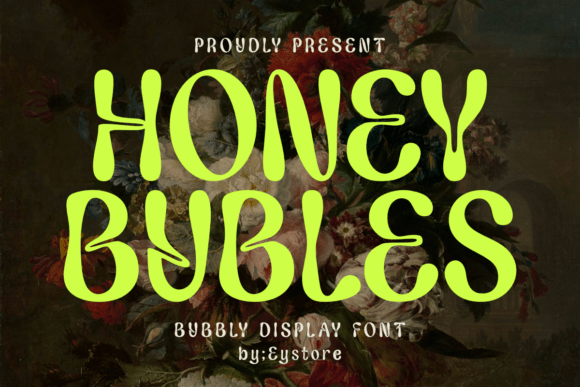
Integrating Honey Bubles into Professional Creative Workflows
Selecting the right typography is a strategic decision that influences brand perception, readability, and production efficiency. For designers, crafters, and small business owners, Honey Bubles serves as more than just a decorative element; it is a functional asset within a broader creative ecosystem. This playful and bubbly display font is engineered to deliver a sweet, cheerful aesthetic without sacrificing technical versatility. Understanding where this typeface fits into your planning, execution, and post-production phases ensures that your projects maintain high quality across both digital and physical mediums.
Honey Bubles distinguishes itself through bold rounded shapes and a soft organic flow. Unlike rigid geometric sans-serifs or overly complex scripts, this handwritten bubble style offers immediate visual warmth. It is specifically optimized for applications requiring high engagement, such as kids' designs, stickers, sublimation products, and merchandise. However, successful implementation requires treating the font as part of a cohesive system rather than an isolated choice. By integrating Honey Bubles thoughtfully into your workflow, you can streamline production while maintaining a consistent, friendly brand voice.
Pre-Production Planning and Asset Compatibility
Before opening design software, effective creators evaluate how a font interacts with their intended output method. Honey Bubles is designed with versatility in mind, but understanding its technical characteristics during the planning phase prevents costly revisions later. The font’s thick strokes and rounded terminals make it exceptionally durable for physical manufacturing processes, yet these same traits require specific considerations for digital scaling.
When planning a project involving print-on-demand (POD) items like t-shirts, mugs, or tote bags, consider the ink spread and material texture. The bold weight of Honey Bubbles provides sufficient surface area for vibrant color saturation in sublimation printing. In contrast, delicate serifs often fail on textured fabrics or bleed excessively on uncoated paper. During the asset preparation stage, verify that your file formats align with your production pipeline. While vector formats (SVG, EPS) are ideal for cutting machines like Cricut or Silhouette, ensure you have high-resolution raster backups for direct-to-garment (DTG) printing to preserve the smooth curves of the letterforms.
Licensing and organization are equally critical pre-production steps. As a professional resource, Honey Bubles should be cataloged within your asset management system alongside complementary typefaces. Pairing this display font with a clean, neutral body copy font creates a balanced hierarchy. Establishing these pairings before starting a project reduces decision fatigue and accelerates the layout process. Create style guides that define specific use cases for Honey Bubles, ensuring that every team member or freelancer understands when to deploy this cheerful aesthetic versus when to opt for standard corporate typography.
Execution Strategies for Digital and Print Media
During the active design phase, Honey Bubles functions best as a focal point. Its eye-catching style commands attention, making it ideal for headlines, logos, and short-form messaging. However, because it is a display font, restraint is necessary to maintain legibility and professional polish. Use this typeface to establish tone and emotion, then rely on secondary fonts to convey detailed information. This division of labor keeps layouts organized and ensures the user experience remains intuitive.
For digital projects, test Honey Bubbles across multiple screen sizes early in the design process. The organic flow of the characters renders beautifully on retina displays, but spacing may need adjustment for mobile interfaces. Utilize OpenType features if available to access alternate characters or ligatures that enhance the handmade feel without compromising alignment. When designing social media graphics or web banners, ensure sufficient contrast between the bubbly letterforms and the background. The font’s inherent playfulness works synergistically with bright, saturated color palettes, but it also performs well in monochrome when negative space is managed effectively.
In physical crafting and sublimation workflows, the execution phase involves translating digital precision into tangible results. The uniform stroke width of Honey Bubles simplifies the weeding process for vinyl projects, reducing waste and production time. For sticker makers, the rounded edges eliminate sharp points that are prone to peeling, extending the product's lifespan. When setting up files for laser engraving or embroidery, convert text to outlines to prevent formatting shifts. This technical step preserves the integrity of the soft organic flow regardless of the machine interpreting the data. Always run test prints or cuts to calibrate settings specifically for this font’s unique geometry.
Optimizing for Specific Product Categories
- Kids’ Designs and Educational Materials: Leverage the friendly, cartoon-style appearance to create approachable learning aids. Ensure leading (line spacing) is generous to accommodate the tall x-height and ascenders typical of bubble fonts.
- Apparel and Merchandise: Position Honey Bubles centrally or as a chest logo. The bold shapes read clearly from a distance, making it superior for event signage or team uniforms compared to thinner script alternatives.
- Packaging and Labels: Use the font to highlight flavor profiles, age groups, or "handmade" attributes. The tactile suggestion of the rounded forms reinforces premium, artisanal quality in consumer perception.
- Digital Content Creation: Incorporate the font into YouTube thumbnails, stream overlays, or blog headers to signal lighthearted content. Consistency in placement helps build recognizable visual branding over time.
Post-Production Quality Control and Long-Term Use
The integration of Honey Bubles extends beyond the initial creation of assets. Post-production quality control ensures that the font performs as expected in real-world scenarios. Review printed samples under various lighting conditions to confirm that the bold shapes do not appear muddy or overly heavy. For digital deliverables, validate accessibility standards; while display fonts are generally exempt from strict WCAG body text requirements, ensuring adequate color contrast remains a best practice for inclusive design.
Gathering feedback is essential for refining how you utilize this resource. Monitor customer responses to products featuring Honey Bubbles. Do they associate the typography with fun and joy as intended? Does the style resonate with the target demographic of moms, educators, and gift buyers? Quantitative sales data combined with qualitative reviews can inform future design decisions. If certain applications yield better engagement, document these insights in your internal knowledge base to guide upcoming campaigns.
Long-term asset management involves keeping your font library current and organized. As Honey Bubles becomes a staple in your toolkit, create reusable templates that already include the correct sizing, kerning, and color treatments. This standardization drastically reduces turnaround time for recurring projects like seasonal promotions or weekly social posts. Additionally, stay informed about updates or expanded character sets released by the foundry. New glyphs or language support can unlock international market opportunities or enable more complex typographic compositions without switching typefaces.
Strategic Value in Modern Creative Businesses
Incorporating Honey Bubles into your workflow is ultimately about balancing aesthetic appeal with operational efficiency. For freelancers and agencies, having a reliable go-to font for cheerful, family-oriented projects eliminates hours of searching through unsuitable options. For small business owners, it provides a cost-effective way to achieve custom lettering aesthetics without commissioning expensive hand-lettering services. The font’s adaptability across sublimation, vinyl, digital, and offset printing means you can maintain brand consistency across diverse revenue streams using a single typographic foundation.
Success with display typography lies in understanding context. Honey Bubbles excels because it solves specific problems: it adds personality to sterile layouts, improves durability in physical manufacturing, and communicates emotion instantly. By approaching this font with a process-oriented mindset—evaluating compatibility during planning, optimizing settings during execution, and validating performance post-production—you transform a simple design tool into a driver of business value. Whether creating bespoke stickers for an Etsy shop or developing a comprehensive curriculum for early childhood education, the deliberate application of Honey Bubles ensures your work stands out beautifully while meeting professional standards of quality and usability.
Ultimately, the goal is seamless integration. When a font feels natural to use and consistently delivers positive outcomes, it ceases to be just another file in your folder and becomes an integral part of your creative identity. Honey Bubles offers that rare combination of whimsy and reliability, empowering creators to add a touch of joy and charm to their work with confidence and precision. By respecting the technical nuances and leveraging its strengths strategically, you ensure that every project not only looks sweet but also functions flawlessly within your broader business objectives.