History Night: Integrating Bold Display Typography into Creative Workflows
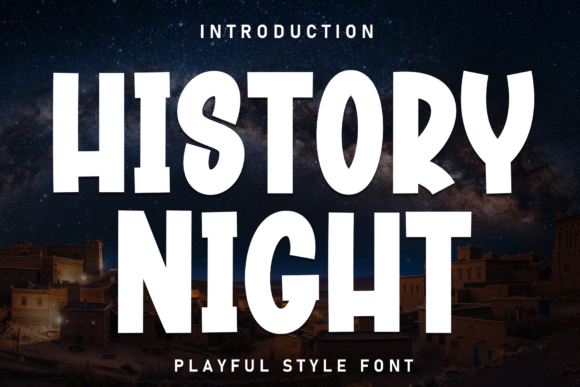
Selecting the right typeface is rarely just an aesthetic decision; it is a strategic component of visual communication that dictates how an audience processes information. For designers, marketers, and content creators working on projects that require a balance of authority and approachability, History Night serves as a specialized tool within the broader design system. This bold, energetic display font is characterized by chunky, high-impact letterforms and whimsical, slightly irregular curves. Understanding where this typeface fits into your production pipeline—from initial concepting to final asset export—ensures that its playful storytime aesthetic enhances rather than distracts from your core message.
Defining the Role of History Night in Visual Hierarchy
Before integrating any display font into a project, it is necessary to define its functional boundaries. History Night is not a workhorse text face; it is a headline specialist. Its sturdy yet joyful silhouette makes it ideal for capturing attention in specific contexts such as children’s book covers, adventure-themed event posters, movie titles, and creative branding. In a practical workflow, this means treating History Night as the primary anchor of your visual hierarchy.
When planning a layout, reserve this typeface for elements that require immediate emotional engagement. Its commanding yet friendly presence turns headlines into epic tales, but only if supported by appropriate negative space and complementary typography. During the wireframing or mood boarding phase, test History Night against your body copy candidates. Because the letterforms are intentionally irregular and chunky, they demand high contrast with cleaner, more structured sans-serif or serif companions. Establishing this relationship early prevents layout friction later in the execution stage.
Pre-Production: Licensing and Technical Preparation
Efficient workflows begin with proper asset management. Before opening your design software, verify that your licensing for History Night covers your intended use case. Display fonts often have different licensing tiers for digital, print, and web embedding. If you are designing for a museum’s night exhibit or a stellar astronomy blog, ensure your license permits large-format printing or webfont hosting respectively.
Technical preparation also involves setting up your environment for success. Install the full variable font family if available, as this provides greater control over weight and width without managing multiple static files. For web projects, subset the font file to include only the characters necessary for your headlines. History Night’s intricate curves can result in larger file sizes, so optimization is critical for maintaining site performance while delivering the intended visual impact.
- File Organization: Store font files in a centralized, cloud-synced asset library to ensure consistency across team members and devices.
- Style Guides: Document specific usage rules for History Night in your brand guidelines, including minimum point sizes and approved color pairings.
- Fallback Stacks: Define robust CSS fallback stacks for web implementations to preserve layout integrity if the custom font fails to load.
Execution Strategies for Print and Digital Media
The application of History Night varies significantly depending on the medium. In print environments like book covers or physical posters, the font’s tactile quality shines. The slightly irregular curves mimic hand-drawn lettering, adding a layer of organic warmth that digital perfection often lacks. When setting type for print, pay close attention to kerning. Display fonts with unique silhouettes often require manual optical adjustments to prevent awkward gaps between letters, especially at large scales. Trust your eye over default metrics to maintain the font’s cohesive rhythm.
For digital interfaces and astronomy blogs, readability and responsiveness take precedence. History Night works best when used sparingly in hero sections or section dividers. Avoid using it for navigation menus or interactive buttons where legibility at small sizes is paramount. Instead, leverage its energy to guide users through a narrative flow. On responsive sites, implement fluid typography scaling so that History Night maintains its proportional impact across mobile, tablet, and desktop viewports without breaking the layout or becoming illegible.
Pairing and Contrast Considerations
Successful integration relies heavily on what surrounds the display font. History Night’s playful nature pairs exceptionally well with neutral, highly readable body text. Consider combining it with:
- Geometric Sans-Serifs: Fonts like Futura or Century Gothic provide a clean, modern counterpoint that lets History Night’s whimsy stand out without competing.
- Traditional Serifs: Pairing with a classic serif creates a "storybook" dynamic, reinforcing the narrative quality suitable for educational content or museum exhibits.
- Monospaced Typefaces: For technical or data-heavy contexts like astronomy blogs, a monospace body font adds a utilitarian texture that contrasts beautifully with the organic display header.
Avoid pairing History Night with other decorative or script fonts. The goal is clarity and impact, not visual noise. Let the display font carry the emotional weight while supporting typefaces handle the informational load.
Workflow Integration Across Different Project Types
Different professional contexts require different implementation strategies for History Night. Understanding these nuances helps streamline decision-making during active projects.
Children’s Publishing and Education
In this sector, History Night functions as a literacy bridge. Its chunky forms are easily recognizable to early readers, while the irregularity suggests fun rather than academic rigidity. During the illustration phase, coordinate with artists to ensure the font’s color palette and texture harmonize with the artwork. Use the font to highlight key vocabulary or chapter titles, creating visual anchors that aid comprehension and retention. Quality control here involves testing prints at actual size to ensure the ink spread doesn’t close up the counters of the chunky letterforms.
Event Marketing and Branding
For adventure-themed events or museum exhibits, History Night acts as a tonal signifier. It signals to the audience that the experience will be immersive and engaging. In marketing workflows, create modular templates featuring History Night as the primary variable. This allows social media managers and content creators to rapidly produce on-brand assets without redesigning layouts from scratch. Consistency is key; establish locked positions for the headline treatment so that even user-generated content maintains professional polish.
Niche Content Creation
Bloggers and niche publishers, particularly in fields like astronomy or history, use typography to differentiate their content from generic competitors. History Night brings a sense of wonder that standard system fonts cannot achieve. Integrate the font into your CMS theme specifically for post titles and pull quotes. Create featured image templates that utilize the font to increase click-through rates on social platforms. Monitor analytics to see if the distinctive typography correlates with improved engagement metrics, adjusting size and placement based on real user data.
Quality Control and Long-Term Maintenance
Integrating a distinctive typeface requires ongoing vigilance to maintain quality standards. Regular audits of your design assets ensure that History Night continues to serve its intended purpose effectively.
Legibility Testing: Always test designs in context. A poster mockup on a 27-inch monitor looks different than a printed proof or a mobile screen. Verify that the whimsical curves remain distinct and don’t blur together at smaller sizes or lower resolutions.
Accessibility Compliance: While display fonts are generally exempt from strict WCAG text spacing requirements, ensure sufficient color contrast between History Night headlines and their backgrounds. The chunky weight can sometimes reduce perceived contrast, so use accessibility tools to validate ratios.
Version Management: Type foundries occasionally update fonts to fix bugs or add glyphs. Subscribe to update notifications for History Night and test new versions in a staging environment before deploying to live projects. This prevents unexpected rendering issues in established layouts.
Maximizing ROI Through Strategic Typography
Treating typography as a business asset rather than mere decoration transforms how you approach design procurement and implementation. History Night offers a specific return on investment by reducing the need for additional illustrative elements to convey tone. Its inherent personality does heavy lifting in establishing mood, potentially lowering production costs for custom lettering or complex graphics.
Furthermore, consistent use of a distinctive typeface builds brand equity. Over time, audiences associate the chunky, joyful silhouette of History Night with your specific content or organization. This recognition accelerates communication, as viewers instantly understand the context and tone before reading a single word. By systematically integrating this font into your workflows, documenting its usage, and maintaining technical best practices, you convert a stylistic choice into a durable competitive advantage.
Ultimately, the successful deployment of History Night depends on disciplined creativity. It demands respect for its limitations and celebration of its strengths. Whether you are crafting an epic tale for young readers or illuminating complex astronomical concepts, this typeface provides the structural confidence needed to make your message resonate. Approach it not as a novelty, but as a precision instrument in your creative toolkit, and it will consistently deliver results that are both visually striking and strategically sound.