Tenth: Elevating Creative Projects with Bold Display Typography
When a design project feels stagnant or overly safe, the solution often lies in changing the typographic voice. Tenth is a decorative display font engineered specifically to serve as the visual anchor of a layout. Unlike versatile workhorse typefaces designed for long-form reading, Tenth exists to command attention. Its distinct artistic elements and strong character make it an ideal choice for creators looking to break away from ordinary aesthetics and inject a sense of high-end professionalism into their work. This typeface bridges the gap between raw artistic expression and polished commercial viability, offering a unique texture that transforms standard headlines into memorable brand assets.
Defining the Visual Identity of Tenth
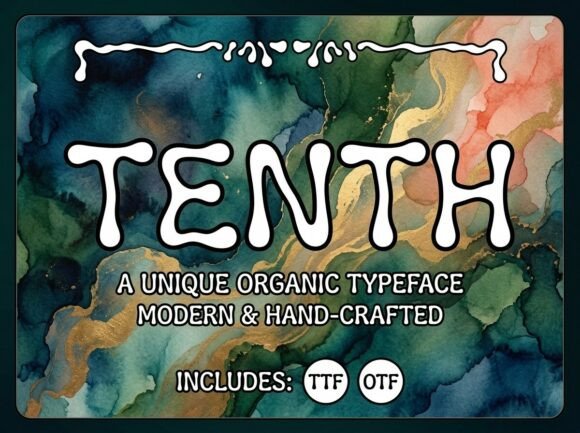
At its core, Tenth is a statement piece. It is not a background player; it is the protagonist of your visual hierarchy. The font features robust strokes and intricate detailing that maintain legibility at large sizes while providing enough textural interest to stand alone without supporting graphics. For designers accustomed to minimalist sans-serifs, Tenth offers a necessary counterweight. It brings warmth and personality to digital interfaces and print collateral alike. The aesthetic leans towards modern luxury and creative confidence, making it particularly effective for projects that need to convey authority without appearing sterile or corporate.
Strategic Applications in Branding and Packaging
The most immediate impact of Tenth is found in branding environments where differentiation is critical. In a crowded marketplace, generic typography can cause even premium products to blend into the shelf noise. Tenth solves this by acting as a built-in logo mark. When used on packaging, the font’s decorative nature reduces the need for excessive iconography or illustration. A simple wordmark set in Tenth carries enough visual weight to define the entire package design system.
Consider the practical application in the beverage or artisanal food industry. A craft brewery or specialty coffee roaster using Tenth for their label typography immediately signals a departure from mass-market production. The font suggests craftsmanship and intentionality. Similarly, in fashion and apparel, Tenth works exceptionally well for hang tags, embroidery patterns, and seasonal campaign headers. It communicates a boutique sensibility that resonates with consumers seeking authenticity over ubiquity. Because the font has such a defined personality, it helps establish brand recognition faster than neutral typefaces that require years of marketing spend to associate with a specific feeling.
Digital Impact and Editorial Layouts
In digital spaces, attention spans are fleeting. Tenth serves as an effective scroll-stopper for social media graphics, web banners, and editorial covers. Content creators and social media managers will find that pairing this display font with clean, minimal body copy creates a sophisticated contrast that boosts engagement. For magazine layouts or digital zines, Tenth excels as a drop cap or a pull-quote treatment. It breaks up dense blocks of text and guides the reader’s eye through the content flow.
Web designers should view Tenth as a tool for establishing above-the-fold dominance. On landing pages, the headline is often the single most important conversion element. Using a typeface with this level of character ensures the value proposition is felt emotionally before it is processed intellectually. However, because of its decorative nature, it pairs best with highly legible geometric or humanist sans-serifs for UI elements and navigation. This juxtaposition highlights Tenth’s strengths while maintaining functional usability across devices.
Navigating Technical Specifications and File Formats
Understanding the technical delivery of Tenth ensures a smooth workflow across different platforms and software environments. The font is provided in two primary formats, each serving a distinct purpose in a professional pipeline.
- OTF (OpenType Format): This is the preferred format for professional design software like Adobe Illustrator, InDesign, and Photoshop. OTF files support advanced typographic features and generally offer better rendering for print and complex vector work. If you are designing logos, packaging, or high-resolution editorial spreads, the OTF file should be your default choice.
- TTF (TrueType Format): This format ensures seamless performance across all operating systems and is often more compatible with non-design-specific software. If you are working in Microsoft Office, Canva, or older versions of desktop publishing tools, the TTF file guarantees that the font renders correctly without installation errors.
Having both formats available eliminates friction when collaborating with clients or teams who may not have access to the full Adobe Creative Cloud suite. It ensures that the visual integrity of the project remains intact regardless of where the final adjustments are made.
Critical Considerations: The All-Caps Constraint
Before integrating Tenth into a project, it is vital to understand its structural limitation: it is an all-caps display typeface. By design, it does not contain lowercase letters. Typing in lowercase will either result in capital letters or missing glyphs, depending on the software. This is not a flaw but a deliberate stylistic decision that enhances the font's uniformity and monumental quality.
This constraint requires a shift in how designers approach hierarchy. Without lowercase letters to create natural rhythm and varying x-heights, visual variety must be achieved through other means. Designers should leverage tracking (letter-spacing), size scaling, and color contrast to create distinction between primary and secondary headlines. Attempting to force Tenth into body copy or subheads requiring sentence case will lead to readability issues and visual fatigue. Reserve this typeface strictly for logos, titles, short phrases, and decorative initials where its bold, uniform structure can shine without overwhelming the viewer.
Pairing Strategies for Balanced Compositions
Because Tenth is so visually active, successful implementation depends heavily on what surrounds it. The goal is to let the display font breathe. Avoid pairing it with other decorative or script fonts, as this creates visual competition and clutter. Instead, opt for quiet, structured companions. A clean grotesque sans-serif or a refined serif with high readability provides the necessary negative space for Tenth to perform.
In practical terms, if Tenth is used for a poster title at 72pt, the supporting information should be set in a neutral typeface at a significantly smaller scale with generous leading. This extreme contrast reinforces the premium feel of the display font. For branding projects, consider using Tenth solely for the logotype and perhaps one recurring campaign element, while building the rest of the identity system around a versatile family that can handle the heavy lifting of communication. This disciplined approach prevents the brand from becoming a caricature of its own style.
Evaluating Fit for Specific Industries
While Tenth is versatile within the realm of display typography, it aligns naturally with specific sectors. Creative agencies, architecture firms, luxury real estate, and high-end hospitality brands will find its aesthetic perfectly matched to their market positioning. The font conveys stability and curated excellence. Conversely, industries requiring a soft, approachable, or playful tone—such as pediatric healthcare or budget-friendly retail—may find Tenth too imposing or serious.
For freelancers and agency designers, adding Tenth to the toolkit provides a reliable option for clients requesting "something different" without resorting to trendy, disposable styles. It is a typeface that ages well because its distinctiveness comes from structural confidence rather than fleeting decorative fads. Whether applied to a vinyl record sleeve, a tech startup’s pitch deck, or a wedding invitation suite, Tenth delivers a consistent message of quality and intentional design. Understanding its specific role as a centerpiece allows creators to harness its full potential, transforming ordinary layouts into compelling visual experiences that resonate with audiences and elevate the perceived value of the work.