Integrating Meppid into Modern Retro Design Workflows
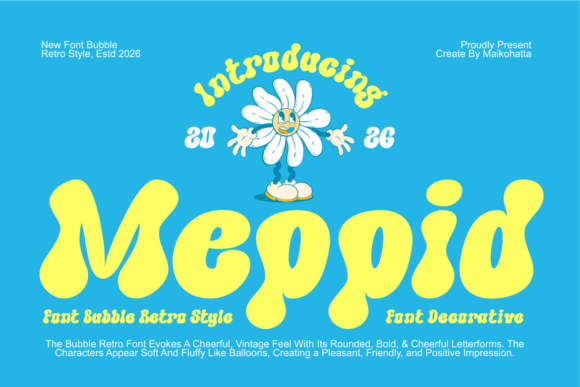
In the current landscape of graphic design and visual branding, the resurgence of 70s aesthetics has moved beyond fleeting trends to become a stable stylistic choice for businesses seeking warmth and approachability. Meppid serves as a specialized tool within this movement, offering a cheerful and playful retro bubble font that anchors designs in a joyful vintage vibe. For professionals ranging from freelance designers to marketing directors, understanding how to implement Meppid is less about nostalgia and more about leveraging specific typographic psychology to achieve tangible communication goals. This typeface features soft, rounded, and bold letterforms that resemble fluffy bubbles, creating a visual texture that immediately signals friendliness and accessibility.
When planning a creative project, typography selection often dictates the entire production pipeline. Meppid fits into this process not merely as a decorative afterthought, but as a foundational element that influences layout grids, color palettes, and copy hierarchy. Its unique structure requires a deliberate approach to spacing and pairing to ensure legibility while maintaining its intended character. Whether you are developing packaging for a consumer product or designing social media assets for an educational platform, integrating this typeface effectively requires balancing its inherent playfulness with professional execution standards.
Strategic Application in Brand Identity Development
Before opening any design software, it is essential to determine where Meppid functions best within a brand ecosystem. Because of its distinct personality, it rarely works as a comprehensive system font. Instead, it excels as a primary display typeface for logos, headlines, and short-form messaging. During the discovery phase of a branding project, evaluate whether the client’s values align with the warm, nostalgic, and positive impression that Meppid provides. It is particularly effective for brands targeting families, wellness communities, artisanal food producers, or lifestyle products where trust and comfort are paramount.
In practical execution, use Meppid to establish the emotional tone before refining structural elements. When designing a logo, the font’s bubbly nature allows for tight kerning and overlapping characters without losing clarity, which can create a cohesive, stamp-like mark. However, this same characteristic means it should be avoided for long-form body text or complex data tables. A common workflow error is attempting to force high-personality display fonts into utility roles. Reserve Meppid for touchpoints where immediate emotional connection is the priority, such as website hero sections, event posters, or unboxing experiences, and pair it with a neutral sans-serif or clean geometric typeface for functional information.
Technical Implementation and Layout Considerations
During the active design phase, technical adjustments are necessary to maximize the usability of Meppid. The font’s rounded terminals and inflated strokes occupy significant negative space. In layout design, this means standard leading and tracking values often require modification. Increase line height slightly when using Meppid in multi-line headlines to prevent the "bubbles" from visually colliding, which can reduce readability. Conversely, for single-word logotypes or stickers, tighter tracking can enhance the sense of cohesion and make the letterforms feel like a singular, unified shape rather than individual characters.
Compatibility across platforms is another critical factor in the implementation process. When using Meppid for digital assets, always test rendering on various screen sizes. Bold, rounded fonts can sometimes bleed or appear heavier on low-resolution displays. To mitigate this, consider creating outlined vector versions for static graphics like social media posts or web banners to preserve the exact integrity of the curves. For dynamic web environments, ensure proper fallback fonts are defined in your CSS stack. Since Meppid has a specific x-height and width, choose a fallback that mimics these proportions to prevent drastic layout shifts if the custom font fails to load.
Color and Texture Integration
The visual weight of Meppid interacts uniquely with color theory and texture. Its groovy 70s inspiration pairs naturally with warm earth tones, muted pastels, and high-contrast duotones. However, because the letterforms are already visually "heavy," applying drop shadows or outer glows requires restraint. Excessive effects can muddy the soft edges that define the font’s appeal. In print workflows, consider how ink spread might affect the rounded corners; a slight trap or choke adjustment may be necessary for small-scale packaging to maintain crispness. For digital projects, flat colors often work better than complex gradients within the glyphs themselves, allowing the shape to remain the focal point.
Workflow Efficiency Across Creative Projects
Efficiency in creative work comes from knowing exactly when and how to deploy specific assets. Meppid streamlines the ideation process for projects requiring a retro-inspired artwork style by providing an instant thematic anchor. Rather than spending hours manipulating standard fonts to look vintage, starting with Meppid allows designers to focus time on composition and illustration. This is particularly valuable for freelancers and agencies managing high-volume output for social media or seasonal campaigns.
- Pre-Production: Create a style tile featuring Meppid alongside proposed color swatches and supporting imagery to validate the vibe before full production begins.
- Asset Creation: Develop a library of pre-set Meppid headline treatments (e.g., arched, wavy, stacked) to speed up recurring social media templates.
- Client Review: Present Meppid options in context rather than isolation. Show the font applied to a mockup of the actual deliverable to help stakeholders understand its scale and impact.
- File Organization: Tag Meppid files clearly in asset management systems with keywords like "retro," "display," and "70s" to ensure team members can locate it quickly during future iterations.
For educators and content creators producing kids-themed designs, Meppid reduces the cognitive load associated with making content feel age-appropriate. The font’s inherent softness removes the need for excessive illustrative decoration to signal "fun." This efficiency extends to merchandise and print-on-demand workflows, where the bold letterforms reproduce reliably across different substrates, from cotton t-shirts to ceramic mugs, without requiring intricate detail that might be lost in manufacturing.
Maintaining Consistency and Quality Control
Long-term use of a distinctive typeface like Meppid requires established guidelines to prevent brand fatigue or inconsistency. As part of your post-project handoff or internal documentation, create specific usage rules. Define the minimum and maximum point sizes for both print and digital applications. Specify approved color combinations and prohibited treatments (such as extreme distortion or clashing textures). These guardrails ensure that even as different team members or vendors interact with the brand assets, the joyful vintage vibe remains consistent and professional.
Quality control also involves monitoring cultural relevance. While Meppid is rooted in 70s aesthetics, it avoids being a caricature. Regularly audit your designs to ensure the font feels fresh and intentional rather than dated. This might involve updating supporting photography styles or adjusting color grading to keep the overall presentation modern. By treating Meppid as a flexible component of a broader design system rather than a static relic, you extend its useful lifespan and ROI.
Collaborative Integration
When working with teams or external partners, clear communication about Meppid’s role prevents friction. If handing off files to a developer or printer, provide notes on the font’s unique metrics. For copywriters, explain that headlines set in Meppid have limited character counts due to the wide letterforms. Encouraging writers to draft shorter, punchier copy early in the process ensures the text fits the design naturally without awkward resizing later. This collaborative alignment transforms Meppid from a simple aesthetic choice into a driver of efficient, cross-disciplinary workflow.
Ultimately, the successful integration of Meppid relies on respecting its strengths and acknowledging its limitations. It is a powerful asset for creating warm, nostalgic, and positive impressions, but it demands thoughtful application. By embedding this typeface into your planning, execution, and quality assurance processes, you ensure that every project benefits from its unique charm without sacrificing professional rigor. Whether used for a boutique logo, a festival poster, or a children’s book cover, Meppid delivers value when treated as a strategic design instrument tailored for connection and joy.