Joyful Mind: Authentic Retro Typography for Modern Brands
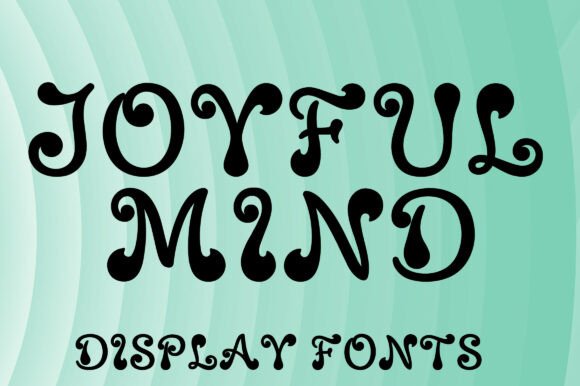
Capturing the genuine essence of 1960s and 70s design requires more than simply applying a filter or choosing a generic rounded typeface. True psychedelic aesthetics rely on specific structural rhythms that evoke movement, emotion, and cultural memory. Joyful Mind serves as a specialized tool for designers and brand strategists aiming to channel this vibrant energy with authenticity rather than caricature. As a display font defined by bold, undulating letterforms and dramatic teardrop terminals, it offers a distinct visual vocabulary that mimics the liquid motion of vintage lava lamps and classic concert posters. Understanding how to leverage these specific typographic traits can significantly enhance communication for independent lifestyle brands, music festivals, and retro-inspired apparel labels.
Establishing Emotional Resonance Through Organic Form
The primary value of Joyful Mind lies in its ability to communicate feeling before content. In an era dominated by clean, geometric sans-serifs, the exaggerated curves and high-contrast rhythm of this typeface create an immediate emotional hook. The undulating baseline and fluid terminals suggest relaxation, creativity, and freedom. For marketers and creators, this is not merely an aesthetic choice but a strategic one. When promoting events, wellness products, or artistic endeavors, the typography itself performs the heavy lifting of setting the mood.
Consider the practical application for a yoga studio or meditation app rebranding to appeal to a younger demographic seeking connection to counter-culture roots. Using a standard serif might feel too academic, while a modern geometric sans could feel too clinical. Joyful Mind bridges this gap by offering heritage without heaviness. The organic shapes signal approachability and mindfulness, aligning the visual identity directly with the user’s desired emotional state. This reduces the cognitive load required to understand the brand's vibe, allowing the message to land faster and more effectively.
Optimizing Social Media Headers and Digital Impact
Digital environments present unique challenges for ornate typography. Small screens often crush delicate details, making many retro revivals illegible in mobile feeds. Joyful Mind addresses this through its heavy weight and robust construction. The thick strokes maintain integrity even when scaled down for Instagram stories or TikTok overlays, ensuring that the "groovy" aesthetic does not sacrifice readability.
For social media managers and content creators, this durability translates to efficiency. You can use a single typeface across multiple formats—from large YouTube thumbnails to compact story stickers—without needing to swap fonts to preserve legibility. The high contrast between the thick stems and thinner connecting curves creates natural focal points that arrest scrolling behavior. When designing headers for groovy-revival campaigns, pair this font with solid, saturated background colors to maximize the silhouette effect. The teardrop terminals act as visual anchors, guiding the eye through short headlines and ensuring key information remains accessible despite the decorative nature of the letterforms.
Strengthening Independent Lifestyle Branding
Independent brands often struggle to differentiate themselves from mass-market competitors who have also adopted retro trends. The distinction frequently lies in typographic nuance. Joyful Mind supports differentiation through its specific adherence to psychedelic structural principles rather than generic nostalgia. The dramatic teardrop terminals and liquid movement are not arbitrary decorations; they are historical references that signal deep genre knowledge to enthusiasts and collectors.
For entrepreneurs in the vinyl, vintage clothing, or craft beverage sectors, this specificity builds trust. It suggests that the brand understands the culture it participates in. When designing packaging or merchandise, the font’s bold presence allows for minimal layout strategies. Because the letterforms are so expressive, they often require less supporting graphics. A t-shirt design featuring only the brand name set in Joyful Mind can be as impactful as a complex illustration, reducing production costs and simplifying inventory decisions. This efficiency is particularly valuable for small business owners managing tight budgets and timelines.
Practical Pairing Strategies for Hierarchy and Clarity
A common pitfall when working with psychedelic display fonts is overuse. Joyful Mind is designed for high-impact moments, not extended reading. To maximize its effectiveness, professionals must treat it as a spice rather than the main ingredient. Successful implementation requires pairing it with neutral, highly legible typefaces that provide necessary contrast.
- Headlines vs. Body Copy: Reserve Joyful Mind strictly for titles, logos, and call-to-action buttons. Pair it with a clean grotesque sans-serif like Helvetica Now or Inter for body text. The neutrality of the body copy amplifies the personality of the display font without competing for attention.
- Spacing Considerations: Due to the exaggerated curves and swashes, default tracking may cause collisions in tighter settings. Manually adjusting letter spacing is often necessary to maintain the liquid flow without creating awkward gaps. Tighter tracking generally enhances the retro poster aesthetic, while looser tracking can improve readability on digital screens.
- Color Interaction: The high-contrast rhythm of the font interacts dynamically with color. Dark text on light backgrounds emphasizes the internal negative space, while light text on dark backgrounds highlights the outer silhouette. Test both approaches to determine which best suits the specific medium and lighting conditions of the final application.
Navigating Limitations and Contextual Fit
While Joyful Mind excels in specific niches, it is not a universal solution. Recognizing where this typeface falls short is as important as knowing its strengths. The strong personality of the letterforms can clash with corporate, technical, or luxury contexts that demand restraint and precision. A financial services firm or a medical technology company would likely find the undulating forms undermine perceptions of stability and accuracy.
Additionally, accessibility must remain a priority. While the heavy weight aids visibility, the decorative nature of the characters can pose challenges for readers with dyslexia or visual processing disorders. Always ensure that critical information conveyed in Joyful Mind is supported by alt text, captions, or secondary typographic reinforcement. If a project requires extensive paragraphs of text or operates within a conservative industry framework, comparing Joyful Mind against more subdued retro serifs or softened sans-serifs is a prudent step. The goal is effective communication, not just stylistic expression.
Supporting Creative Workflows and Decision Making
For freelancers and agency designers, having a reliable psychedelic display font in the toolkit streamlines the ideation phase. Instead of spending hours modifying existing fonts to achieve a liquid look or searching through low-quality free alternatives, Joyful Mind provides a professional-grade foundation. This reliability supports faster turnaround times for client pitches and mockups.
Furthermore, the font’s distinct character helps simplify creative direction meetings. Presenting a mood board featuring Joyful Mind quickly establishes a clear tonal benchmark. Stakeholders can immediately grasp whether the "free-spirited-and-funky soul" aligns with their vision, facilitating quicker feedback loops. This clarity prevents scope creep and ensures that the final deliverables meet expectations regarding style and intensity. By serving as a definitive reference point, the typeface becomes a collaborative tool that aligns teams and accelerates project momentum.
Ultimately, Joyful Mind offers a bridge between historical appreciation and contemporary utility. It empowers creators to tap into the enduring appeal of 60s and 70s aesthetics while maintaining the functional standards required for modern branding. Whether used for a festival poster, a boutique label, or a digital campaign, its success depends on thoughtful application that respects both the form’s heritage and the audience’s needs. By focusing on emotional resonance, digital durability, and strategic pairing, professionals can harness this vibrant energy to create work that feels both timeless and timely.