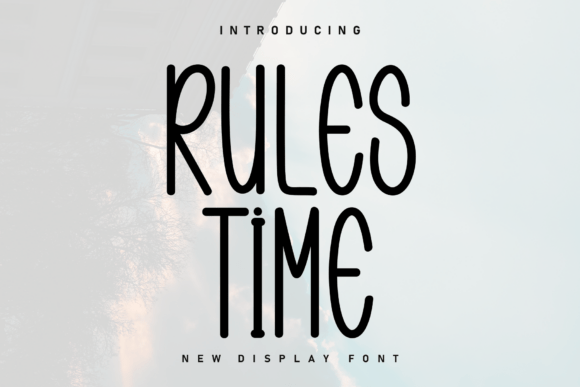
Rules Time Font: Heartfelt Design for Modern Projects
In a digital landscape often dominated by rigid geometry and sterile sans-serifs, finding a typeface that feels genuinely human can transform a project. Rules Time is a charming handwritten font filled with a sense of heartfelt perfection that bridges the gap between casual scribbles and professional typography. Its smooth strokes and organic lines evoke a relaxed atmosphere, making it an essential tool for designers who need to convey warmth without sacrificing legibility. Unlike distressed or overly chaotic script fonts, Rules Time maintains a clean structure that allows it to function effectively in both display and short-form body contexts.
The true value of this typeface lies in its versatility. It does not demand attention through aggression; instead, it invites the viewer in through familiarity. For creators, marketers, and small business owners, this distinction is crucial. You are often tasked with building trust and emotional connection in seconds. Rules Time provides a visual shorthand for authenticity, suggesting that a real person stands behind the brand, product, or message. Understanding how to leverage this specific aesthetic requires looking beyond simple decoration and treating the font as a strategic communication asset.
Elevating Brand Identity with Organic Typography
Branding is perhaps the most impactful arena for applying Rules Time. When developing a visual identity for lifestyle brands, artisanal products, or wellness services, standard corporate fonts can sometimes feel too distant. This handwritten style introduces a layer of approachability that aligns perfectly with values centered on care, craftsmanship, and community. However, successful implementation requires restraint and hierarchy.
Consider using Rules Time specifically for secondary brand elements rather than the primary logotype, unless the brand is exclusively personal or boutique. It works exceptionally well for taglines, packaging accents, and signature-style sign-offs. For example, a coffee roaster might use a bold serif for the company name but employ Rules Time for tasting notes or seasonal greetings on the bag. This contrast creates a dynamic visual rhythm. The structured font establishes authority, while the handwritten element adds narrative depth. This pairing prevents the design from looking amateurish while retaining the desired cozy aesthetic.
- Signature Elements: Use the font to mimic a founder’s signature on certificates of authenticity or welcome cards.
- Packaging Callouts: Highlight limited edition status or special ingredients with organic text to differentiate from standard product lines.
- Social Media Templates: Create reusable quote templates where the handwritten font emphasizes key emotional words within a cleaner layout.
Practical Applications for Invitations and Events
Event stationery demands a balance of information clarity and emotional tone. Rules Time excels here because its "heartfelt perfection" suggests intimacy without becoming illegible. Many script fonts fail in practical application because their flourishes obscure letterforms at smaller sizes. Rules Time avoids this pitfall through consistent stroke width and open counters.
For wedding invitations, this typeface serves as an excellent choice for names, dates, or romantic excerpts, while a complementary serif handles the logistical details like venue addresses and times. This ensures guests can easily read critical information while still feeling the romance of the occasion. Beyond weddings, consider its utility for corporate events, workshops, or galas. A handwritten font on a conference badge or workshop agenda softens the institutional feel of the event, signaling to attendees that the experience will be interactive and human-centric rather than purely academic or transactional.
When designing for print, always test Rules Time at the intended physical size. What looks elegant on a 27-inch monitor may become cramped on a 5x7 invitation card. Adjust tracking slightly if necessary to maintain the airy, relaxed atmosphere that defines the font's character. The goal is effortless readability that supports the event's mood.
Digital Content and Social Media Engagement
In the realm of social media and digital marketing, stopping the scroll is the primary objective. Users have developed banner blindness to polished, stock-photo-heavy graphics. Text-based graphics utilizing authentic typography like Rules Time can disrupt this pattern by mimicking the aesthetic of personal content. When a branded post looks slightly more like a note from a friend than an advertisement, engagement rates often improve.
Content creators and bloggers can utilize this font to add emphasis to carousel slides or Pinterest pins. Because the strokes are smooth and organic, they photograph well against textured backgrounds like paper, linen, or matte colors. Avoid placing Rules Time over busy photographic backgrounds without adequate overlay or masking, as the varying stroke widths can get lost in visual noise. Instead, let the typography breathe on solid or subtly graded backgrounds to maximize impact.
- Identify the Emotional Hook: Determine which word or phrase in your caption carries the most emotional weight.
- Create Visual Hierarchy: Set that keyword in Rules Time at a larger scale, keeping supporting text in a simple sans-serif.
- Maintain Consistency: Establish a set color palette and placement rule for the handwritten element across all posts to build recognition.
- Test Accessibility: Ensure sufficient contrast ratios between the handwritten text and background for users with visual impairments.
Pairing Strategies for Professional Results
The difference between a novice design and a professional composition often comes down to font pairing. Rules Time has a distinct personality, so it requires partners that provide stability without competing for attention. Avoid pairing it with other decorative scripts or highly stylized display serifs, as this creates visual conflict and reduces legibility.
Instead, look for typefaces with neutral characteristics. Clean geometric sans-serifs provide a modern counterpoint that grounds the organic flow of Rules Time. Alternatively, traditional transitional serifs offer a classic elegance that complements the handwritten feel without mimicking it. The key is contrast. If Rules Time is the expressive voice, the supporting font should be the steady narrator. This relationship allows you to use the handwritten font more liberally because the surrounding typography provides a safe structural framework.
For educators and course creators, this pairing strategy is vital for instructional materials. Use the handwritten font for encouraging sidebars, tips, or personal anecdotes, while keeping lesson content in a highly readable body font. This delineation helps students cognitively separate core curriculum from supplementary encouragement, enhancing the learning experience through thoughtful typographic cues.
Maintaining Clarity and Authenticity
While Rules Time evokes a sense of handmade charm, it must still serve functional communication goals. Overusing any decorative element dilutes its power. If every headline, subhead, and button uses a handwritten font, the design loses its focal points and becomes exhausting to navigate. Treat Rules Time as a spice, not the main ingredient. Reserve it for moments where emotion, emphasis, or personal connection is the primary objective.
Furthermore, ensure that the usage aligns with your actual brand voice. If your messaging is technical, legal, or urgent, a relaxed handwritten font may send mixed signals. Authenticity in design means congruence between form and function. Rules Time is ideal for storytelling, gratitude, creativity, and community building. By respecting these boundaries, you preserve the font’s ability to resonate deeply with your audience. When applied with intention and restraint, it transforms standard layouts into memorable experiences that feel crafted rather than generated.