Wasilah Font: Modern Design Meets Islamic Tradition
Selecting the right typeface is often about more than just legibility; it is about establishing an immediate emotional and cultural connection. Wasilah stands out in the crowded landscape of display fonts because it successfully bridges two worlds that are often treated separately: strict geometric modernism and profound Islamic heritage. For designers, marketers, and community leaders, this font offers a visual vocabulary that speaks to contemporary aesthetics without abandoning traditional reverence. It is not merely a stylistic choice but a strategic tool for communication in spaces where culture and modernity must coexist harmoniously.
Defining the Aesthetic of Wasilah
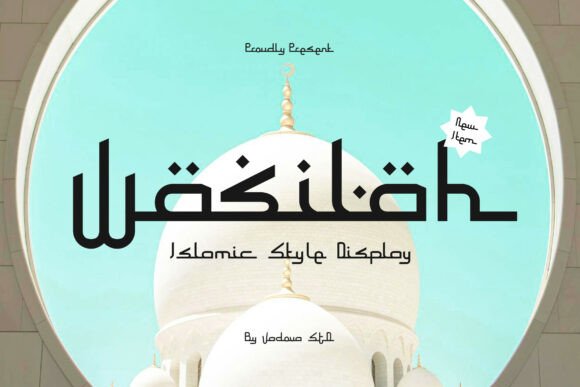
At its core, Wasilah is a distinctive modern display font. Its construction relies on geometric precision, utilizing clean lines and balanced proportions that align with current international design standards. However, what separates it from generic sans-serif or geometric typefaces is the subtle integration of Islamic calligraphic influences. The letterforms carry a rhythm and flow reminiscent of traditional script, yet they remain fully functional within Latin-based layouts. This duality creates a sophisticated energy that feels both fresh and deeply rooted. It avoids the trap of looking like a novelty or a pastiche, instead offering a mature typographic solution for brands and projects that require authenticity.
Priorities for Professional Designers and Agencies
For experienced graphic designers and branding agencies, the primary evaluation criteria for any typeface include versatility, technical quality, and distinctiveness. When considering Wasilah, professionals are likely looking beyond the initial visual impact to assess how the font performs across various media. The geometric foundation of Wasilah makes it highly scalable, retaining clarity on large-format event signage while maintaining elegance in digital headers. Professionals value this reliability because it reduces the friction between concept and execution.
In a commercial context, this font serves as a powerful differentiator. Agencies working with clients in the modest fashion industry, halal finance, or luxury hospitality need assets that signal premium quality. Wasilah provides a way to avoid clichéd oriental tropes while still honoring the client's cultural identity. For these users, the return on investment comes from the font’s ability to elevate brand perception. They are less concerned with learning curves and more focused on licensing flexibility, kerning consistency, and how well the typeface pairs with neutral body text. The goal is seamless integration into comprehensive identity systems where tradition supports, rather than overshadows, modern messaging.
Educators and Community Organizers
The priorities shift significantly when the user is an educator, religious leader, or community organizer. For this demographic, readability and tone are paramount over avant-garde styling. Educational materials, such as textbooks for Islamic studies, workshop handouts, or madrasa newsletters, require typography that commands respect without feeling archaic. Wasilah offers a middle ground that appeals to younger generations accustomed to digital interfaces while satisfying older community members who value traditional aesthetics.
Ease of use becomes a critical factor here. Unlike professional designers who may manipulate vector points, educators and organizers often work within templates or standard word processing software. They need a font that looks intentional and polished straight out of the box. Wasilah’s strong personality allows it to function effectively as a standalone title treatment, reducing the need for complex layout skills. For example, using this typeface for a Ramadan schedule or an Eid greeting card instantly communicates the significance of the occasion. The value proposition for this group is largely emotional and communal; the font acts as a visual anchor that reinforces shared values and enhances the dignity of educational and spiritual content.
Entrepreneurs and Small Business Owners
Small business owners operating in niche markets face unique challenges. They often lack dedicated design teams and must create marketing assets quickly and cost-effectively. Whether running an online bookstore, a boutique travel agency, or a wellness blog, these entrepreneurs need visual shorthand that tells customers exactly who they are. Wasilah serves as an efficient branding accelerator for businesses targeting Muslim consumers or those interested in Islamic arts and culture.
For this audience, the decision-making process balances cost against long-term utility. They are evaluating whether this single font can serve multiple purposes across their business. Can it work for Instagram stories, product packaging, and email headers simultaneously? Wasilah’s bold, display-oriented nature makes it particularly effective for social media graphics where stopping the scroll is essential. Unlike corporate brands that might use the font subtly, small businesses often leverage its full expressive potential to build recognition. The practical benefit here is speed and cohesion; by adopting a typeface with such specific cultural resonance, entrepreneurs can bypass lengthy design iterations and achieve a professional, culturally aligned look immediately.
Evaluating Suitability Based on Project Goals
Determining whether Wasilah is the correct choice requires an honest assessment of your project’s specific objectives. Not every design benefits from a typeface with such a strong voice. Understanding the nuances of application helps prevent misuse and ensures the font adds value rather than distraction.
- Cultural Resonance vs. Neutrality: If your goal is to remain culturally agnostic or universally corporate, Wasilah may be too specific. However, if the objective is to signal inclusivity, heritage, or spiritual mindfulness, it is an ideal candidate.
- Hierarchy and Function: As a display font, Wasilah excels at headlines, logos, and short quotes. Readers should evaluate their need for extended body text separately. Pairing Wasilah with a clean, neutral sans-serif for paragraphs usually yields the best results, preserving the display font’s impact without sacrificing readability.
- Audience Demographics: Consider the age and background of the end viewer. Younger, design-literate audiences often appreciate the fusion of geometry and tradition as a sign of progressive identity. More conservative audiences may respond to the underlying familiarity of the forms. Wasilah tends to bridge this gap effectively, but testing with a sample audience is always prudent.
- Medium of Delivery: Evaluate where the type will live. On high-resolution screens and printed paper, the geometric details shine. In low-resolution environments or extremely small sizes, intricate cultural details can sometimes be lost. Ensure the intended size allows the font’s character to remain intact.
Creative Exploration for Hobbyists and Content Creators
For hobbyists, bloggers, and independent content creators, the relationship with typography is often experimental and personal. These users prioritize creativity and self-expression over rigid commercial guidelines. Wasilah offers a rich playground for exploring the intersection of faith, culture, and digital art. Content creators focusing on lifestyle, spirituality, or cultural commentary can use this font to establish a cohesive visual theme across platforms like Pinterest, TikTok, or personal blogs.
The learning value for this group is significant. Working with a typeface that carries historical weight encourages creators to think more deeply about the meaning behind their visuals. It moves design beyond mere decoration into the realm of storytelling. A hobbyist designing digital journal pages or printable wall art might find that Wasilah transforms a simple quote into a piece of meaningful decor. For these users, the font is not just a utility but a source of inspiration that validates and elevates their creative voice within a specific cultural context.
Making an Informed Typographic Decision
Ultimately, the decision to incorporate Wasilah into a project should stem from alignment between the font’s inherent qualities and the user’s communicative intent. It is a specialized tool designed for specific contexts, and its strength lies in that specificity. Beginners should feel empowered to use it as a shortcut to professional-looking cultural design, while experts can appreciate its technical construction and market positioning.
When evaluating this typeface, move beyond the preview image and consider the lifecycle of your project. Ask whether the font supports the message you intend to convey over time. Does it possess the gravity required for spiritual content? Does it have the sleekness needed for modern commerce? By matching these attributes to your unique needs—whether you are educating students, building a brand, or expressing personal creativity—you ensure that Wasilah functions not just as a decorative element, but as a foundational component of effective, respectful, and resonant communication.