Broome: Strategic Application of Rugged Display Typography
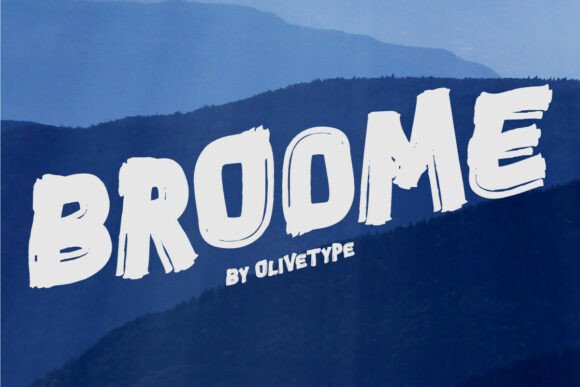
In the landscape of visual communication, typography functions as more than a vessel for text; it serves as an immediate indicator of brand personality and strategic intent. Broome is a bold brush display font that captures raw energy and rugged attitude in every stroke, distinguishing itself from the saturated market of clean, geometric sans-serifs. For entrepreneurs, marketers, and creative directors, selecting Broome is not merely an aesthetic preference but a calculated decision to signal authenticity, heritage, and dynamic movement. Designed with a gritty, hand-painted texture, this typeface brings an authentic, worn-in feel that instantly stands out in digital and print environments where polish often equates to sterility.
Understanding the strategic utility of Broome requires looking beyond its visual appeal to examine how it influences audience perception and supports specific business goals. Its rough edges and expressive letterforms create a sense of movement and rebellion, making it perfect for projects that demand attention and personality. However, like any powerful design tool, its effectiveness depends entirely on context. When applied intentionally, Broome bridges the gap between professional messaging and human connection, offering a tactile quality that suggests craftsmanship and established history.
Aligning Typeface Selection with Brand Positioning
The decision to implement Broome should stem from a clear understanding of your brand’s market position. This typeface is inherently loud and unapologetic. It aligns best with brands that prioritize individuality, tradition, or high-energy experiences over corporate minimalism. If your strategic goal is to convey stability through precision and modernity, Broome may introduce unnecessary friction. Conversely, if your objective is to disrupt a sterile category or evoke nostalgia and grit, this font becomes a functional asset.
Consider the psychological impact of the handcrafted brush style. In an era of AI-generated perfection and vector-based uniformity, imperfection signals humanity. Broome adds a natural, imperfect charm that feels both dynamic and organic. For small business owners and artisans, this visual cue validates the "handmade" or "locally sourced" value proposition without requiring explicit copy. For larger entities, it can soften a corporate image, making a brand appear more accessible and grounded. The key is ensuring that the ruggedness of the font matches the actual customer experience; using Broome for a luxury tech startup might create cognitive dissonance, whereas using it for a craft brewery or outdoor apparel line reinforces the product narrative.
Evaluating Contextual Fit and Audience Expectations
Before integrating Broome into a design system, conduct a brief audit of your audience's expectations and the competitive landscape. Ask the following strategic questions:
- Does the texture match the tone? Broome’s worn-in feel implies age and use. Ensure your content supports this backstory rather than contradicting it with futuristic or clinical messaging.
- Is the hierarchy clear? Because Broome shines in large headlines and statement designs, verify that you have a complementary secondary typeface. Pairing it with another heavy display font will result in visual chaos.
- What is the medium? The intricate details of the brush strokes require adequate resolution and size. On low-resolution mobile screens or at small point sizes, the texture may degrade into noise.
- Does it support accessibility? Highly textured fonts can be difficult for users with visual impairments. Strategic use means limiting Broome to decorative headings while maintaining high legibility for body text.
Practical Applications Across Industries
Broome delivers a striking visual impact across various sectors, but its application must be tailored to specific operational needs. Whether you are working on western cowboy themes, vintage posters, movie titles, music covers, apparel branding, or bold social media graphics, the font acts as a shorthand for a specific cultural aesthetic. Understanding these nuances allows for more effective planning and execution.
Apparel and Merchandise: In fashion and retail, typography on clothing serves as wearable branding. Broome’s bold weight and textured edges translate exceptionally well to screen printing and embroidery. The font’s inherent "distressed" look means that minor printing inconsistencies or fabric textures enhance rather than detract from the design. For merchandise planners, this reduces quality control friction regarding perfect registration, as the font is designed to look imperfect.
Hospitality and Food & Beverage: For breweries, BBQ joints, and coffee roasters, menu design and signage are critical touchpoints. Broome communicates flavor profiles before the customer reads a single ingredient. It suggests smokiness, aging, and artisanal methods. Strategically, use Broome for section headers or signature dish names to guide the eye, but revert to a clean sans-serif for descriptions and pricing to ensure rapid scanning and ordering efficiency.
Digital Marketing and Social Media: In the scroll-heavy environment of social media, stopping power is a measurable metric. Broome’s expressive letterforms create a sense of movement that arrests attention. For content creators and social media managers, this font works best in square or vertical video thumbnails and carousel covers. However, limit its use to three to five words per graphic. The complexity of the brush strokes consumes visual processing time; overcrowding the canvas dilutes the impact and reduces engagement rates.
Risk Mitigation and Operational Considerations
While Broome is a versatile tool, relying on it without clear goals or context introduces specific risks. Designers and decision-makers must be aware of potential pitfalls to maintain brand integrity and operational efficiency.
Legibility vs. Style Trade-offs: The primary risk with any brush display font is readability. Broome is ideal for designers looking to break away from clean, overused typography, but this departure comes with a functional cost. Never use Broome for paragraphs, captions, or essential legal information. If a user cannot read your call-to-action or price point within seconds, the aesthetic choice has failed strategically. Always test your designs at the smallest intended viewing size before finalizing assets.
Brand Fatigue: Because Broome possesses such a strong personality, overuse can lead to visual fatigue. If every headline, subhead, and button uses this typeface, the "rugged attitude" becomes background noise. Treat Broome as a spice rather than a main ingredient. Establish strict brand guidelines that dictate exactly when and where this font appears. This discipline ensures that when Broome does appear, it retains its power and significance.
Licensing and Scalability: From an operations standpoint, ensure you have the appropriate licensing for all intended uses. A font licensed for desktop print design may not cover web embedding, app usage, or merchandise resale. As your business scales, auditing font licenses prevents legal exposure. Furthermore, consider file size for web performance. Textured brush fonts often contain complex vector data or require large webfont files. Optimize your assets to prevent slow load times, which negatively impacts SEO and user experience.
Strategic Pairing and Visual Hierarchy
To maximize the long-term value of Broome, it must exist within a balanced typographic ecosystem. The font’s raw energy demands a counterweight. Successful pairing is not just about aesthetics; it is about information architecture.
- Select a Neutral Partner: Pair Broome with a highly legible, neutral sans-serif (such as Helvetica, Inter, or Roboto) or a classic serif. The contrast between the wild, organic forms of Broome and the structured stability of the secondary font creates tension that guides the viewer’s eye.
- Establish Weight Contrast: Since Broome is inherently bold, avoid pairing it with other bold display faces. Use light or regular weights for supporting text to let Broome breathe.
- Maintain Consistent Spacing: Brush fonts often have irregular metrics. You may need to manually adjust kerning or tracking in headlines to ensure optical balance. Do not rely solely on default software settings, as the organic nature of the glyphs can create awkward gaps.
- Color Strategy: Broome’s texture interacts uniquely with color. High-contrast combinations (white on black, cream on navy) emphasize the rough edges. Low-contrast or pastel palettes may obscure the defining details. Test color combinations in grayscale to ensure the texture remains visible.
Making Intentional Design Decisions
Ultimately, the choice to use Broome should be rooted in a desire to communicate specific values: resilience, creativity, and authenticity. It is a tool for differentiation in a crowded marketplace. By approaching this typeface with a strategic mindset—evaluating fit, mitigating risks, and adhering to hierarchy principles—you transform it from a mere stylistic trend into a sustainable component of your brand identity.
If you want your design to feel powerful, untamed, and full of attitude, Broome is the perfect choice to bring your vision to life. However, true design leadership lies in restraint and intentionality. Use Broome to amplify your message, not to replace it. When deployed with purpose, it does more than decorate; it resonates, creating a memorable emotional anchor that supports your broader business objectives and fosters genuine connection with your audience.