Rough Blocked: Strategic Application of High-Impact Display Typography
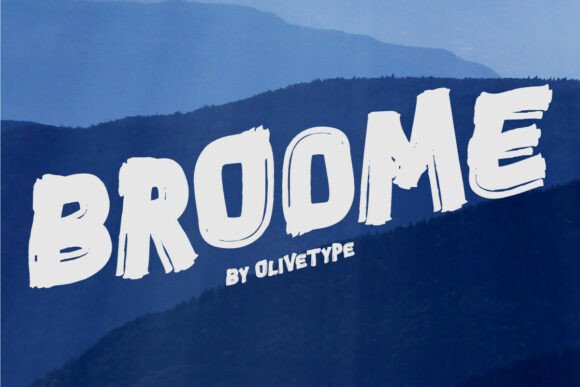
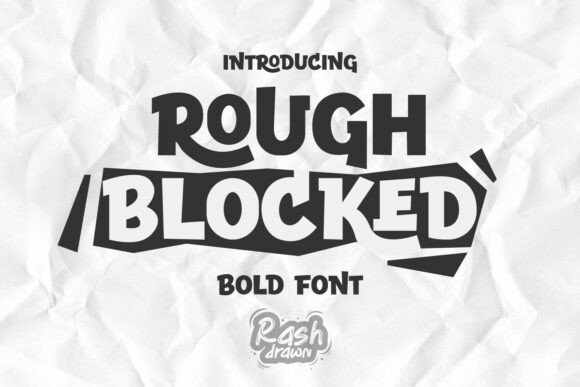
In the crowded landscape of modern visual communication, clarity often competes with noise. For entrepreneurs, marketers, and creative professionals, selecting a typeface is rarely just an aesthetic choice; it is a strategic decision that influences how a message is received, processed, and remembered. Rough Blocked emerges as a distinct tool in this arsenal, offering a high-impact display solution designed for moments when standard typography fails to cut through the saturation. With its heavy, solid blocks and intentionally irregular edges, this font captures the raw energy of street posters and urban culture while maintaining the structural integrity required for professional branding.
Understanding Rough Blocked requires moving beyond its visual style to examine its functional role in design strategy. It is not a universal solution but a specialized instrument for specific communication goals. When applied with intention, it transforms passive viewers into active observers. However, relying on its boldness without a clear plan can lead to visual fatigue or brand misalignment. This guide explores how to leverage Rough Blocked effectively to support positioning, enhance customer experience, and achieve tangible results in your creative and business operations.
Defining the Strategic Value of Raw Aesthetics
The primary value proposition of Rough Blocked lies in its ability to convey authenticity and urgency simultaneously. In an era where polished, minimalist design often signals corporate sterility, the slightly distressed texture of this typeface introduces a human element that feels immediate and unfiltered. This is particularly valuable for brands attempting to bridge the gap between professional reliability and cultural relevance. The font’s heavy weight commands attention, but it is the roughness of the edges that retains interest by suggesting a story behind the message.
From a psychological perspective, display fonts with textured imperfections can reduce the cognitive distance between the brand and the audience. They mimic the tactile nature of physical environments—brick walls, wheat-paste posters, and handmade signage. For small business owners and freelancers, this translates to a perceived accessibility. You are not just presenting information; you are making a statement that feels grounded in reality. This distinction is crucial when your goal is to build trust through transparency rather than perfection.
Aligning Typography with Brand Positioning
Before integrating Rough Blocked into your visual identity, assess whether its inherent characteristics align with your long-term positioning. This typeface performs exceptionally well for brands centered on:
- Urban and Street Culture: Fashion labels, music venues, and lifestyle brands that draw inspiration from city environments.
- Activism and Social Causes: Organizations requiring a voice that sounds urgent, grassroots, and uncompromising.
- Artisanal and Maker Movements: Businesses emphasizing handcrafted quality, where imperfection is a feature, not a bug.
- High-Energy Events: Festivals, sports competitions, and product launches where excitement is the primary metric of success.
If your brand positioning relies on luxury, clinical precision, or traditional conservatism, Rough Blocked may create cognitive dissonance. The strategic error here is not the font itself, but the mismatch between visual tone and brand promise. Always audit your existing assets to ensure this new typographic voice complements rather than contradicts your core messaging.
Practical Implementation for Maximum Impact
Effective use of Rough Blocked demands restraint. Because of its high visual weight and textural complexity, it functions best as a headline or accent element rather than a workhorse for body copy. Treating it as a primary reading font will degrade legibility and frustrate users, undermining the very attention you seek to capture. Instead, view it as the "hook" in your content hierarchy.
Hierarchy and Layout Considerations
When planning layouts for t-shirts, social media graphics, or web headers, pair Rough Blocked with clean, neutral sans-serif or serif typefaces. The contrast between the rugged display font and a refined supporting font creates a dynamic tension that guides the eye. This pairing ensures that while the headline grabs attention, the subsequent information remains accessible and easy to digest.
Consider the following operational guidelines for layout planning:
- Scale Intentionally: Rough Blocked thrives at large sizes. Using it too small negates the textural details that give it character and reduces legibility. Commit to oversized applications where the rough edges can be fully appreciated.
- Mind the Negative Space: Heavy block letters consume significant visual real estate. Balance this density with ample whitespace to prevent the design from feeling claustrophobic or aggressive.
- Color Contrast is Non-Negotiable: Due to the irregular edges, low-contrast color combinations will cause the letters to bleed visually. Stick to high-contrast pairings (e.g., black on white, bright yellow on dark blue) to maintain crisp definition.
- Limit Case Usage: All-caps settings maximize impact for short phrases but can become overwhelming in longer headlines. Test mixed-case or title-case variations to see if they better suit the rhythm of your specific message.
Risk Management and Decision-Making
Adopting a distinctive typeface like Rough Blocked carries inherent risks that must be managed through thoughtful decision-making. The most common pitfall is overuse. When every element in a campaign screams for attention, nothing is heard. Reserve this font for top-tier messages—the sale announcement, the event title, the core slogan—and let quieter elements handle the logistics.
Another risk involves context blindness. What reads as "edgy" and "authentic" in one setting may read as "messy" or "unprofessional" in another. For educators or publishers, using Rough Blocked might signal creativity, but applying it to official documentation or safety instructions could undermine authority. Always evaluate the specific touchpoint before deployment. Ask yourself: Does this font clarify the message, or does it add friction?
Accessibility and Inclusivity Checks
Strategic design must be inclusive. Display fonts with distressed edges can pose challenges for readers with dyslexia or visual impairments. To mitigate this, never rely solely on Rough Blocked to convey critical information. Ensure that all essential details are also presented in highly legible, accessible typefaces. Additionally, verify that color contrast ratios meet WCAG standards even with the textured letterforms. Accessibility is not an afterthought; it is a fundamental component of effective communication strategy.
Long-Term Results and Asset Longevity
Trends in typography cycle rapidly, but utility endures. While Rough Blocked taps into current preferences for raw, industrial aesthetics, its true longevity depends on how deeply it is integrated into your operational workflow. Rather than treating it as a temporary trend, consider how it fits into a scalable design system.
Create templates and style guides that define exactly when and how to use Rough Blocked. This prevents ad-hoc decisions that dilute brand consistency over time. For freelancers and agencies, establishing these parameters upfront saves revision cycles and ensures clients receive cohesive deliverables. For internal teams, it reduces the cognitive load of design creation, allowing for faster production without sacrificing quality.
Furthermore, track the performance of designs featuring this typeface against those using standard alternatives. Do social posts with Rough Blocked headlines generate higher engagement? Do t-shirt designs sell better with this typography? Data-driven validation moves the conversation from subjective preference to objective outcome. If the metrics support the aesthetic choice, you have found a sustainable asset. If not, pivot without attachment.
Making the Final Selection
Rough Blocked offers a powerful means to differentiate your visual output in a saturated market. Its blend of solidity and texture provides a unique voice for brands seeking to project strength and authenticity. However, its effectiveness is entirely dependent on strategic application. By understanding its psychological impact, respecting hierarchy, managing risks, and measuring outcomes, you transform a font file into a business asset.
Ultimately, the decision to use Rough Blocked should stem from a clear communication goal, not merely a stylistic impulse. Whether you are designing a standout merchandise line, crafting a viral social campaign, or rebranding a local business, let your objectives dictate your typography. When used with discipline and foresight, Rough Blocked does more than decorate a page; it amplifies your message, ensuring that when you speak, your audience truly listens.