John: Strategic Application of a High-Impact Decorative Display Font
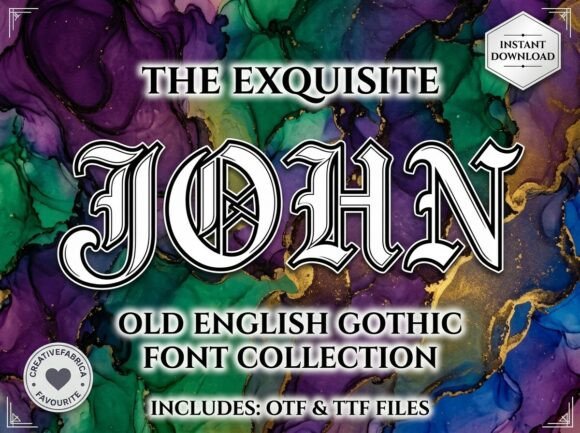
In the competitive landscape of visual communication, typography is rarely just about legibility; it is a primary vehicle for brand positioning and emotional resonance. John is a stunning decorative display font designed specifically to serve as the center of attention in design projects. Unlike utilitarian typefaces meant for extended reading, John features unique artistic elements and a strong visual personality that demands immediate engagement. For creators, marketers, and business owners, understanding how to leverage this specific tool is essential for breaking away from ordinary aesthetics while maintaining a professional finish.
The strategic value of John lies in its ability to function as a visual anchor. In an era where digital and physical spaces are saturated with generic sans-serif typography, utilizing a font with such distinct character can significantly improve brand recall. However, because John is an all-caps uppercase-only display typeface, it requires intentional planning. It is not a universal solution but a specialized instrument best suited for bold headlines, artistic logos, and creative packaging. Success with this font depends less on installation and more on understanding its constraints and optimal use cases within a broader design system.
Defining the Role of John in Visual Hierarchy
To use John effectively, one must first accept its limitations as strengths. The absence of lowercase letters is not a deficiency; it is a deliberate design choice that enforces hierarchy. By restricting the typeface to uppercase forms, John naturally positions itself at the top of the visual pyramid. This makes it exceptionally useful for establishing clear entry points in complex layouts. When a viewer encounters a design featuring John, their eye is immediately drawn to the text rendered in this font, creating a predictable and controllable user flow.
This characteristic supports several strategic goals:
- Instant Brand Recognition: The unique artistic elements create a proprietary feel, making marketing materials instantly identifiable without relying solely on color or logo marks.
- Emotional Signaling: The strong visual personality conveys confidence and creativity, which can be pivotal for brands in fashion, entertainment, hospitality, or artisanal goods.
- Layout Efficiency: Because the font carries so much visual weight, designers often need less copy to achieve impact, allowing for cleaner, more breathable compositions.
However, this dominance means John should never compete with other decorative elements. If your background imagery is busy or your supporting graphics are ornate, John may create visual noise rather than clarity. Strategic application involves treating the font as the primary graphical element in the composition, letting negative space and simpler secondary typefaces support it.
Technical Considerations and File Format Strategy
Operational efficiency in design workflows depends on selecting the correct file format for the intended output. John includes both OTF (OpenType Font) and TTF (TrueType Font) files, and knowing when to deploy each is critical for maintaining quality across different media.
When to Use the OTF File
The OpenType format is the professional standard for advanced design and layout software such as Adobe Illustrator, InDesign, and Affinity Designer. You should prioritize the OTF version when working on high-resolution print materials, complex vector logos, or detailed packaging designs. OTF files generally offer superior rendering for curves and intricate details, ensuring that the unique artistic elements of John remain crisp at large scales. Additionally, if future updates include ligatures or alternate characters, the OTF container is typically required to access these features within design applications.
When to Use the TTF File
TrueType fonts provide universal compatibility across operating systems and basic office software. The TTF version of John is strategically important for internal documents, presentation decks, or collaborative environments where team members may not have professional design software installed. While it renders perfectly well for screen-based mockups and standard office use, be cautious when scaling TTF files for large-format printing, as some older RIP software may interpret curves differently than modern OTF engines. Always verify output quality before finalizing production assets.
Strategic Use Cases and Practical Applications
Because John is specifically designed for high-impact headlines, logos, and decorative initials, its utility is highest in contexts where brevity and impact outweigh the need for information density. Decision-makers should evaluate potential projects against the following criteria to determine if John is the appropriate choice.
Brand Identity and Logo Design
For startups and rebrands seeking a non-traditional identity, John offers a shortcut to distinctiveness. Its architectural letterforms can stand alone as a wordmark without requiring additional iconography. When using John for logos, consider the spacing between characters. Tight tracking can create a solid, unified block suitable for industrial or bold consumer brands, while generous tracking can evoke luxury and exclusivity. Since every letter is a work of art, ensure that the specific combination of letters in your brand name creates a balanced silhouette. Test the logo at small sizes to confirm that the decorative elements do not merge into illegibility.
Marketing Headlines and Advertising
In digital advertising and social media, stopping the scroll is the primary metric of success. John’s heavy visual weight performs exceptionally well in this context. Use it for the main hook or value proposition, keeping body copy in a highly legible neutral sans-serif. This contrast not only ensures readability but also amplifies the decorative nature of John by comparison. Avoid using John for subheads or captions; diluting its presence reduces its effectiveness as a focal point.
Packaging and Environmental Design
Physical touchpoints benefit greatly from tactile, expressive typography. On product packaging, John can transform a simple label into a premium experience. It works particularly well for limited edition releases, seasonal campaigns, or products where the aesthetic is part of the value proposition. In environmental design, such as signage or event branding, the all-caps nature of John aids in quick recognition from a distance. Just ensure sufficient contrast against the background material, as decorative fonts can sometimes lose definition on textured surfaces.
Risk Management and Common Pitfalls
Despite its versatility, misapplying John can undermine professionalism and hinder communication. Awareness of these risks allows for better decision-making during the creative process.
The Readability Trap: Never use John for paragraphs, lists, or instructional text. The lack of lowercase ascenders and descenders removes the word shapes that facilitate rapid reading. Using this font for body copy will fatigue readers and increase bounce rates or abandonment. Reserve it strictly for display purposes where the message is short enough to be processed as an image rather than read linearly.
Tonal Mismatch: John has a strong personality that may conflict with conservative or highly technical industries. While it can add warmth to sterile sectors, it can also appear frivolous if not balanced correctly. Conduct audience testing before committing to John for corporate communications or regulated industries. What reads as "creative" to a designer might read as "unserious" to a compliance officer or traditional investor.
Overuse Within a Single Layout: Because John is designed to be the center of attention, using it for multiple competing elements cancels out its effect. If everything screams, nothing is heard. Limit John to one or two instances per page or screen. Let it breathe. Surrounding it with ample whitespace and understated supporting elements maximizes its impact and maintains a polished, professional finish.
Making the Decision to Invest
Acquiring a specialized display font like John is a strategic investment in your visual toolkit. Before purchasing, audit your upcoming project pipeline. Do you have a need for bold, artistic headlines in the next quarter? Are you developing a new product line that requires distinctive packaging? If your current needs are primarily informational or data-heavy, a robust sans-serif family may yield a higher ROI. However, if your goal is to elevate brand perception, differentiate from competitors, or inject creativity into stagnant marketing materials, John provides a cost-effective alternative to custom lettering.
Furthermore, consider the long-term maintenance of your brand assets. Because John is a display font, it is less likely to suffer from trend fatigue compared to minimalist geometric sans-serifs that dominate current design trends. Its artistic nature gives it a timeless quality that can age gracefully if used sparingly and intentionally. By integrating John thoughtfully into your design system—respecting its all-caps constraint and leveraging its technical formats appropriately—you secure a versatile asset capable of delivering high-impact results across diverse media channels.
Ultimately, typography is a business decision. John offers a pathway to distinctiveness for those willing to use it with discipline. It rewards strategic restraint and punishes careless application. For entrepreneurs, marketers, and creators ready to move beyond the ordinary, it represents an opportunity to make every headline a definitive statement of intent.