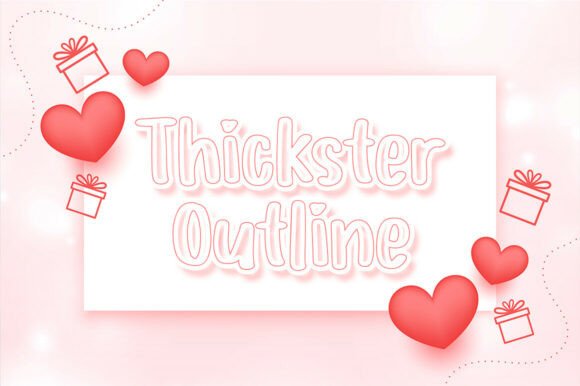
Thickster Outline: Rugged Display Typography
Transform your next visual project by choosing a typeface that balances industrial strength with refined elegance. Thickster Outline captures a rugged-and-engineered soul, offering designers a striking display option that commands attention without overwhelming the layout. This font features the massive silhouettes of the original Thickster design but is rendered as a clean, monolinear outline with subtle heart accents. Its rhythmic geometric texture and airy presence make it the premier choice for independent modern architecture branding, minimalist tech logos, high-end editorial layouts, and high-impact structural-and-chic social media headers.
The Role of Outline Typography in Modern Branding
In contemporary graphic design, the shift toward outlined typefaces represents a desire for transparency and lightness within bold visual statements. Unlike solid heavyweights that can dominate a color palette or obscure background imagery, an outline variant creates negative space that allows the design to breathe. This quality is essential for establishing a sophisticated visual hierarchy. When integrating this asset into brand identity systems, the monolinear construction ensures consistency across various touchpoints, from digital screens to large-format print design.
The unique character of this typeface lies in its duality. It possesses the structural integrity required for construction and engineering sectors while maintaining the delicate precision needed for luxury editorial design. The subtle heart accents add a layer of human-centric warmth, preventing the aesthetic from feeling too sterile or purely mechanical. This balance is crucial for brands aiming to communicate both technical expertise and approachable customer experience.
Practical Applications Across Creative Projects
Versatility is a key metric when evaluating creative assets for professional workflows. This display font excels in environments where impact and legibility must coexist. Designers can leverage its distinct geometry to elevate various mediums:
- Architectural Signage and Wayfinding: The engineered aesthetic aligns perfectly with modern building facades and interior environmental graphics.
- Tech Startup Identity: Use the outline style for logo design to suggest innovation and openness rather than corporate rigidity.
- Social Media Graphics: Create scroll-stopping headers where the transparent letterforms allow dynamic photography or video backgrounds to show through.
- Packaging Design: Apply the typeface on minimal labels to convey premium quality and structural reliability.
- Web Design Hero Sections: Utilize large-scale typography that loads visually lighter than solid blocks, improving perceived performance and modern aesthetics.
Best Practices for Implementation and Hierarchy
To maximize the effectiveness of this display typeface, designers must consider scalability and contrast. Because outline fonts rely on stroke weight rather than fill, they require careful handling at smaller sizes. Reserve this asset for headlines, titles, and short phrases where the geometric rhythm can be fully appreciated. For body copy and UI elements, pair it with a highly readable sans-serif or grotesque typeface to maintain clear communication and accessibility standards.
Color selection also plays a pivotal role in how the outline is perceived. High-contrast combinations, such as white strokes on dark charcoal or deep navy, enhance legibility and reinforce the rugged theme. Conversely, using a muted tone over a busy texture can create a more integrated, editorial feel. Always test the typeface across different devices and print proofs to ensure the stroke width remains consistent and the subtle details do not get lost during production.
When incorporating this font into marketing materials or advertising campaigns, treat it as a graphical element as much as a textual one. The negative space inside the letters offers opportunities for creative masking, gradient overlays, or interaction with other design elements. This approach transforms standard typography into a core component of the visual narrative, strengthening the connection between the message and the medium.
Ultimately, successful visual communication relies on selecting tools that resonate with the intended audience while serving functional purposes. By understanding the specific strengths of specialized display fonts, designers can craft identities that are not only visually arresting but also strategically sound. Thoughtful typography choices elevate the entire design workflow, ensuring that every pixel contributes to a cohesive, professional, and memorable brand experience.