Understanding Anser: A Comprehensive Guide to Bold Decorative Display Typography
In the vast landscape of digital design, typography serves as the voice of visual communication. While body text prioritizes readability and neutrality, display fonts carry the emotional weight and personality of a brand. Among these specialized typefaces, Anser has emerged as a significant tool for designers seeking to make an immediate, high-impact statement. This article explores the nuances of this stunning decorative display font, examining its artistic characteristics, practical applications, and technical specifications to help creators understand how to leverage it effectively in modern design projects.
The Role of Decorative Display Fonts in Modern Design
To fully appreciate a typeface like Anser, one must first understand the category to which it belongs. Display fonts are distinct from text fonts; they are not designed for long-form reading but rather for short bursts of information where attention is paramount. In an era dominated by social media feeds, e-commerce thumbnails, and rapid digital scrolling, the ability to capture a viewer's gaze within milliseconds is invaluable.
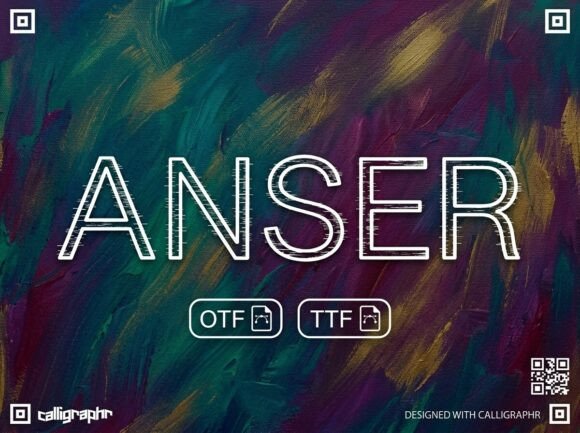
Anser fits into this ecosystem as a font designed to be the center of attention. Unlike minimalist sans-serifs that blend into the background, Anser features unique artistic elements and a strong visual personality. It represents a departure from the ordinary, offering creators a way to inject bespoke artistry into their work without commissioning custom hand-lettering. This balance between artistic flair and professional polish is what makes it relevant for contemporary branding, where authenticity and distinctiveness are key market differentiators.
Visual Characteristics and Artistic Personality
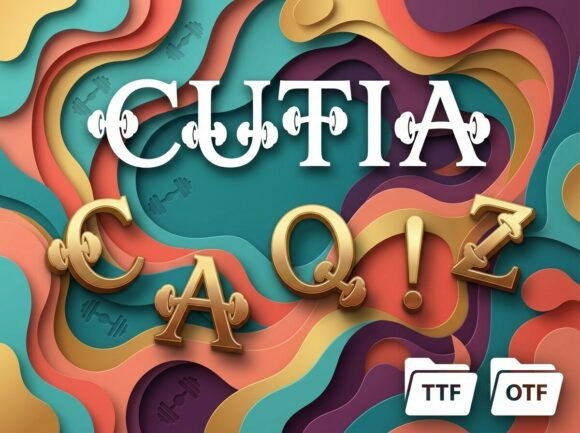
The defining characteristic of Anser is its boldness. It is not merely heavy in weight; it is heavy in presence. The letterforms are constructed with decorative intricacies that transform standard characters into individual works of art. For designers accustomed to clean, geometric grids, Anser offers a textured alternative that feels organic yet structured.
This font excels because it maintains a professional finish despite its ornamental nature. Many decorative fonts sacrifice legibility for style, resulting in designs that look messy or amateurish. Anser avoids this pitfall by ensuring that its artistic elements enhance rather than obscure the message. The strokes are deliberate, and the spacing is calibrated to support headlines and logos. This makes it particularly suitable for industries that rely on aesthetic appeal, such as fashion, luxury goods, artisanal food and beverage, and creative agencies.
BREAKING AWAY FROM ORDINARY TYPOGRAPHY
Creativity often requires breaking established patterns. When a market becomes saturated with similar visual styles, introducing a typeface with a strong personality can serve as a pattern interrupt. Anser allows designers to break away from safe, conventional choices. Whether used for a music festival poster, a boutique hotel signage system, or a limited-edition product label, the font signals to the audience that the content is curated, special, and worth investigating further.
Practical Applications: Where Anser Shines
Understanding where to use a specialized font is just as important as understanding its aesthetics. Based on its design attributes, Anser is versatile enough for several specific high-impact applications:
- Bold Headlines: In editorial design and web layouts, Anser serves as an excellent anchor. It creates a clear visual hierarchy, instantly telling the reader what the primary topic is before they engage with the supporting body copy.
- Artistic Logos: Because each letter possesses unique detailing, Anser can function as a logotype without extensive modification. It provides a foundation for wordmarks that feel custom-designed.
- Creative Packaging: On shelves crowded with competitors, packaging typography must perform heavy lifting. Anser’s decorative nature adds perceived value and shelf presence, making products feel premium and tactile.
- Social Media Graphics: In square or vertical formats where space is limited, a single word set in Anser can convey more emotion than a full sentence in a standard font.
Crucial Technical Considerations: The Uppercase Constraint
When integrating any specialized typeface into a workflow, understanding its technical limitations is essential for avoiding frustration. There is a vital specification regarding Anser that every designer must note before purchase or implementation: this font is an ALL-CAPS Uppercase Only display typeface.
This is not a bug or a missing feature; it is a deliberate design choice. Anser does not include lowercase letters. It is specifically engineered for high-impact scenarios where capitalization enhances the architectural quality of the word shape. Attempting to force this font into mixed-case settings or paragraph text will result in poor readability and aesthetic dissonance.
Navigating All-Caps Typography Responsibly
The uppercase-only constraint reinforces the font's intended purpose. In typography, all-caps text reduces reading speed because the uniform height of the letters removes the distinctive word shapes our brains use for rapid recognition. Therefore, Anser should strictly be reserved for:
- Short titles and headers (3–5 words maximum).
- Brand names and acronyms.
- Decorative initials or drop caps.
- Call-to-action buttons where brevity is required.
By respecting this limitation, designers ensure that the font remains effective. Pairing Anser with a highly legible sans-serif or serif for body text creates a harmonious contrast that maximizes both impact and usability.
File Formats and Professional Compatibility
For a font to be useful in a professional environment, it must be technically robust. Anser is delivered with industry-standard file formats that ensure compatibility across various platforms and software ecosystems.
OpenType Font (OTF)
The OTF file is the professional standard for advanced design and layout software. OpenType supports advanced typographic features, including ligatures, alternates, and precise kerning tables. For designers working in Adobe Illustrator, InDesign, or Affinity Designer, the OTF version of Anser ensures that the rendering is crisp and that any built-in stylistic sets are accessible. This format is preferred for print production and high-resolution branding assets.
TrueType Font (TTF)
The TTF file serves as the universal compatibility option. While older technology than OpenType, TrueType remains widely supported across operating systems, office suites, and web platforms. Having the TTF version ensures that Anser can be installed on Windows and macOS machines seamlessly and used in applications ranging from Microsoft Word to Canva. This versatility allows teams to maintain brand consistency even when non-designers need to create internal documents or basic presentations.
Best Practices for Integrating Anser into Your Workflow
To get the most out of this decorative display font, consider the following educational guidelines for implementation:
Prioritize Contrast: Because Anser is visually dense, pair it with lightweight, open typefaces. A thin geometric sans-serif or a classic transitional serif provides necessary breathing room. Avoid pairing Anser with other heavy or decorative fonts, as this creates visual competition and clutter.
Mind the Spacing: Decorative uppercase fonts often benefit from adjusted tracking (letter-spacing). Depending on the specific word, you may need to slightly tighten the spacing to create a cohesive unit or loosen it to add elegance. Always optically adjust spacing rather than relying solely on default metrics, especially for logos.
Contextual Relevance: Ask whether the project calls for "stunning" and "artistic." If the goal is to convey safety, neutrality, or dense information, Anser may be the wrong choice. However, if the goal is to evoke excitement, luxury, creativity, or boldness, it is an exceptional asset.
Licensing Awareness: As with any commercial font, always verify the licensing terms for your specific use case. Desktop licenses typically cover static images and print, while webfont licenses are required for embedding the typeface in CSS for live websites. Ensuring compliance protects both the designer and the client.
Conclusion: Elevating Visual Communication
Anser represents more than just a collection of vector shapes; it is a strategic design tool. By combining unique artistic elements with a professional finish, it bridges the gap between raw expression and commercial viability. Its uppercase-only nature demands intentionality from the designer, forcing a focus on hierarchy and impact over volume.
For general readers and aspiring designers, understanding fonts like Anser illuminates the broader principles of typography. It highlights that type selection is not merely about aesthetics but about function, context, and communication. When used correctly—with respect for its all-caps constraint and paired with complementary typefaces—Anser empowers creators to break away from the ordinary and produce work that resonates deeply with audiences. Whether you are crafting a bold headline, an artistic logo, or creative packaging, this font stands ready to serve as the polished, high-impact centerpiece of your next visual masterpiece.