Choco Party: Elevating Brand Identity with Vintage-Inspired Typography
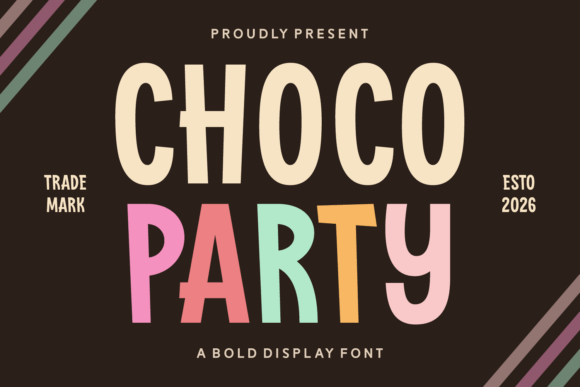
When you are designing for the culinary world, specifically within the realms of confectionery and artisanal baking, standard sans-serif fonts often fail to convey the necessary warmth and nostalgia. This is where Choco Party distinguishes itself as more than just a decorative typeface; it is a strategic branding tool. Designed with a bold, condensed structure, this display font captures the essence of mid-century packaging and retro signage while maintaining the legibility required for modern commercial applications. It bridges the gap between playful indulgence and sophisticated design, making it an essential asset for creators who need their typography to taste as good as the product looks.
The Anatomy of Retro-Confectionery Charm
Understanding why Choco Party works so effectively requires looking at its construction. Unlike script fonts that can become illegible at small sizes or overly ornate serifs that feel too formal for a casual treat, Choco Party utilizes tall, condensed letterforms. This verticality allows designers to maximize presence in narrow spaces, such as chocolate bar wrappers or vertical shelf talkers, without sacrificing stroke weight. The "retro-confectionery soul" mentioned in its description isn't just marketing fluff; it refers to the specific curvature and terminal styles that mimic hand-painted sign writing from the 1950s and 60s.
For graphic designers and brand strategists, this means the font carries built-in semantic value. When a consumer sees Choco Party, they subconsciously associate the text with craftsmanship, tradition, and premium ingredients. It does the heavy lifting of establishing a vintage aesthetic before the viewer even reads the word "chocolate" or "bakery." This immediate visual communication is crucial in retail environments where purchasing decisions are made in seconds.
Transforming Artisanal Chocolate Packaging
The most direct application of Choco Party is in the competitive landscape of craft chocolate. Modern consumers are drawn to packaging that tells a story of origin and process. A sleek, minimalist font might suggest mass production, whereas Choco Party suggests a human touch. Consider a bean-to-bar maker launching a new single-origin line. Using this typeface for the flavor notes—such as "Dark Cherry & Smoked Almond"—creates a tactile connection between the visual identity and the sensory experience of eating the chocolate.
Practical implementation on packaging requires attention to hierarchy. Because Choco Party is a bold display font, it excels as the primary identifier. However, it pairs best with a clean, neutral sans-serif for nutritional information and ingredient lists. This contrast ensures compliance and readability while letting the brand name shine. Designers working with flexible packaging materials will also appreciate the font’s sturdy rhythm; it holds up well against the wrinkles and curves of foil and paper, maintaining its integrity even when the package is handled frequently on store shelves.
Boutique Cafe Signage and Menu Engineering
Coffee shops and patisseries face a unique challenge: creating an atmosphere that feels established and cozy, even if the business opened last month. Choco Party serves as an instant aging agent for interior design. When applied to chalkboard menus or acrylic window decals, it evokes the feeling of a classic European café or an American diner. The condensed nature of the letterforms is particularly valuable for menu boards where space is at a premium. You can fit longer item descriptions or prices without reducing the font size to an unreadable level.
Beyond aesthetics, there is a psychological component to using this typeface in hospitality. Bold, rounded typography has been shown to increase appetite appeal and perceived sweetness. When a customer reads "Salted Caramel Croissant" set in Choco Party, the expectation of richness is amplified. For cafe owners updating their seasonal offerings, swapping out header fonts for this specific style during holiday periods or special promotions can signal a shift in mood and encourage impulse purchases.
Social Media Headers and Digital Merchandising
In the digital space, the rules of engagement differ from print. Social media headers and story templates require fonts that stop the scroll. Choco Party’s high-impact silhouette makes it ideal for Instagram bios, Pinterest pins, and TikTok thumbnails. The key to success here is color interaction. While black text on a cream background is classic, experimenting with duotones or textured overlays can enhance the vintage vibe for a younger demographic aged 20–35 who appreciate "newstalgia."
For creators selling custom merchandise like tote bags, enamel pins, or apparel, Choco Party offers excellent reproducibility. Intricate scripts often lose detail when embroidered or screen-printed on fabric. The solid, robust strokes of this display font ensure that the design remains crisp whether it is stitched onto a canvas bag or printed on a ceramic mug. This durability makes it a safer choice for merchandisers who want to maintain brand consistency across physical and digital touchpoints.
Strategic Pairings and Layout Considerations
While Choco Party is a powerhouse, it cannot stand alone in every context. Its personality is dominant, which means it demands supportive typography. Avoid pairing it with other display fonts or heavy serifs, as this creates visual clutter and competes for attention. Instead, look for geometric sans-serifs or monospaced typefaces that provide a modern counterpoint. The goal is to let Choco Party be the star while the supporting cast handles the functional aspects of communication.
Spacing is another critical consideration. Due to its condensed design, tight tracking can sometimes make the letters feel cramped, especially in all-caps settings. Conversely, excessive tracking can break the word shape and reduce readability. Finding the sweet spot often requires optical adjustment rather than relying solely on default metric kerning. Designers should test the font at various sizes before finalizing layouts, as the optimal spacing for a poster headline may differ significantly from that of a web banner.
Limitations and Best Practices
No typeface is a universal solution, and recognizing the limitations of Choco Party is as important as understanding its strengths. It is strictly a display font. Attempting to use it for body copy, long-form blog posts, or detailed product descriptions will result in poor readability and user fatigue. Reserve it for headlines, logos, short phrases, and call-to-action buttons. Additionally, while its vintage charm is its greatest asset, it may not be suitable for brands positioning themselves as ultra-modern, clinical, or tech-forward. Context is everything.
Accessibility should also remain a priority. The stylized nature of retro fonts can sometimes pose challenges for screen readers or users with dyslexia. Always ensure that web implementations include proper fallback fonts and that contrast ratios meet WCAG standards. When used responsibly, Choco Party enhances the user experience by adding character without compromising function. It transforms generic sweet treats into memorable brand experiences, proving that in the world of food design, typography is indeed an ingredient.