Evaluating Mollroy: When to Choose a Raw Dry Brush Display Font
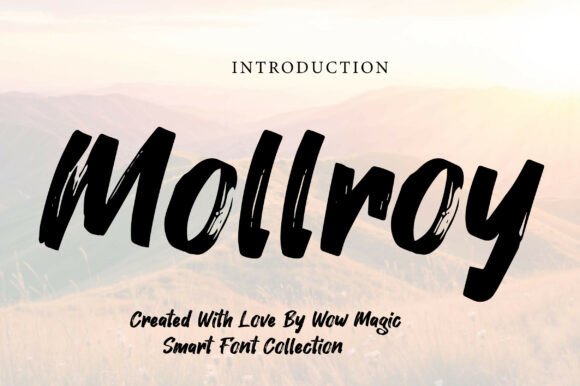
Selecting the right display typeface is often the most critical decision in a visual identity project. The font must do more than simply render text legibly; it needs to embody the emotional tone of the brand or campaign. Mollroy enters this space as a bold, dry brush display font designed specifically to convey raw energy, movement, and unpolished personality. Unlike cleaner geometric sans-serifs or traditional serifs, Mollroy relies on texture and irregularity to communicate authenticity. For designers and art directors evaluating typography options, understanding where this specific aesthetic fits within the broader design ecosystem is essential for making an informed choice.
Defining the Aesthetic: Texture Over Precision
Mollroy distinguishes itself through its commitment to the dry brush technique. In digital typography, many "handwritten" fonts are merely vectorized scripts with smooth curves. Mollroy, conversely, embraces the friction of the medium. The rough painted style creates edges that are intentionally jagged and ink-starved, mimicking the physical limitations of paint on canvas or concrete. This distinction matters because texture carries semantic weight. A smooth curve suggests corporate stability, technology, or luxury, while a rough edge suggests human effort, street culture, urgency, or organic origins.
When evaluating Mollroy against other display options, consider the message your negative space conveys. The gaps and splatters inherent in this typeface create a dynamic rhythm that static fonts cannot replicate. However, this also means the font occupies visual space differently. It demands higher contrast backgrounds and more generous padding to prevent the textured edges from getting lost in busy layouts. If your design requires tight spacing or small-scale reproduction, the very features that make Mollroy distinct may become liabilities.
Comparative Analysis: Mollroy vs. Alternative Styles
To determine if Mollroy is the correct tool for your project, it is helpful to compare it against adjacent categories of display typography. Each style serves a different functional and emotional purpose.
Versus Clean Geometric Sans-Serifs
Geometric sans-serifs offer neutrality and maximum legibility. They are safe choices for information-heavy designs or brands that wish to appear modern and accessible. Mollroy sits at the opposite end of this spectrum. Where geometry offers order, Mollroy offers disruption. If your goal is to blend in or provide effortless reading at small sizes, a geometric sans is superior. If your goal is to arrest attention and signal a departure from the norm, Mollroy provides the necessary visual friction that clean lines lack.
Versus Traditional Calligraphy and Script
Many designers looking for "personality" default to script fonts. However, traditional scripts often carry connotations of elegance, femininity, or formality. Mollroy’s dry brush construction avoids these associations entirely. Its energy is aggressive and grounded rather than flowing and decorative. When comparing these two approaches, ask whether the desired personality is refined or raw. For streetwear branding or album covers in genres like rock, hip-hop, or industrial, the unrefined nature of Mollroy aligns better with the cultural context than a polished script would.
Versus Grunge and Distressed Textures
Grunge fonts share the distressed aesthetic of Mollroy but often achieve it through digital erosion or noise overlays applied to standard letterforms. Mollroy differs because the texture is structural; the brush stroke defines the shape of the letter, rather than being applied as a post-processing effect. This results in a more authentic appearance that scales better without looking pixelated or artificial. When choosing between a grunge overlay and a dedicated brush font like Mollroy, prioritize the latter if you need the hand-made feel to be integral to the letterform anatomy rather than a superficial layer.
Optimal Use Cases and Application Contexts
Mollroy performs best in environments where immediate visual impact outweighs the need for sustained readability. Understanding these high-value contexts helps justify the selection of such a stylized typeface.
- Streetwear and Apparel Branding: Fashion relies heavily on signaling subcultural alignment. The rough, painted quality of Mollroy resonates with urban aesthetics and DIY culture. It works exceptionally well on garment tags, chest prints, and lookbook headers where the texture complements fabric grain.
- Event Posters and Gig Flyers: In crowded visual environments like concert venues or social media feeds, clean type can disappear. Mollroy’s bold weight and irregular silhouette create a unique shape that is recognizable even at thumbnail size or from a distance.
- Product Packaging for Artisanal Goods: For products emphasizing hand-crafted quality, such as craft beer, hot sauce, or specialty coffee, the font acts as a proxy for the maker's hand. It signals that the product is not mass-produced, adding perceived value through typographic association.
- Social Media Headlines: Static graphics on platforms like Instagram or TikTok compete with video content. Using Mollroy for key phrases or hooks adds kinetic energy to still images, helping to stop the scroll without relying on animation.
Limitations and Tradeoffs to Consider
No display font is universally applicable, and Mollroy has specific constraints that must be weighed during the evaluation process. Acknowledging these tradeoffs prevents costly redesigns later in the production cycle.
Legibility at Small Sizes: The dry brush texture reduces the effective stroke width. At body copy sizes or below 24pt (depending on resolution), the letters may break apart or become muddy. Mollroy should strictly be reserved for headlines, titles, and large-format display work. You will invariably need to pair it with a highly legible secondary font for supporting text.
Limited Character Sets and Language Support: Many specialized display fonts focus primarily on basic Latin characters. Before committing to Mollroy, verify its language support against your project requirements. If you need extensive diacritics, Cyrillic, or CJK support, you may find the character set insufficient, necessitating a fallback font that might clash stylistically.
Visual Weight Management: Because the font is inherently bold and textured, it consumes significant visual real estate. In layouts with limited whitespace, Mollroy can feel overwhelming or claustrophobic. It requires confident layout skills to balance its intensity. If your design system relies on dense information architecture, this font may disrupt the hierarchy rather than enhance it.
Tone Specificity: The raw energy of Mollroy is not neutral. It is difficult to use this font for corporate finance, healthcare, or legal communications without risking a perception of unprofessionalism. The font carries a strong point of view; ensure that point of view aligns with your brand guidelines before adoption.
Decision Framework: Is Mollroy Right for Your Project?
When finalizing your typography selection, use the following criteria to validate Mollroy as the appropriate choice:
- Does the project require emotional immediacy? If the primary goal is to convey data or instructions, look elsewhere. If the goal is to evoke feeling, energy, or attitude, Mollroy is a strong candidate.
- Is the viewing environment conducive to texture? High-resolution screens and print allow the brush details to shine. Low-quality newsprint or low-DPI web banners may degrade the texture into noise.
- Do you have a supporting type system? Mollroy is a soloist, not a choir member. Ensure you have selected a versatile sans-serif or monospaced font to handle the functional heavy lifting while Mollroy handles the expression.
- Does the texture match the brand narrative? Authenticity is key. If a brand claims to be handcrafted or edgy but uses a sterile font, there is dissonance. Conversely, if a tech startup uses Mollroy without a clear subversive strategy, it may read as trying too hard. Alignment between visual style and brand truth is paramount.
Ultimately, Mollroy represents a specific niche within display typography: the intersection of boldness and organic imperfection. It is a tool for designers who understand that type is image, and that the texture of a letterform communicates as loudly as the word itself. By carefully weighing its distinctive raw energy against the practical requirements of legibility and brand alignment, you can determine whether this bold dry brush font is the missing element in your next creative endeavor or if a different typographic approach would better serve your objectives.