Evaluating Jeffery: A Practical Guide to Using This All-Caps Decorative Display Font
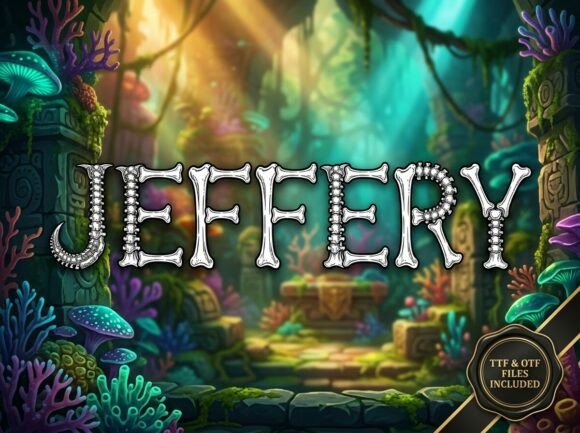
Jeffery is a decorative display typeface engineered specifically for high-impact visual communication. Unlike versatile text families designed for extended reading, this font serves as a specialized tool for creators seeking a distinct artistic personality in headlines, logos, and packaging. Its defining characteristic is an all-caps uppercase structure, meaning it lacks lowercase glyphs entirely. This architectural decision positions Jeffery firmly within the category of ornamental display typography, where every letterform is treated as an individual graphic element rather than a component of flowing prose.
For designers and brand strategists comparing typography options, understanding the specific utility of Jeffery is essential before integration into a project. It offers a polished, professional finish with unique artistic elements that break away from standard geometric or humanist sans-serifs. However, its specialized nature requires careful consideration regarding hierarchy, pairing, and technical application. This evaluation explores where Jeffery excels, where it faces limitations compared to broader alternatives, and how to determine if it aligns with your current design objectives.
Defining the Visual Character and Technical Scope
Jeffery distinguishes itself through a strong visual personality that balances artistic flair with structural integrity. While many decorative fonts sacrifice legibility for novelty, Jeffery maintains a professional polish suitable for commercial applications. The letterforms feature unique artistic details that prevent the typeface from appearing generic, making it particularly effective for brands needing to establish immediate visual recognition. The weight and proportion are calibrated for large-scale reproduction, ensuring that the intricate details remain crisp in both digital and print environments.
From a technical standpoint, the font is delivered in two industry-standard formats to ensure workflow compatibility:
- OTF (OpenType Font): This is the preferred format for professional design software such as Adobe Illustrator, InDesign, and Affinity Designer. OpenType supports advanced typographic features and typically offers better rendering precision for complex decorative curves.
- TTF (TrueType Font): This format ensures universal compatibility across various operating systems and non-specialized applications. It serves as a reliable fallback for office suites, basic video editors, or web platforms that may not fully support OpenType features.
The dual-format delivery addresses a common friction point in font licensing, allowing teams to maintain consistency across different production stages without purchasing separate licenses or converting files manually.
The All-Caps Constraint: Limitation or Feature?
The most critical factor in evaluating Jeffery is its exclusive uppercase design. For users accustomed to standard typefaces, this may initially appear restrictive. However, in the context of display typography, this constraint is often a deliberate stylistic choice. All-caps typefaces create a uniform rectangular texture that conveys stability, authority, and modernity. By removing lowercase ascenders and descenders, Jeffery establishes a consistent horizontal rhythm that simplifies alignment in logo locks and headline treatments.
This design choice does introduce significant tradeoffs. Jeffery cannot function as body copy, subheadings requiring sentence case, or any interface element demanding mixed-case readability. If your project requires a single typeface solution for both headlines and supporting text, Jeffery will not suffice. It necessitates a secondary typeface partner, adding a layer of complexity to the selection process. Conversely, if your goal is to create a standalone wordmark or a poster title where mixed case would dilute the visual impact, the all-caps structure becomes a distinct advantage over more flexible but less impactful alternatives.
Comparing Jeffery Against Alternative Typography Approaches
When selecting a display font, designers typically weigh several categories against their project needs. Understanding how Jeffery compares to these adjacent styles helps clarify its specific niche.
Jeffery vs. Standard Bold Sans-Serifs
Bold sans-serif typefaces like Helvetica Now or Montserrat are the default choice for many headlines due to their neutrality and versatility. Compared to these standards, Jeffery offers significantly higher brand differentiation. A standard sans-serif communicates information efficiently but rarely carries inherent emotional resonance. Jeffery embeds artistic character directly into the letterforms, reducing the reliance on additional graphics or color to create mood. The tradeoff is flexibility; while a bold sans can adapt to almost any tone, Jeffery commits the design to a specific aesthetic direction. Choose Jeffery when the typeface itself must carry the brand’s personality; choose a standard sans when the content or imagery should take precedence.
Jeffery vs. Hand-Lettered Custom Logotypes
For maximum uniqueness, some brands commission custom hand-lettering. While bespoke lettering offers unlimited creative freedom, it comes with higher costs, longer timelines, and scalability challenges. Jeffery occupies a middle ground between stock typography and custom illustration. It provides the artistic cohesion of hand-drawn type with the editability and consistency of a digital font. This makes it particularly valuable for projects with tight deadlines or iterative content needs, such as seasonal packaging or social media campaigns, where custom lettering would be impractical. However, for flagship brand identities requiring trademark protection and absolute exclusivity, custom lettering remains superior to any licensed font.
Jeffery vs. Other Decorative Display Fonts
The decorative display category includes everything from grunge textures to elegant scripts. Many fonts in this space prioritize extreme stylization over professional finish, resulting in typefaces that look amateurish at large sizes or fail in formal contexts. Jeffery’s emphasis on a "polished finish" differentiates it from distressed or overly whimsical alternatives. It is better suited for premium packaging, editorial headers, and corporate rebrands that need creativity without sacrificing credibility. If your project targets a youthful, DIY, or counter-cultural audience, a rougher or more experimental alternative might resonate better. For mature audiences and commercial products, Jeffery’s refinement is typically the safer and more effective choice.
Decision Factors: When Jeffery Is the Right Fit
Selecting typography is ultimately about matching form to function. Based on its characteristics, Jeffery is strongly recommended for the following scenarios:
- Product Packaging and Labels: The uniform cap height and decorative details create shelf presence without requiring extensive background graphics. The OTF format ensures clean printing at various label sizes.
- Event Branding and Posters: Titles and announcements benefit from the high-impact nature of the all-caps structure. The font’s personality reduces the need for supplementary illustration in promotional materials.
- Boutique and Artisan Brands: Businesses that want to signal craftsmanship and attention to detail find Jeffery’s artistic elements align well with their value proposition, distinguishing them from mass-market competitors using system fonts.
- Social Media Templates: The bold visual weight performs well in thumbnail sizes and mobile feeds, where subtle typographic nuances are often lost.
Conversely, consider alternative options if your project involves long-form editorial content, user interfaces with dynamic text inputs, or multilingual layouts requiring extensive character sets beyond standard Latin uppercase. Jeffery is a specialist tool, not a generalist workhorse.
Practical Implementation and Pairing Strategies
Because Jeffery is strictly uppercase, successful implementation depends heavily on thoughtful pairing. The goal is to create contrast that enhances readability while respecting Jeffery’s decorative nature.
Pairing with Neutral Sans-Serifs: A clean, geometric sans-serif in regular or light weight provides necessary breathing room. The simplicity of the supporting text allows Jeffery’s details to shine without competing for attention. Avoid condensed or heavy weights in the secondary font, as they can create visual tension with Jeffery’s own bold presence.
Pairing with Traditional Serifs: For a more classic or editorial feel, a high-contrast serif creates an elegant juxtaposition. This combination works particularly well in fashion, luxury goods, and cultural publications. Ensure the serif’s x-height is proportional to Jeffery’s cap height to maintain harmonious baseline alignment.
Spacing and Hierarchy Adjustments: All-caps decorative fonts often require adjusted tracking. Depending on the specific word shape, slight positive tracking may improve legibility, while negative tracking can create a tighter, more cohesive logotype. Always test spacing at actual reproduction size, as decorative details that look spacious on screen may fill in during printing or appear cramped at small scales.
Making an Informed Typography Investment
Jeffery represents a specific approach to visual communication: prioritizing immediate impact and artistic expression over universal utility. Its value lies in its ability to transform ordinary text into a focal point while maintaining professional standards suitable for commercial use. The inclusion of both OTF and TTF formats demonstrates practical awareness of diverse user workflows, reducing technical barriers to adoption.
However, the all-caps limitation is non-negotiable. Successful use requires accepting this constraint as part of the design strategy rather than viewing it as a deficiency. When evaluated against project requirements, budget, and brand positioning, Jeffery offers a compelling option for creators who have determined that their headline typography must do more than convey words—it must embody an attitude. By understanding both its strengths and its boundaries, designers can leverage Jeffery effectively while avoiding common pitfalls associated with specialized display typefaces.