Evaluating Urban Vintage: A Practical Guide to Grunge Display Typography
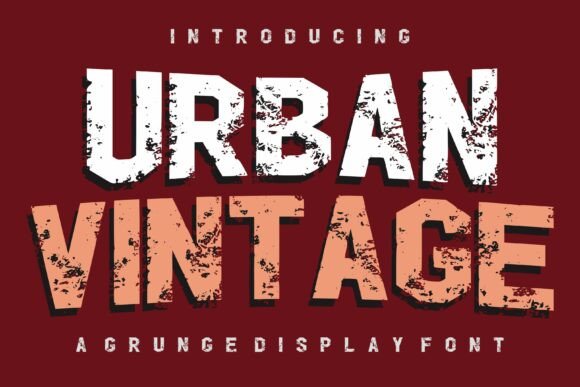
Selecting the right display font requires balancing aesthetic impact with functional clarity. For designers working within street culture, retro revival, or industrial branding, Urban Vintage presents a specific solution to the challenge of conveying authenticity. It is a bold, expressive grunge display typeface that moves beyond simple distress filters to offer a structurally heavy, worn-out aesthetic. Unlike standard sans-serifs modified with texture overlays, Urban Vintage integrates rough edges and distressed details directly into the glyph construction.
This distinction matters when evaluating resources for posters, apparel, logos, and urban-themed projects. While many fonts claim a "vintage" look, Urban Vintage specifically targets the intersection of rugged street culture and mid-century typographic weight. Understanding where this typeface fits within the broader landscape of grunge and display typography helps designers avoid common pitfalls associated with over-stylized lettering and ensures the chosen asset aligns with long-term project goals.
Distinguishing Authentic Texture from Digital Overlay
A primary factor in comparing Urban Vintage against other options in the grunge category is the origin of its texture. In the current market, many "distressed" fonts are actually clean vector shapes with raster masks applied. These can appear repetitive at large scales or lose definition when resized. Urban Vintage distinguishes itself through authentic structural degradation. The roughness is part of the vector path, meaning the worn edges scale infinitely without pixelation or loss of detail.
This structural approach offers distinct advantages for print production and merchandise:
- Screen Printing Viability: Because the distress is vector-based, it holds up better during the screen separation process compared to raster-textured alternatives.
- Scalability: The font maintains its character on both massive billboards and smaller garment tags without requiring multiple optical sizes.
- Editability: Designers can modify individual anchor points to customize the wear pattern, something often impossible with mask-based grunge effects.
However, this level of integrated detail comes with tradeoffs. Files with complex vector distress are inherently heavier than clean geometric sans-serifs. When working on web projects or applications with strict performance budgets, the file size of Urban Vintage may be a limiting factor compared to cleaner, system-safe alternatives.
Comparing Structural Weight and Readability
Grunge typography often sacrifices legibility for style. When evaluating Urban Vintage, it is necessary to compare its readability against both traditional vintage revivals and modern brutalist typefaces. Urban Vintage leans heavily into the "bold and expressive" spectrum. Its heavy structure provides excellent contrast against busy photographic backgrounds, making it superior to thinner, more delicate retro scripts for headline use.
Yet, this weight dictates its application scope. Compared to versatile slab serifs or condensed gothics that can function as subheads or short body copy, Urban Vintage is strictly a display tool. The distressed textures reduce the negative space within counters (the enclosed spaces in letters like 'o', 'a', and 'e'). At smaller sizes, these internal textures can fill in, causing letters to become indistinguishable blobs.
Designers comparing options should apply the following hierarchy test:
- If the text needs to be read quickly at a distance (signage, posters), Urban Vintage’s high-contrast weight is an asset.
- If the text serves a secondary informational role (captions, details, pricing), a cleaner companion font is required.
- If the design requires a mix of vintage feel and high legibility at small sizes, a less aggressive texture or a different typeface family entirely may be the more prudent choice.
The Tradeoff Between Character and Versatility
Versatility is often the enemy of character. Highly neutral typefaces can adapt to any context but lack emotional resonance. Urban Vintage sits on the opposite end of this spectrum. It possesses immense character derived from its specific blend of street culture influence and vintage form. This makes it exceptionally strong for niche applications but limits its cross-project utility.
When building a comprehensive brand identity system, relying solely on Urban Vintage is rarely advisable. It functions best as an accent or primary headline face within a larger typographic ecosystem. Designers evaluating this font should consider whether they already possess a robust supporting cast of neutral sans-serifs or monospaced typefaces. If a project requires a single font to handle everything from logos to legal disclaimers, Urban Vintage will likely fail to meet those broad requirements. However, if the goal is to inject immediate attitude and historical weight into a specific campaign, its specialized nature becomes its greatest strength.
Best-Fit Scenarios and Application Contexts
Understanding the ideal environment for Urban Vintage prevents misuse. Based on its visual DNA and technical construction, this typeface excels in specific contexts while underperforming in others. Evaluating your project against these scenarios helps determine if this resource warrants inclusion in your toolkit.
Ideal Use Cases
Streetwear and Apparel Graphics: The font’s connection to rugged street culture makes it a natural fit for t-shirt graphics, hoodie prints, and skate deck art. The distressed texture mimics the natural aging of fabric and ink, creating a garment that feels lived-in rather than freshly printed.
Event Posters and Gig Flyers: Music venues, festivals, and underground events benefit from the font’s raw energy. The heavy structure commands attention in crowded visual environments, while the grunge details signal genre and atmosphere instantly.
Heritage and Craft Branding: For breweries, barbershops, tattoo studios, and artisan workshops, Urban Vintage communicates established history without feeling stuffy. It bridges the gap between nostalgic reverence and contemporary edge.
Situations Requiring Alternatives
Corporate and Financial Communications: The inherent chaos of grunge textures conflicts with messages requiring stability, precision, and trust. Annual reports, banking apps, and medical documentation typically require cleaner, more stable typography.
Long-Form Editorial Content: Even in magazines focused on urban culture, extended reading passages demand higher x-heights and open counters. Using Urban Vintage for anything beyond pull quotes or section headers will fatigue readers and degrade comprehension.
Minimalist Luxury Design: High-end fashion or luxury real estate often relies on whitespace and pristine lines. The noisy texture of Urban Vintage can clash with refined aesthetics unless used extremely sparingly as a deliberate juxtaposition.
Technical Considerations for Production
Beyond aesthetics, practical production factors influence whether Urban Vintage is the right operational choice. Experienced designers evaluate fonts not just by how they look on screen, but by how they behave in output.
Licensing and Usage Rights: Always verify the specific license tier. Display fonts used for commercial merchandise often require different licensing than those used for personal portfolio work. Ensure the license covers the intended volume of reproduction, especially for apparel runs.
Pairing Strategy: Urban Vintage demands contrast. Pairing it with another textured or decorative font creates visual competition. Successful compositions typically anchor Urban Vintage against:
- Clean geometric sans-serifs for modern balance
- Monospaced typefaces for utilitarian, technical contrast
- Simple serif faces for editorial sophistication
Color and Background Interaction: The distressed elements interact differently depending on color value. Light text on dark backgrounds tends to make the distress appear more pronounced, as the background bleeds into the eroded areas. Dark text on light backgrounds can sometimes minimize the texture effect. Testing color combinations early in the design process prevents surprises during final output.
Making the Final Selection Decision
Choosing Urban Vintage ultimately depends on the specific emotional and functional requirements of your project. It is not a universal solution, nor is it merely a stylistic novelty. It is a specialized tool designed to solve particular communication challenges related to authenticity, heritage, and urban expression.
When comparing it against alternatives in your library or marketplace, weigh the following decision factors:
- Authenticity vs. Cleanliness: Do you need genuine structural wear, or would a cleaner vintage revival suffice?
- Impact vs. Legibility: Is maximum visual impact the priority, or does information density take precedence?
- Specialization vs. Flexibility: Does this project justify a dedicated display face, or do you need a workhorse family?
- Vector vs. Raster: Will the output method benefit from scalable vector distress, or are you working exclusively in digital environments where texture overlays might be more efficient?
For designers seeking to convey rugged street culture with professional-grade typographic construction, Urban Vintage offers a compelling option. Its strengths lie in its unapologetic boldness and authentic detailing. By understanding its limitations regarding readability and versatility, creative professionals can deploy it effectively to create compositions that resonate with audiences seeking genuine character in an increasingly polished digital landscape. The key to successful implementation lies not in the font alone, but in the thoughtful evaluation of how its distinctive qualities serve the broader design objective.