Evaluating Royal College: A Practical Guide to Vintage Slab Serif Typography
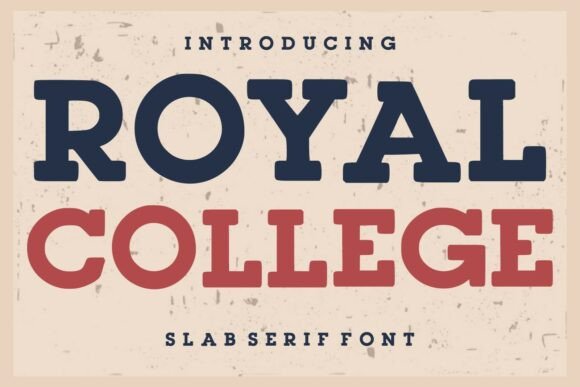
When selecting typography for projects requiring academic authority or retro athletic aesthetics, designers often navigate a crowded field of slab serifs and varsity-inspired typefaces. Royal College distinguishes itself within this category as a bold vintage slab serif that specifically targets the intersection of classic collegiate tradition and clean, modern readability. Unlike generic block letters that prioritize shape over form, Royal College retains distinct letterform nuances that evoke mid-20th-century university branding while maintaining the structural integrity required for contemporary digital and print applications.
For professionals aged 20 to 50 evaluating font options for logos, apparel, packaging, or institutional branding, understanding the specific functional niche of Royal College is essential. It is not merely a decorative display font; it is a specialized tool designed to convey heritage, confidence, and established credibility. However, like any specialized typeface, it possesses distinct strengths and limitations when compared to broader serif families or modern geometric sans-serifs. Making an informed decision requires analyzing how its vintage characteristics align with current design objectives and technical constraints.
Defining the Aesthetic: Beyond Generic Varsity
The market is saturated with "collegiate" fonts, many of which are simplified block alphabets lacking lowercase characters or punctuation. These utilitarian options serve well for jersey numbers but often fail in comprehensive branding systems. Royal College offers a more sophisticated alternative by functioning as a true typeface rather than a novelty alphabet. Its defining characteristic is the balance between heavy slab serifs and refined internal counters.
This distinction matters significantly for versatility. While a standard varsity block font might work for a headline, it rarely supports subheads, captions, or extended body copy. Royal College provides a complete character set that allows for hierarchical consistency across a project. The letterforms are rooted in traditional academic typography, featuring strong vertical stress and bracketed serifs that soften the transition between stem and serif. This results in a visual tone that feels nostalgic yet polished, avoiding the crude or amateurish appearance that can sometimes plague retro-inspired designs.
Comparing Royal College to Alternative Categories
To determine if Royal College is the correct resource for a specific project, it is helpful to compare it against adjacent typographic categories. Each style serves different communicative goals, and recognizing these differences prevents aesthetic mismatches.
- Versus Modern Geometric Slabs: Contemporary slab serifs often feature uniform stroke widths and unbracketed serifs, creating a mechanical, industrial feel. Royal College, by contrast, embraces organic variation and historical weight. If a project requires a tech-forward or minimalist corporate identity, a modern geometric slab may be superior. However, for brands emphasizing history, craftsmanship, or education, Royal College’s humanist undertones provide necessary warmth.
- Versus Traditional Old Style Serifs: Classic book serifs like Garamond or Caslon offer high readability and elegance but lack the assertive presence needed for sports graphics or bold signage. Royal College occupies a middle ground, offering the structural familiarity of a serif with the visual impact of a display face. It sacrifices some long-form reading comfort for immediate visual recognition and thematic resonance.
- Versus Hand-Lettered Retro Scripts: Vintage scripts convey nostalgia through fluidity and personal touch, whereas Royal College conveys it through structure and institution. Scripts suggest individuality and artisanal quality; Royal College suggests organization, team spirit, and established standards. The choice depends entirely on whether the brand narrative is personal or institutional.
Strategic Applications and Best-Fit Scenarios
Royal College excels in environments where the design must instantly communicate stability and tradition. Its bold weight and distinctive silhouette make it particularly effective in competitive visual landscapes where quick recognition is paramount. Understanding where this font performs best helps justify its selection over more neutral alternatives.
Branding and Institutional Identity
For universities, alumni associations, and educational nonprofits, Royal College serves as a powerful anchor for visual identity. It bridges the gap between historical archives and modern marketing materials. When redesigning heritage brands, there is often a tension between honoring the past and appearing relevant. Royal College resolves this by using vintage forms executed with crisp, modern vector precision. It signals respect for tradition without appearing dated or deteriorated.
Apparel and Merchandise Design
In the realm of fashion and merchandise, typography must remain legible at various scales and on textured surfaces. The robust construction of Royal College ensures that ink does not bleed excessively on fabric and that details remain sharp during embroidery or screen printing. Compared to thinner vintage revivals that may require artificial stroking to survive production processes, Royal College’s native boldness reduces prepress adjustments and production risks. This makes it a practical choice for varsity jackets, caps, and limited-edition streetwear that references academic aesthetics.
Packaging and Editorial Layouts
Heritage food products, craft beverages, and lifestyle publications frequently utilize slab serifs to imply quality and longevity. Royal College works effectively here because its vintage coding triggers associations with established institutions and trusted standards. On packaging, it pairs exceptionally well with minimalist sans-serif supporting text, creating a contrast that highlights the product name while keeping regulatory information legible. In editorial contexts, it functions best as a pull-quote or section header font, adding rhythmic variety to layouts dominated by lighter body text.
Tradeoffs and Technical Considerations
No typeface is universally applicable, and Royal College has specific limitations that designers must weigh during the evaluation process. Acknowledging these tradeoffs upfront prevents costly revisions later in the design workflow.
Readability at Small Sizes: Due to its bold weight and strong serifs, Royal College can become visually dense at small point sizes. It is primarily a display typeface intended for headlines, logos, and short phrases. For extensive body copy, user interfaces, or fine print, pairing it with a highly legible sans-serif or light serif is mandatory. Attempting to use Royal College for paragraphs will likely result in eye strain and reduced comprehension.
Tonal Specificity: The font carries a strong inherent personality. It unmistakably reads as "academic" or "athletic." If a brand wishes to appear neutral, futuristic, or purely luxury-oriented without historical connotations, Royal College may impose too much thematic baggage. It is a flavor ingredient, not a neutral base. Designers should test it in context early to ensure the vintage signal aligns with the overall brand strategy.
Digital Rendering: While generally well-hinted for modern screens, extremely bold slab serifs can sometimes render heavily on low-resolution displays or certain mobile browsers. Testing across devices is crucial, especially for web headers. In some cases, optical sizing adjustments or slight tracking increases may be necessary to maintain clarity in digital environments.
Making the Final Selection Decision
Choosing Royal College ultimately comes down to matching typographic voice with project intent. It is the right choice when the goal is to leverage the cultural capital of academia and vintage athletics while maintaining professional design standards. It offers a distinct advantage over free or generic alternatives by providing a cohesive system that supports comprehensive branding rather than isolated graphic elements.
However, if the project demands extreme neutrality, high-density text setting, or a forward-looking technological aesthetic, other resources will serve better. Professionals should view Royal College as a specialized asset in their typographic toolkit—ideal for evoking trust, heritage, and bold confidence, but requiring thoughtful pairing and contextual awareness to reach its full potential.
By evaluating Royal College against both project requirements and alternative styles, designers can move beyond surface-level aesthetics to make selections grounded in function, communication, and long-term viability. Whether revitalizing a century-old institution or launching a new brand with retro sensibilities, understanding the nuanced capabilities of this typeface ensures that the final design resonates authentically with its intended audience.