Evaluating Goldspot: A Practical Guide to Handwritten Typography
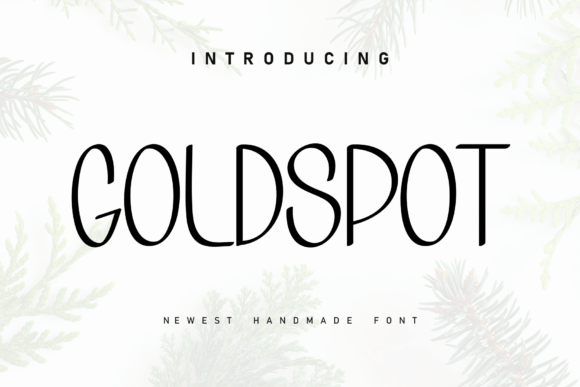
Selecting the appropriate typeface is a critical decision in visual communication, particularly when the design goal involves conveying warmth, authenticity, or personal connection. Goldspot is a sweet and beautiful handwritten font featuring characters that dance along the baseline, designed to add a cozy accent to various creative projects. For designers, marketers, and content creators evaluating typography options, understanding the specific functional attributes of Goldspot is essential for determining its suitability. This evaluation explores the technical characteristics, practical applications, and necessary tradeoffs associated with integrating this script typeface into professional workflows.
Defining the Visual Characteristics of Goldspot
To evaluate Goldspot effectively, one must first understand its structural mechanics beyond subjective descriptors like "sweet" or "beautiful." The defining feature of this typeface is its variable baseline alignment. Unlike standard serif or sans-serif fonts where characters sit on a uniform horizontal line, Goldspot utilizes vertical oscillation. This mimics the natural inconsistency of analog handwriting, preventing the text from appearing mechanically generated.
The letterforms exhibit a moderate x-height and open counters, which contributes to legibility despite the decorative nature of the script. The stroke contrast is relatively consistent, avoiding extreme thins that can disappear at smaller sizes or on lower-resolution screens. When assessing Goldspot against other handwritten options, it occupies a middle ground between chaotic grunge scripts and rigid calligraphy. It offers organic texture without sacrificing the structural integrity required for commercial design. This balance makes it distinct from highly stylized display fonts that prioritize artistic expression over readability.
Strategic Applications and Ideal Use Cases
Goldspot performs best in specific contexts where the primary objective is emotional engagement rather than rapid information processing. Evaluators should consider this typeface for projects requiring a human touch or artisanal quality. Common high-fit scenarios include:
- Branding and Packaging: Products positioned as handmade, organic, or boutique benefit from the tactile implication of Goldspot. It signals craftsmanship and attention to detail on labels, tags, and unboxing experiences.
- Social Media Graphics: In feed environments dominated by clean sans-serifs, the dancing baseline creates visual disruption that captures attention. It works effectively for quotes, announcements, or lifestyle imagery where the text acts as a graphical element.
- Stationery and Invitations: Wedding suites, greeting cards, and personal correspondence rely heavily on script typography to convey intimacy. Goldspot provides a modern alternative to traditional copperplate scripts, appealing to contemporary aesthetics while retaining sentimentality.
- Editorial Accents: Within magazine layouts or blog designs, Goldspot serves as an effective tool for highlighting pull quotes, sidebars, or introductory drop caps, breaking up dense blocks of body copy.
In these situations, the font functions as a tonal anchor. It does not merely display words; it reinforces the brand voice through visual texture. If the project requires communicating approachability, nostalgia, or softness, Goldspot aligns well with those strategic goals.
Functional Tradeoffs and Limitations
While aesthetically pleasing, Goldspot introduces functional constraints that must be weighed during the selection process. Objective evaluation requires acknowledging where this typeface may hinder rather than help user experience.
Legibility at Small Sizes
The very feature that gives Goldspot its charm—the dancing baseline—becomes a liability at reduced point sizes. Below 18-24 points (depending on output medium), the vertical variation can cause letters to visually collide or appear misaligned. Evaluators must test the font at actual production sizes. If the design requires fine print, legal disclaimers, or dense instructional text, Goldspot is likely unsuitable. It is strictly a display or sub-headline typeface.
All-Caps Usage
Handwritten fonts with connected or semi-connected flows are rarely designed for all-capitalization settings. Using Goldspot in uppercase often breaks the natural rhythm of the script, resulting in awkward spacing and reduced readability. Designers intending to use this font must plan for title case or sentence case layouts. If a project demands uppercase headers for stylistic consistency across a brand system, a complementary sans-serif or structured serif would be a more prudent choice.
Accessibility Considerations
Script typefaces inherently present challenges for users with dyslexia or visual impairments. The irregular baselines and unique character shapes increase cognitive load during reading. When using Goldspot in digital environments, evaluators should ensure it is never used for essential navigation, long-form content, or critical calls to action. Adhering to WCAG guidelines means reserving Goldspot for decorative purposes or short phrases where context clues support comprehension.
Pairing Strategies and Hierarchy
Goldspot cannot function in isolation within a comprehensive design system. Its success depends heavily on pairing with neutral typefaces that provide stability. Because Goldspot possesses high personality and texture, it requires a grounding counterpart.
Geometric Sans-Serifs: Fonts like Montserrat, Poppins, or Futura offer clean lines that contrast effectively with the organic curves of Goldspot. The geometric precision highlights the hand-drawn quality of the script without competing for attention.
Traditional Serifs: For a more classic or editorial feel, pairing Goldspot with a transitional serif like Merriweather or Lora creates a sophisticated hierarchy. This combination works particularly well in publishing or luxury branding where heritage and modernity intersect.
Evaluators should avoid pairing Goldspot with other script fonts or highly decorative serifs. Such combinations create visual noise and confuse the typographic hierarchy. The rule of thumb is contrast: if Goldspot provides the emotion, the supporting typeface must provide the structure.
Licensing and Technical Due Diligence
Beyond aesthetics, practical selection involves verifying licensing terms and technical specifications. Before committing to Goldspot, confirm the license covers the intended usage. Desktop licenses typically cover static images and print, while webfont licenses are required for CSS implementation. App licenses and e-pub licenses are separate tiers. Using a desktop license for a website embed is a common compliance error that exposes organizations to legal risk.
Additionally, check the character set coverage. Does Goldspot include necessary ligatures, alternates, or multilingual support? Handwritten fonts sometimes lack extensive glyph libraries compared to system fonts. If the project involves multiple languages or special punctuation, verify availability beforehand to avoid mid-project substitutions that compromise visual consistency.
Making the Final Selection Decision
Determining whether Goldspot is the correct asset requires balancing emotional resonance with functional requirements. It is a strong candidate when the design brief prioritizes warmth, individuality, and informal elegance. It adds significant value to packaging, social content, and personal stationery where the "cozy accent" directly supports the message.
However, alternatives should be considered if the project demands high information density, strict accessibility compliance, or formal corporate authority. In such cases, the playful baseline of Goldspot may undermine credibility or usability. Evaluators should prototype with real content rather than placeholder text to assess true performance. Ultimately, Goldspot is a specialized tool in the typographic toolkit. Its effectiveness lies not in universal application, but in deliberate deployment where its specific handwritten qualities solve a defined communication challenge.