Love Memories: Evaluating a Handwritten Font for Authentic Design
In the crowded marketplace of digital typography, finding a script font that balances aesthetic appeal with functional legibility is a persistent challenge for designers and marketers. Love Memories distinguishes itself as a handwritten typeface that prioritizes organic rhythm over rigid perfection. Unlike many display fonts that sacrifice readability for ornamentation, this typeface offers a practical solution for projects requiring a personal, human touch without compromising professional standards. Its defining characteristic—a baseline that allows characters to dance rather than sit statically—creates a sense of movement and warmth that static scripts often lack.
For professionals ranging from freelance graphic designers to small business owners, the value of a font lies in its versatility and technical reliability. Love Memories serves as a specialized tool within a broader typographic system. It is not intended for body copy or extensive informational text; rather, it functions as an accent asset designed to evoke intimacy and nostalgia. Understanding its specific strengths and limitations is essential for integrating it effectively into branding, editorial design, and digital content strategies.
Typographic Characteristics and Visual Rhythm
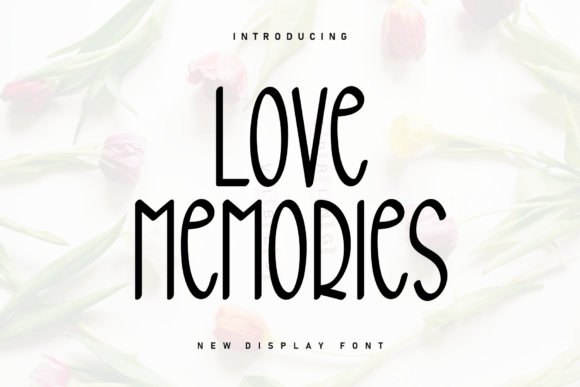
The primary differentiator of Love Memories is its dynamic baseline. In traditional typography, characters align strictly along a horizontal axis. This font breaks that convention intentionally, mimicking the natural variance found in genuine handwriting. The ascenders and descenders vary in height and depth, while individual glyphs shift slightly above or below the center line. This creates a visual cadence that feels spontaneous rather than manufactured.
This rhythmic quality serves a specific psychological purpose in design. When viewers encounter perfectly uniform text, they process it as institutional or commercial. The irregularities in Love Memories signal authenticity, triggering associations with personal correspondence, artisanal craftsmanship, and emotional sincerity. However, this same feature requires careful handling. Because the letters do not lock into a predictable grid, spacing adjustments (kerning and tracking) are often necessary to maintain visual cohesion, especially when setting longer phrases or headlines.
The stroke weight remains consistent throughout the character set, avoiding the extreme contrast between thick and thin lines that can cause reproduction issues at smaller sizes. This monolinear approach enhances legibility across various media, from high-resolution print materials to social media graphics viewed on mobile devices. The letterforms themselves strike a balance between cursive connectivity and print clarity, ensuring that even users unfamiliar with elaborate calligraphy can read the text effortlessly.
Practical Applications in Professional Workflows
Evaluating Love Memories through the lens of real-world application reveals its strongest use cases. It excels in environments where the goal is to soften a brand’s voice or add a layer of emotional resonance to visual communication.
- Wedding and Event Stationery: This is perhaps the most obvious application. The font’s cozy accent makes it ideal for invitations, save-the-dates, and place cards. It conveys romance without appearing dated or overly formal, bridging the gap between classic elegance and modern minimalism.
- Artisanal Product Packaging: For small businesses selling handmade goods, coffee, baked items, or boutique cosmetics, Love Memories reinforces the narrative of handcrafted quality. Using this font for product names or short taglines on labels helps differentiate shelf presence from mass-produced competitors utilizing standard sans-serif typography.
- Social Media Content Creation: Influencers, bloggers, and social media managers benefit from the font’s inherent personality. It performs exceptionally well in Instagram stories, Pinterest pins, and YouTube thumbnails where quick visual recognition is paramount. The dancing baseline adds visual interest to flat color backgrounds or photographic overlays without requiring additional graphic elements.
- Editorial Accents and Pull Quotes: Magazine layouts and blog posts can utilize Love Memories to highlight testimonials, author signatures, or emotional hooks within an article. When paired with a clean serif or geometric sans-serif for body text, it creates a typographic hierarchy that guides the reader’s eye and breaks up dense blocks of information.
Professionals should note that this font works best as a supporting actor rather than the lead. It provides texture and tone but lacks the structural neutrality required for navigation menus, legal disclaimers, or instructional content. Successful implementation depends on pairing it with highly legible companion fonts that ground the design and provide necessary contrast.
Technical Considerations and Usability
Beyond aesthetics, the long-term value of any typeface depends on its technical robustness. Love Memories demonstrates competence in several key areas relevant to production workflows. The glyph set typically includes standard uppercase and lowercase letters, numerals, and essential punctuation. Many versions also include alternate characters and ligatures, which are crucial for avoiding repetitive letterforms in words with double letters. Utilizing OpenType features to access these alternates prevents the "stamped" look that can undermine the illusion of authentic handwriting.
File format compatibility is generally comprehensive, with OTF and TTF formats available for desktop publishing software like Adobe Illustrator, Photoshop, and InDesign. Webfont versions (WOFF/WOFF2) allow for consistent rendering across websites, though designers must be mindful of loading times and fallback stacks. When specifying Love Memories in CSS, always define a reliable cursive or generic sans-serif fallback to ensure graceful degradation if the custom font fails to load.
Licensing is another critical factor for commercial users. Before deploying Love Memories in client work, merchandise, or large-scale advertising, verify the specific license terms. Desktop licenses typically cover static images and print, while web and app licenses may require separate purchases. Respecting intellectual property rights protects both the designer and the client from potential legal complications and supports the sustainability of independent type foundries.
Limitations and Best Practices
No typeface is universally appropriate, and acknowledging the constraints of Love Memories is as important as celebrating its strengths. The playful baseline variation, while charming, can become distracting if overused. Setting entire paragraphs or lengthy sentences in this font will fatigue readers and diminish the specialness of the effect. Reserve it for short bursts of text—typically no more than three to five words per line—to maximize impact and maintain readability.
Additionally, the font’s informal nature may clash with certain industry standards. Corporate finance, medical institutions, legal services, and luxury brands targeting ultra-high-net-worth individuals may find the coziness of Love Memories misaligned with their desired perception of authority, precision, or exclusivity. Contextual awareness is vital; what works beautifully for a local bakery’s rebrand could erode trust in a cybersecurity firm’s white paper.
When working with clients, manage expectations regarding customization. While Love Memories offers a convincing handwritten aesthetic, it cannot replicate the unique specificity of actual custom lettering. If a project demands truly bespoke typography, consider using this font as a starting point for mood boarding or mockups before investing in hand-lettering services. Alternatively, use it for secondary elements while commissioning custom logotypes for primary brand identifiers.
Assessing Value for Creative Professionals
Ultimately, the decision to incorporate Love Memories into a design toolkit should be driven by project requirements rather than trend following. For creators who frequently work in lifestyle, hospitality, education, or personal branding niches, this font represents a high-value asset. Its ability to instantly inject warmth and humanity into digital compositions saves time that might otherwise be spent sourcing stock photography or creating custom illustrations to achieve similar emotional effects.
The font’s enduring appeal lies in its restraint. It avoids the excessive swashes and decorative flourishes that date many script fonts to specific eras. Instead, Love Memories occupies a timeless middle ground—recognizably handwritten yet clean enough for contemporary design systems. This longevity means it can remain in active rotation for years without appearing stale, providing excellent return on investment for freelancers and agencies building comprehensive resource libraries.
For those evaluating whether this typeface fits their current needs, consider testing it within actual project parameters before committing. Create sample headlines, overlay it on intended background colors, and view it at multiple sizes. Assess how it interacts with your existing brand palette and companion typography. A font that looks beautiful in isolation may behave differently in context, and practical testing remains the most reliable method for determining true compatibility.
Love Memories succeeds because it understands its role. It does not attempt to be everything to everyone; instead, it executes a specific function with clarity and charm. For designers seeking to create connections through typography, it offers a dependable, aesthetically pleasing solution that honors the tradition of handwritten communication while meeting the demands of modern digital production. When applied thoughtfully and with respect for its inherent characteristics, it transforms ordinary text into meaningful visual experiences that resonate with audiences on an emotional level.