Evaluating Flowers February for Handwritten Design Projects
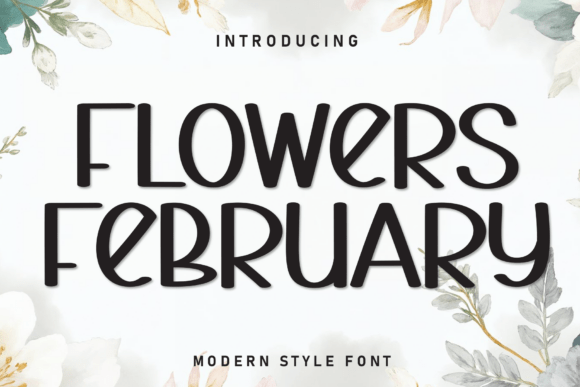
Flowers February is a handwritten display font characterized by its sweet, lively aesthetic and distinctively quirky letterforms. Designed to radiate friendliness, this typeface occupies a specific niche within the broader category of script and hand-lettered fonts. For designers, crafters, and event planners evaluating typography options, understanding the functional attributes and stylistic boundaries of Flowers February is essential for determining its suitability for a given project. This evaluation explores the practical applications, benefits, and limitations of incorporating this charmingly sweet typeface into visual communications.
Defining the Visual Characteristics
To make an informed selection, one must first understand the specific design language of Flowers February. Unlike formal calligraphy scripts that adhere to strict historical rules, or rigid sans-serif fonts that prioritize neutrality, Flowers February operates as a personality-driven display face. Its primary attributes include:
- Organic Irregularity: The baseline and x-height vary slightly throughout the character set, mimicking natural handwriting rather than digital precision.
- Rounded Terminals: Stroke endings are soft and curved, contributing to the "sweet" and approachable visual tone.
- Quirky Ligatures and Alternates: Many versions include special character pairings or alternate glyphs that enhance the bespoke feel of the text.
- Moderate Contrast: The stroke weight variation is present but not extreme, ensuring legibility at standard display sizes while maintaining a casual vibe.
These characteristics position Flowers February as a tool for emotional communication rather than information density. It is engineered to convey warmth, personalization, and whimsy.
Ideal Use Cases and Applications
The decision to use Flowers February should be driven by the desired emotional response of the audience. Based on its stylistic profile, this font demonstrates strong performance in specific contexts where human connection is paramount.
Wedding and Event Stationery
This is perhaps the most common application for Flowers February. Wedding invitations, save-the-dates, and seating charts benefit from the font’s ability to bridge the gap between elegance and playfulness. It suggests a celebration that is joyful and relaxed rather than stiffly traditional. When paired with minimalist layout elements, the font provides sufficient visual interest without requiring additional ornamentation.
Greeting Cards and Personal Correspondence
For commercial greeting card designers or individuals creating custom stationery, Flowers February offers a versatile solution. Its friendly demeanor works well for birthdays, baby showers, and thank-you notes. The quirkiness prevents the design from feeling generic, adding a layer of perceived thoughtfulness that aligns with the purpose of personal correspondence.
Lifestyle Branding and Packaging
Small businesses in the artisanal, bakery, children’s apparel, or floral sectors often seek typography that reflects their brand values. Flowers February can serve as a primary logotype or secondary accent font for packaging labels. It signals handmade quality and approachability, distinguishing products from mass-market competitors using standard corporate typography.
Benefits and Strategic Advantages
Selecting Flowers February over other handwritten alternatives offers several tangible benefits for design projects:
- Instant Personality Injection: The font carries significant stylistic weight, reducing the need for complex graphic illustrations to establish a mood.
- Approachability: In an era of polished digital perfection, the imperfect nature of this typeface fosters trust and relatability.
- Versatility Within Niche: While distinctly cute, it avoids being overly juvenile, making it appropriate for adult audiences in wedding and lifestyle contexts.
- Pairing Potential: Its organic forms create effective contrast when paired with clean geometric sans-serifs or structured serifs for body copy.
Tradeoffs and Practical Considerations
An objective evaluation must also address the limitations of Flowers February. Understanding these tradeoffs prevents misuse and ensures professional results.
Legibility Constraints
As a display font, Flowers February is optimized for headlines, titles, and short phrases. It is generally unsuitable for body text, long-form content, or small point sizes. The irregular baselines and decorative elements that provide charm at large sizes become visual noise when scaled down. Designers must plan for a secondary, highly legible typeface for supporting information.
Tone Specificity
The "sweet" and "quirky" nature of this font is a double-edged sword. It is ill-suited for corporate finance, legal documents, luxury fashion, or somber occasions. Using Flowers February in these contexts creates cognitive dissonance, undermining the credibility of the message. Evaluators must ensure the font’s inherent voice aligns strictly with the project’s tonal requirements.
Overuse and Saturation
Handwritten display fonts can quickly overwhelm a composition. Because Flowers February has such distinct character, using it in all-caps or across multiple hierarchy levels often degrades readability and aesthetic appeal. Best practice dictates using it sparingly as an accent element rather than a dominant structural component.
Decision-Making Framework: Is Flowers February Right for You?
When comparing Flowers February against other options, consider the following decision matrix to determine alignment with your goals:
- Audience Analysis: Does your target demographic respond positively to whimsical, informal aesthetics? If the audience expects authority or tradition, look elsewhere.
- Hierarchy Assessment: Do you need a font for a headline or focal point only? If you require a single typeface family for both display and body text, Flowers February will not suffice.
- Brand Alignment: Does the "friendly and quirky" descriptor match your brand voice guidelines? Test the font alongside existing brand assets to check for visual harmony.
- Medium Evaluation: Will the font be reproduced at a size where its details remain crisp? Embroidery, engraving, and low-resolution screens may obscure the delicate quirks that define the typeface.
- Licensing Verification: Confirm that the license covers your intended use case. Personal crafting licenses differ significantly from commercial branding or merchandise licenses.
When to Consider Alternatives
While Flowers February excels in its niche, certain scenarios warrant alternative selections:
- For Formal Elegance: If the project requires sophistication without quirkiness, consider traditional copperplate scripts or high-contrast modern calligraphy.
- For Maximum Readability: If the text must be readable at small sizes or from a distance, opt for a rounded sans-serif or a monoline script with consistent spacing.
- For Edgy or Modern Vibes: If "sweet" contradicts the desired aesthetic, explore brush scripts, marker fonts, or distorted display typefaces.
- For Extended Text: If you need handwritten style for paragraphs, seek out dedicated handwriting text families designed with optical sizing for smaller applications.
Final Evaluation Insights
Flowers February represents a specialized tool in the typographic arsenal. Its value lies not in versatility across all design problems, but in its exceptional performance within a specific emotional register. For projects demanding friendliness, personalization, and a touch of whimsy, it delivers reliable aesthetic results. However, successful implementation requires disciplined restraint and clear understanding of its functional boundaries.
Designers and decision-makers should approach Flowers February as an accent ingredient rather than a foundational element. When used with intention and paired appropriately, it transforms standard layouts into engaging, emotionally resonant experiences. By carefully weighing the benefits against the legibility and tonal constraints outlined above, you can determine whether this charmingly sweet display font merits inclusion in your next creative endeavor. The ultimate measure of success is not merely the font's inherent beauty, but its effectiveness in serving the communication goals of your specific project.