Zoe: Evaluating the Balance Between Industrial Structure and Hand-Cut Authenticity
Selecting a display typeface often involves navigating a tension between two opposing forces: the need for structural legibility and the desire for organic personality. In professional design workflows, fonts usually fall into one camp or the other. Geometric sans-serifs offer clarity but can feel sterile, while hand-lettered scripts provide warmth at the cost of readability at scale. Zoe occupies a specific niche in this spectrum, functioning as a bold display font that attempts to reconcile industrial precision with a raw, hand-cut aesthetic. For designers and brand managers evaluating typography for high-impact projects, understanding where Zoe fits—and where it does not—is essential for making an informed resource allocation decision.
Defining the Hybrid Aesthetic: Structure Meets Imperfection
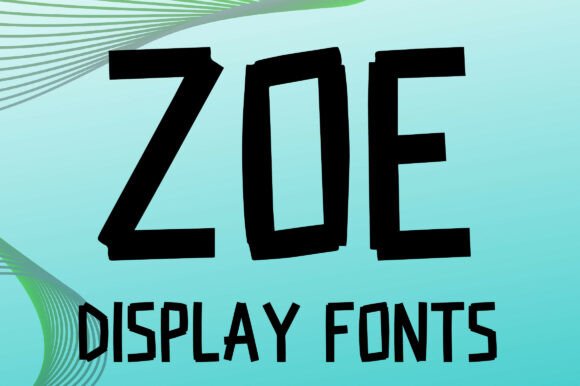
To evaluate Zoe effectively, one must first understand its anatomical positioning. It is not a traditional grotesque, nor is it a purely decorative script. The typeface is built on a heavy, industrial skeleton that ensures stability and mass. This foundational weight provides the "poster-ready" density required for headlines and signage. However, the distinctiveness lies in the edge treatment and terminal details. Rather than mathematically perfect curves or sharp vector points, Zoe incorporates subtle irregularities reminiscent of physical cutting tools, screen printing misregistration, or stencil wear.
This hybrid approach serves a functional purpose beyond mere style. In digital environments saturated with polished, pixel-perfect vectors, slight textural imperfections can actually enhance visual retention. The eye is drawn to contrast, and Zoe’s roughness creates friction against smooth backgrounds. When comparing this to standard bold sans-serifs, the tradeoff becomes clear: you gain character and tactile presence, but you sacrifice the neutral invisibility of a utility typeface. Zoe demands attention; it cannot serve as a passive container for information. It is an active participant in the message, which makes it ideal for expressive branding but potentially problematic for interfaces requiring cognitive ease.
Evaluating Fit: Urban Grit Versus Playful DIY
The versatility of Zoe stems from how its texture interacts with color, spacing, and context. While the font file remains static, its application shifts the perceived tone significantly. Professionals considering this typeface should assess their project against two primary use cases where it performs best.
- Gritty Urban and Streetwear Contexts: When set in high-contrast monochrome or neon against dark substrates, Zoe’s industrial bones take precedence. The hand-cut elements read as weathering or distress, aligning with skate culture, music promotion, and street fashion. Here, the font communicates durability and authenticity without needing additional texture overlays in Photoshop.
- Playful DIY and Maker Aesthetics: Conversely, when used in vibrant, multi-color palettes with generous tracking, the irregularities soften. The same edges that looked like concrete wear now resemble paper cuts or marker strokes. This duality allows Zoe to bridge demographics, appealing to both edgy youth markets and nostalgic adult audiences interested in craft and tangibility.
If your project sits outside these tonal ranges—for example, in luxury minimalism, corporate finance, or medical technology—Zoe’s inherent noise may conflict with the desired message of precision and trust. Recognizing this boundary early prevents costly rebranding efforts later.
Comparative Analysis: Zoe Against Standard Display Alternatives
When building a typographic system, Zoe is rarely the only option on the table. Understanding its performance relative to adjacent categories helps clarify its value proposition. Below is a practical breakdown of how it compares to common alternatives encountered during the selection process.
Versus Geometric Bold Sans-Serifs
Geometric giants (e.g., Futura-style or neo-grotesque displays) are the default for modern headlines due to their scalability and neutrality. Compared to these, Zoe offers higher emotional resonance but lower modular flexibility. A geometric sans can be stretched, condensed, and paired with almost any body text without friction. Zoe, however, has a fixed personality. Pairing it requires more care; it generally needs a highly neutral, structured body font to avoid visual competition. If your layout relies on extreme typographic variation or dynamic responsive resizing, a geometric option may offer safer technical performance. Choose Zoe when the headline needs to carry the entire emotional weight of the piece.
Versus Pure Hand-Lettering and Brush Scripts
Authentic hand-lettering provides unmatched uniqueness, but it often fails at smaller display sizes or longer phrases due to inconsistent baseline alignment and varying x-heights. Zoe solves the legibility issues of true hand-drawn type by adhering to a consistent grid. While it lacks the bespoke flow of custom lettering, it offers repeatability. For video game titles, app icons, or recurring social media templates where consistency across assets is mandatory, Zoe provides a handcrafted look without the production bottleneck of drawing every word individually. If you need a one-off poster with maximum soul, hire a letterer. If you need a scalable system that feels human, Zoe is the efficient compromise.
Versus Distressed or Grunge Typefaces
Many "grunge" fonts achieve texture through destructive methods: eroding edges, adding splatter, or breaking strokes. These effects often reduce legibility and can look dated or gimmicky. Zoe differs because its texture appears constructive rather than destructive. The irregularities feel like part of the form's creation, not a post-processing filter. This distinction matters for longevity. Destructive textures tend to tie designs to specific eras (e.g., 90s grunge or 2000s distressed vintage), whereas Zoe’s constructive imperfection reads as a stylistic choice rather than a trend artifact. For brands seeking timelessness within the raw aesthetic, this is a critical differentiator.
Technical Tradeoffs and Implementation Considerations
Aesthetic appeal must always be weighed against technical reality. Before licensing or deploying Zoe, consider the following practical factors that impact workflow and output quality.
Legibility Thresholds: Due to its heavy weight and textured edges, Zoe has a minimum effective size. At small scales, the hand-cut details can fill in, turning letters into indistinct blobs. Unlike clean sans-serifs that remain readable down to 8pt, Zoe likely requires a floor of 24pt–36pt depending on the medium. Always test print or render at actual size before finalizing layouts. If your hierarchy requires subheads or captions in the same family, verify that the optical sizing holds up; otherwise, plan for a secondary typeface for supporting text.
Spacing and Kerning Sensitivity: Display fonts with organic edges often require manual kerning adjustments. The irregular terminals can create awkward negative space pockets that automated metrics miss. Budget extra time for typographic refinement. Tight tracking tends to amplify the gritty, urban feel, while loose tracking enhances the playful, retro vibe. However, excessive tightening risks merging the textured edges, negating the font’s defining feature. Finding the sweet spot requires visual testing across multiple words and lengths.
Color and Background Interaction: The texture of Zoe interacts unpredictably with certain background treatments. On busy photographic backgrounds, the rough edges can vibrate or disappear. Solid colors or subtle gradients typically provide the best stage for the typeface to perform. Additionally, consider accessibility. The irregular forms can sometimes reduce character recognition speed for neurodivergent readers or those with low vision. If WCAG compliance is a strict requirement, ensure sufficient contrast ratios and consider using Zoe only for non-critical decorative headings while relying on accessible body fonts for essential information.
Decision Framework: When to Commit to Zoe
Ultimately, choosing Zoe is a strategic decision about brand voice and visual priority. Use the following criteria to validate your choice.
- Prioritize Personality Over Neutrality: Select Zoe if the primary goal is to convey craftsmanship, boldness, or counter-cultural energy. Avoid it if the goal is institutional authority or seamless user interface functionality.
- Confirm Scale Appropriateness: Verify that your primary use cases involve large-format display. If 80% of your touchpoints are mobile screens or dense text documents, the investment in a specialized display face may yield diminishing returns.
- Assess System Compatibility: Ensure you have (or are willing to acquire) a complementary neutral typeface. Zoe is a soloist, not a choir member. It needs a quiet backing track to shine.
- Evaluate Longevity Needs: If you need a trendy look for a six-month campaign, many options exist. If you need a raw aesthetic that will age gracefully over years, Zoe’s constructive texture offers better durability than destructive grunge alternatives.
By approaching Zoe as a specialized tool rather than a universal solution, designers can leverage its unique strengths effectively. It excels in the space between the machine-made and the handmade, offering a pragmatic path to authentic visual expression. Whether for a streetwear label launching a new collection, an indie game studio establishing identity, or a creative agency refreshing a client’s social presence, success depends on respecting the font’s boundaries. When applied with intention and paired with appropriate supporting elements, Zoe delivers the impact and legibility necessary to cut through visual noise, proving that structure and soul are not mutually exclusive.