Combo Color: A Practical Guide to Using Wavy Display Typography
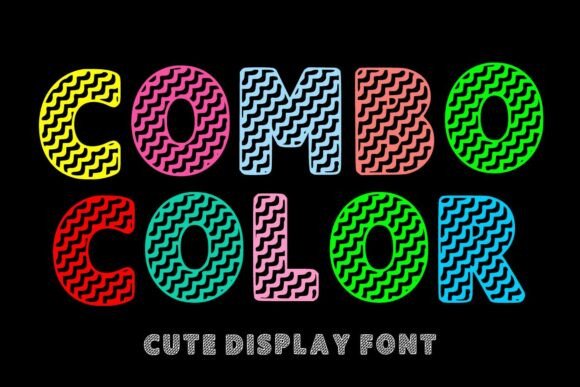
In the vast landscape of digital typography, finding a typeface that balances artistic expression with functional legibility can be a challenge. Designers often toggle between sterile geometric sans-serifs for utility and overly ornate scripts for flair, rarely finding a middle ground that feels both modern and approachable. Combo Color occupies this specific niche. It is a display font defined by bold, rounded letterforms filled with a unique wavy pattern, offering a vibrant alternative to standard solid fills. Rather than simply being "decorative," this typeface serves as a strategic tool for capturing attention in saturated visual markets.
Understanding how to leverage Combo Color requires looking beyond its aesthetic appeal. This guide explores the practical applications, design considerations, and real-world scenarios where this wavy, colorful style enhances communication rather than distracting from it. Whether you are a business owner refreshing your packaging or a content creator designing social media assets, recognizing the strengths and limitations of this font ensures your design choices remain effective and professional.
The Anatomy of Playful Legibility
To use Combo Color effectively, one must first understand its construction. Unlike traditional fonts where the shape of the letter carries all the weight, this typeface relies on internal texture. The wavy pattern inside the bold outlines creates a sense of movement and rhythm even when the text is static. This optical vibration draws the eye naturally, making it significantly more engaging than flat color blocks.
However, the rounded nature of the letterforms plays an equally important role. Sharp edges often convey authority, rigidity, or urgency. In contrast, the soft curves in Combo Color signal accessibility, safety, and friendliness. When combined with the internal wave motif, the result is a typeface that feels energetic without being aggressive. This duality is what makes it suitable for diverse audiences, from toddlers in educational settings to adult consumers browsing lifestyle products. The font does not just display words; it sets an emotional baseline before the viewer even processes the semantic meaning of the text.
Evaluating Suitability for Your Project
Before integrating this vibrant display font into a layout, it is essential to assess whether it aligns with your project’s goals. Not every design benefits from high-energy typography. Use the following criteria to determine if Combo Color is the right fit:
- Audience Expectation: Does your target demographic respond well to whimsy and color? Gen Z and Millennial audiences often appreciate retro-modern aesthetics, while corporate B2B sectors may find the wavy patterns too informal.
- Hierarchy Needs: Is this font intended for headlines, logos, or short call-to-action buttons? Its intricate internal details make it unsuitable for body copy or small print.
- Brand Voice Alignment: Does your brand identity lean towards cheerful, creative, or organic? The font reinforces these traits but clashes with luxury, minimalist, or severe brand personalities.
- Background Complexity: Because the letters contain internal patterns, they require breathing room. Busy photographic backgrounds can cause the wavy lines to visually vibrate unpleasantly or disappear entirely.
Strategic Applications Across Industries
The versatility of Combo Color becomes apparent when examining specific industry use cases. Its ability to stand out makes it a workhorse for projects that compete for attention in crowded environments.
Kids’ Projects and Educational Materials
In children’s design, engagement is paramount. Textbooks, worksheets, and classroom posters often suffer from visual fatigue due to repetitive layouts. Combo Color introduces a tactile quality to digital and print materials. The wavy interior mimics the look of hand-drawn markers or crayons, bridging the gap between digital precision and analog warmth. For educators and parents creating learning aids, this font helps distinguish key vocabulary words or section headers, guiding young eyes through content with visual cues that feel like play rather than instruction.
Packaging and Retail Branding
Shelf presence is a battle won in milliseconds. On product packaging, particularly for snacks, beverages, toys, or eco-friendly goods, Combo Color acts as a visual hook. The bold shapes ensure readability from a distance, while the colorful pattern invites closer inspection. This is particularly valuable for artisanal or handmade brands that want to avoid the sterile look of mass production. The font suggests craftsmanship and fun, implying that the product inside offers a delightful experience. However, designers must ensure sufficient contrast against the package background to maintain compliance with labeling readability standards.
Social Media and Digital Content
Social media feeds are inherently chaotic. Static, uniform text often blends into the noise. Graphics utilizing Combo Color break this monotony through texture. For influencers, event promoters, or small businesses, using this typeface in Instagram stories, YouTube thumbnails, or TikTok overlays increases stop-rate. The wavy pattern adds depth to flat digital screens, making graphics feel more dynamic. When paired with solid-colored backgrounds or simple gradients, the font becomes the hero element, reducing the need for excessive decorative clip art or stickers.
Navigating Limitations and Best Practices
While Combo Color is a powerful asset, it is not a universal solution. Treating it as a primary text face is a common error that leads to poor user experience. Because the wavy pattern reduces the negative space within each character, long strings of text set in this font become difficult to parse. It is strictly a display typeface. Limit usage to three to five words at a time for maximum impact.
Color management also requires careful consideration. Since the font features its own internal coloration or pattern, pairing it with clashing background colors can create visual tension. Designers should treat the font as a pre-colored image. If the waves are multicolored, opt for neutral or monochromatic backgrounds. If the waves are single-tone, ensure the background provides adequate contrast ratio for accessibility. Always test designs in grayscale to verify that the wavy pattern does not compromise the fundamental legibility of the letterforms.
Pairing for Professional Balance
To ground the playfulness of Combo Color, pair it with typefaces that offer stability and neutrality. The goal is to let the display font shine without making the entire design feel juvenile. Excellent pairing options include:
- Clean Geometric Sans-Serifs: Fonts like Montserrat or Poppins provide a structured foundation that contrasts beautifully with the organic waves.
- Simple Humanist Serifs: A readable serif adds a touch of sophistication and tradition, balancing the modern novelty of the wavy pattern.
- Monospaced Typefaces: For a trendy, editorial look, the rigid grid of a mono font highlights the fluidity of Combo Color.
Avoid pairing it with other decorative, script, or textured fonts. Competition between two strong display faces creates visual chaos and dilutes the message. Let Combo Color be the singular focal point of your typographic hierarchy.
Making the Final Decision
Choosing typography is ultimately an exercise in communication strategy. Combo Color offers a distinct advantage for creators seeking to inject personality, energy, and warmth into their work. Its unique combination of bold rounded shapes and decorative wavy patterns solves the problem of creating impactful headlines without resorting to cliché or aggression.
For general consumers and professionals alike, the value lies in its specificity. It is not a font for contracts, legal disclaimers, or dense informational paragraphs. It is a font for celebration, invitation, and emphasis. By respecting its boundaries and leveraging its strengths in appropriate contexts—such as kids' projects, vibrant branding, and social graphics—you transform a decorative asset into a functional component of successful design. When used with intention, Combo Color does more than fill space; it creates a memorable visual signature that resonates with viewers on an emotional level, proving that practical typography and artistic joy are not mutually exclusive.